Water application · Aquaculture
RAS research tank monitoring: dissolved oxygen, pH and nitrogen probes on one controller
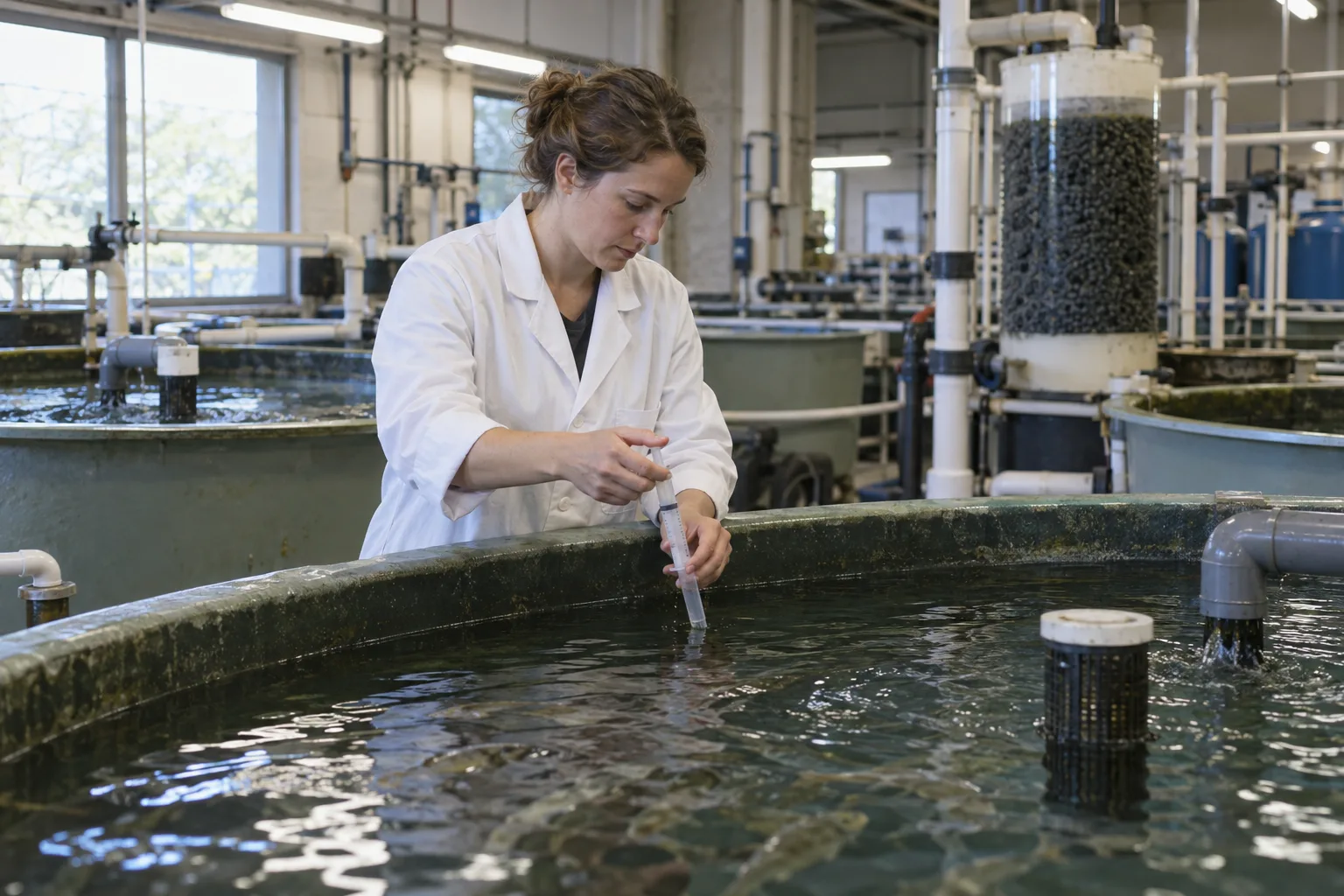
In a small recirculating research tank, dissolved oxygen, pH and temperature are the parameters a probe follows continuously with the accuracy an experiment needs, and nitrate joins them once it has accumulated past about 30 mg/L. Ammonium and nitrite probes record when the biofilter departs from its steady state and how fast, while the concentrations reported for a healthy tank are confirmed with a colorimetric kit or a bench method.
At a glance
- Continuous with full confidence
- Dissolved oxygen (DO-100 or DO-130), pH (PH-100) and temperature
- Nitrate probe
- NO3-100 reports nitrate ion in mg/L; recommended at 30 mg/L and above
- Ammonium and nitrite probes
- Range starts at 0.2 ppm; used for trends and events, confirmed by kit
- Controller
- Omni Genesis, four ports; RS485 probes share one bus by address
A recirculating tank in a university wet lab holds fish, a biofilter and an experimental question. Whether the question is a feed trial, a stocking density comparison or a study of the biofilter itself, the water chemistry is either the treatment or the thing that must stay equal between replicates. Daily manual tests describe one moment in each day. Probes on a controller fill in the other hours, and the useful design decision is which parameter to trust to a probe and which to pair with a kit.
What the water in a RAS has to hold
The Southern Regional Aquaculture Center’s management guide for recirculating systems (SRAC 452) gives the reference values most labs start from:
| Parameter | SRAC 452 recommended value |
|---|---|
| Dissolved oxygen | 60% of saturation or more, usually 5 ppm or more for warmwater fish; above 2 ppm in biofilter effluent |
| pH | 7.0 to 8.0 |
| Un-ionized ammonia nitrogen | Less than 0.05 ppm |
| Nitrite nitrogen | Less than 0.5 ppm |
| Salt | 0.02 to 0.2% |
The same guide calls nitrate relatively nontoxic except above 300 ppm, and asks for pH, ammonia and nitrite to be checked daily, with oxygen watched closely before and after feeding because respiration rises sharply as fish digest. The Wisconsin Sea Grant technical brief on freshwater RAS recommends 80 percent oxygen saturation and notes how species differ: salmon, trout and perch tolerate less than 1 mg/L of ammonia, while bass, carp, catfish and tilapia withstand 1 to 3 mg/L.
Field data show how far the nitrogen species sit apart. A 2023 study that ran ion chromatography analysers on working freshwater and saline RAS recorded nitrite between 0.1 and 3.6 mg/L and nitrate between 0.6 and 392 mg/L. Nitrite stays low when the biofilter works; nitrate climbs until water exchange or denitrification removes it.
Oxygen, pH and temperature: the continuous core
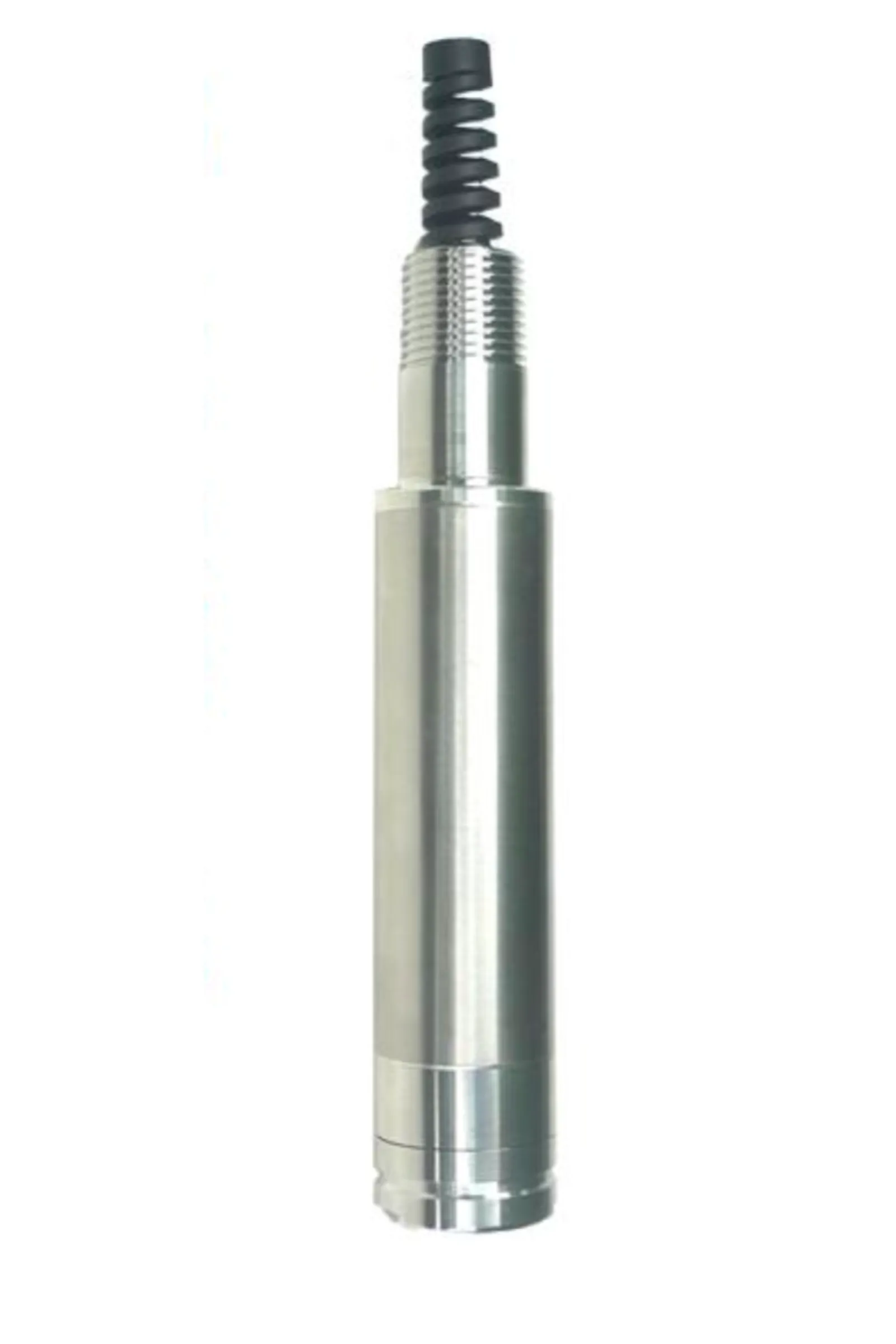
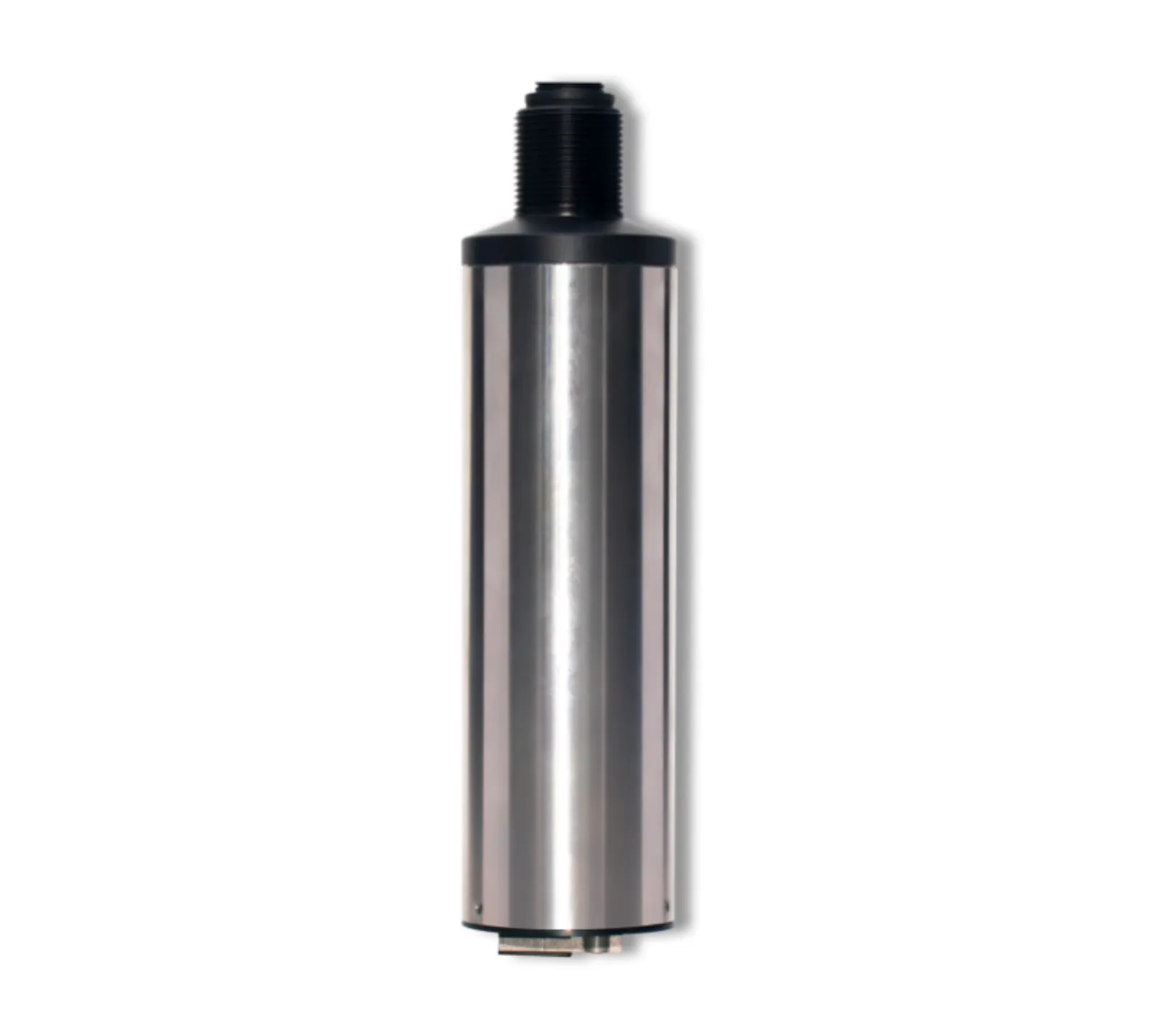
Dissolved oxygen. The DO-100 is a fluorescence probe covering 0 to 20 mg/L and 0 to 200% saturation, with accuracy of ±2% of range, repeatability of ±1% and a t90 response of about 60 seconds. It reports concentration, saturation and temperature, compensates for temperature automatically and accepts salinity and atmospheric pressure as inputs. That response time resolves the dip after each feeding that SRAC describes. In a tank where biofilm builds on every submerged surface, the DO-130 adds an automatic brush whose interval is set in seconds; its datasheet suggests every hour for aquaculture water and every 30 minutes at high density.
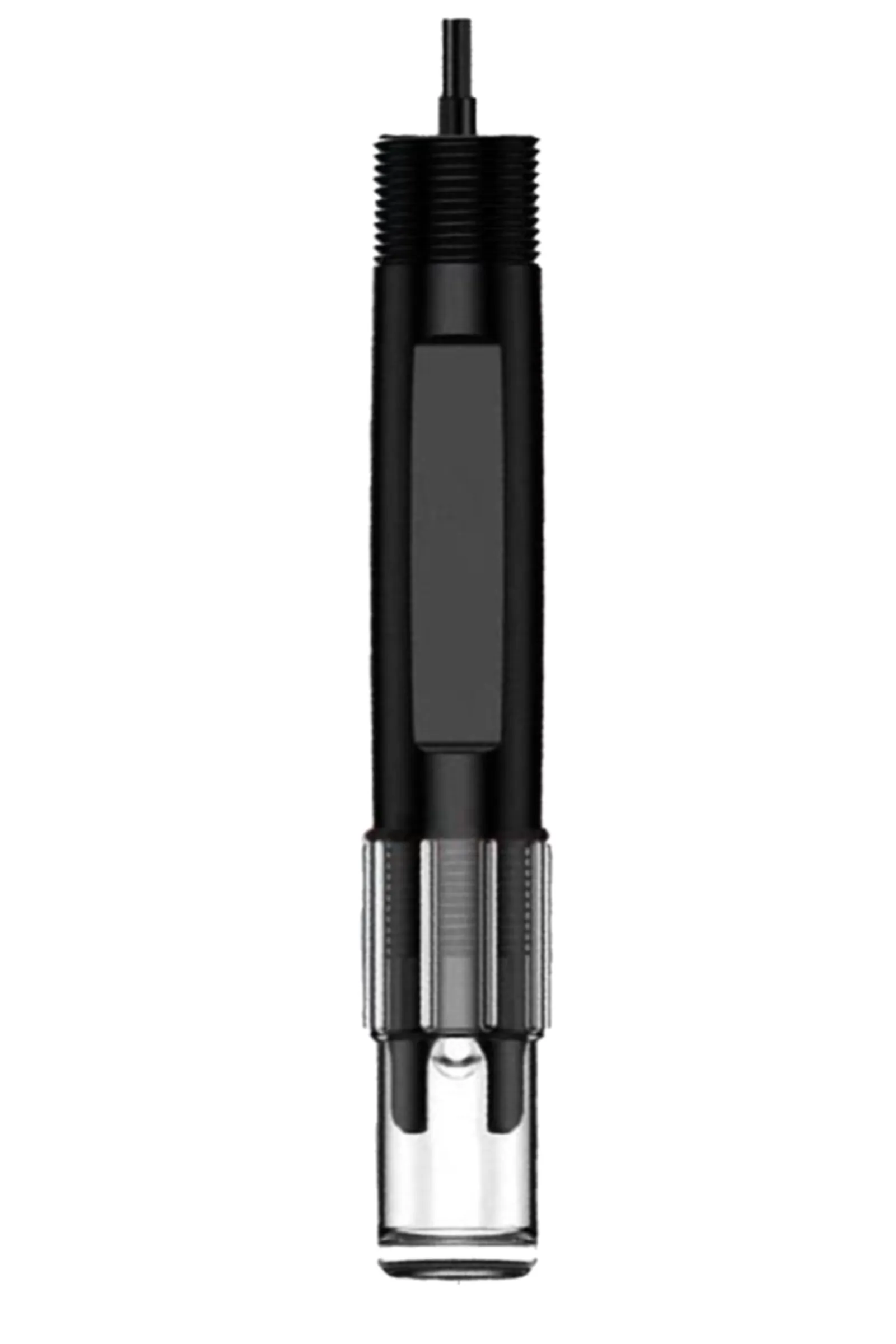
pH. The PH-100 measures 0.00 to 14.00 pH at 0.01 resolution, with accuracy of ±0.02 pH and stability of 0.02 pH or better over 24 hours. Calibration is three-point, in 9.18, 6.86 and 4.00 buffers. Each step of nitrification releases acid, as the Sea Grant brief explains, so the pH trace of a loaded tank slopes downward between alkalinity additions. With a 24 hour stability figure that tight, the slope in the record is the tank’s own.
Temperature. The oxygen probe and the three ion-selective probes each carry a temperature measurement. The oxygen probe’s reading, 0 to 50 °C, is the natural one to log as tank temperature.
Nitrogen: what each ion-selective probe reports
| Probe | Reports | Range | Accuracy | Conditions of use from the datasheet |
|---|---|---|---|---|
| NH4-100 | Ammonium nitrogen, ppm | 0.2 to 1000 ppm | ±5% F.S. | Calibrate with two or more standards, up to five points |
| NO2-100 | Nitrite ion, ppm | 0.2 to 1000 ppm | ±5% F.S., repeatability ±2% | Keep sample pH between 4.5 and 8; interfering ions: acetate, fluoride, chloride, nitrate, sulfate |
| NO3-100 | Nitrate ion (NO₃⁻), mg/L | 0 to 1000 mg/L | ±5% F.S. | Recommended at 30 mg/L and above; chloride below 10 times nitrate; also interfering: perchlorate, iodide, cyanide, tetrafluoroborate, nitrite |
All three have a built-in NTC10K temperature sensor, automatic or manual temperature compensation and 0.01 resolution, and all three state accuracy as a percentage of a 1000 ppm full scale.
Nitrate
Nitrate is the nitrogen species whose RAS concentrations match its probe. A tank on low exchange accumulates nitrate into the tens and hundreds of mg/L, which is the NO3-100’s recommended territory. Two details matter when the numbers go into a paper. The probe reports the nitrate ion; divide by 4.43 for nitrate-nitrogen, so the 30 mg/L recommendation equals about 6.8 mg/L NO₃-N. And the chloride condition has to be checked against the tank’s salt regime: SRAC’s upper salt recommendation of 0.2% is 2,000 mg/L of sodium chloride, roughly 1,200 mg/L of chloride, which calls for nitrate above 120 mg/L. Unsalted and lightly salted freshwater tanks meet the ratio comfortably.
Ammonium
The NH4-100 responds to the ionized form. At RAS pH that is nearly all of the total: SRAC’s table gives the un-ionized share at 20 °C as 0.40% at pH 7.0 and 3.83% at pH 8.0. The probe’s trace therefore tracks total ammonia nitrogen closely, and the toxic fraction is calculated from it with the logged pH and temperature. The EPA’s ammonia criteria rest on the same dependence on pH and temperature.
At pH 7.4 and 20 °C, where the table gives 0.99%, a tank holding un-ionized ammonia nitrogen under 0.05 ppm carries total ammonia nitrogen of about 5 ppm at most, near the low end of a range that begins at 0.2 ppm. In that state the trace is flat and close to its floor. It moves during the events a study usually cares about: biofilter start-up, where SRAC describes ammonia peaking and then nitrite following about two weeks into activation, a step increase in feed, a filter taken offline. The probe timestamps the rise and gives its rate. The concentration at each sampling point comes from the colorimetric test or the bench analyser, and the trace tells you when to sample.
Nitrite
A working biofilter keeps nitrite under SRAC’s 0.5 ppm, while the same water carries nitrate and chloride at tens to hundreds of times that level, and both are on the NO2-100’s interference list. RAS water at pH 7.0 to 8.0 sits inside the probe’s 4.5 to 8 sample window. Researchers run the nitrite probe as the early indicator of a biofilter upset, where concentrations move into the ppm range, and report values from the kit, which is also the routine test both extension guides assume.
One controller, one tank
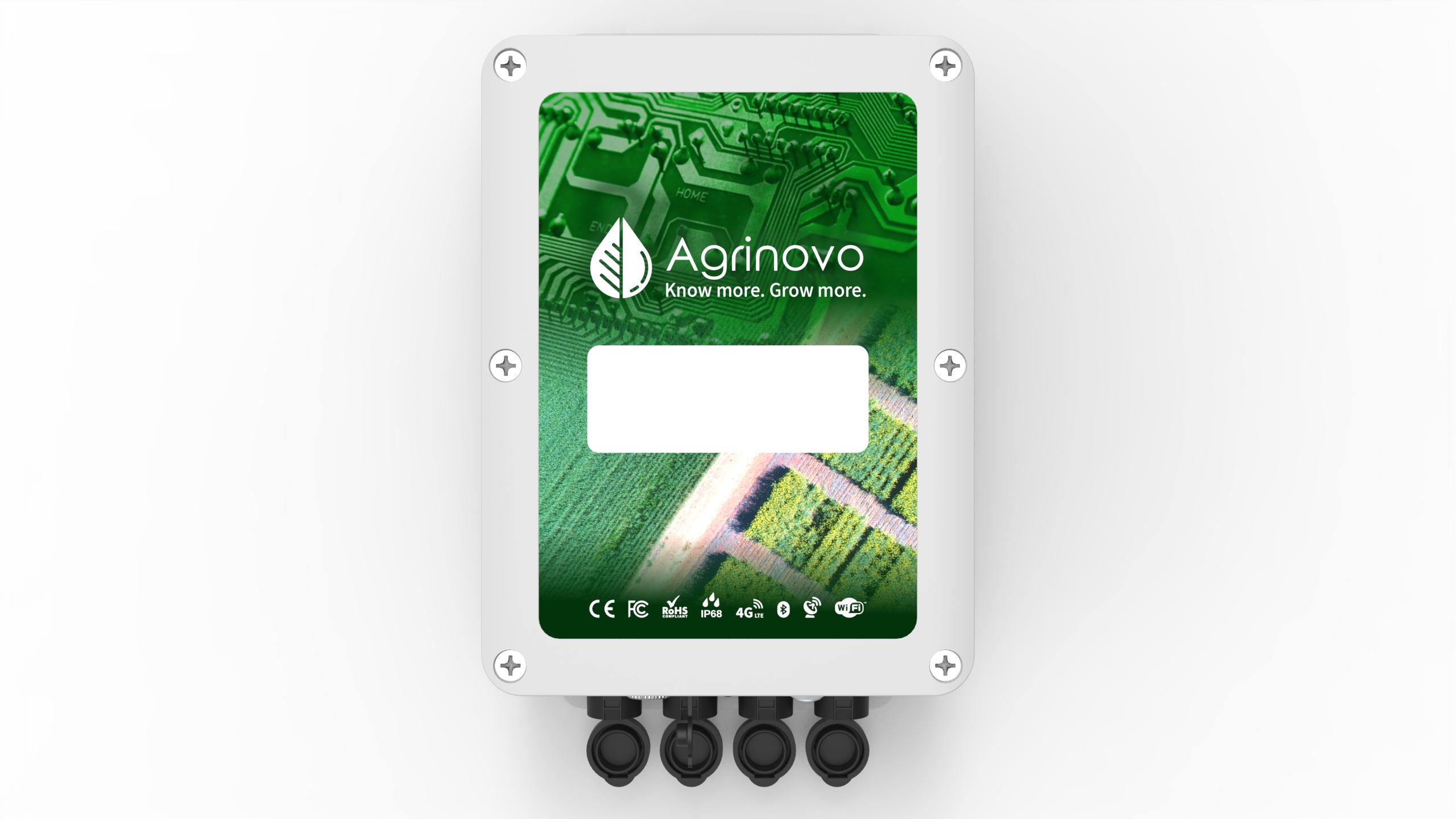
The Omni Genesis has four sensor ports, each configured from the cloud for I2C, analog, digital, 1-Wire, RS485 Modbus RTU or SDI-12. Its datasheet states that multiple RS485 probes share a single bus, each at its own Modbus address, so one controller reads a full set of water quality probes. The probes here ship at address 0x01 and all talk at 9600 bps, 8N1, so give each a unique address before joining them.
The controller supplies switched 12 V to the probes, which sits inside their 12 to 24 V DC requirement, and its 6 to 32 V DC input takes a fixed bench supply. It reports over 4G-LTE by default and has Wi-Fi 2.4 GHz and Bluetooth built in. Readings are logged locally and synchronised to the cloud, sampling intervals and calibration values are set from the dashboard, and thresholds raise alerts. For a replicated design, one controller per tank keeps each tank’s series independent.
Export and programmatic access are described on the API page. Labs with their own acquisition hardware read the probes directly; register maps are on the developer pages for the DO-100, PH-100, NH4-100 and NO3-100.
Calibration during a trial
The PH-100 is calibrated in three buffers, rinsing the electrode with distilled water between them. The ion-selective probes are cleaned periodically and recalibrated after extended use or cleaning; the NO2-100 is rinsed and stored short-term in diluted nitrite standard. The DO-100 datasheet gives a calibration interval of 6 to 8 months under normal conditions and asks for the membrane cap to be cleaned regularly. Schedule calibrations before a trial begins and at fixed points within it, and record them alongside the kit results so a reviewer can follow every value back to a standard.
For sensor placement around the biofilter and alarm design in production systems, see the RAS water quality guide, the RAS monitoring system post and the comparison of ammonia, nitrite and nitrate sensors. Quotations and purchase orders for university buyers are covered on the research purchasing page.
Agrinovo hardware for this application
Every item links to its product page with the datasheet. Specifications on those pages come from the manufacturer documents, not from this article.
DO probes
DO-100 Fluorescent Dissolved Oxygen Sensor
DO probes
DO-130 Self-Cleaning Dissolved Oxygen Sensor
pH probes
PH-100 Digital pH Probe - RS485 Modbus
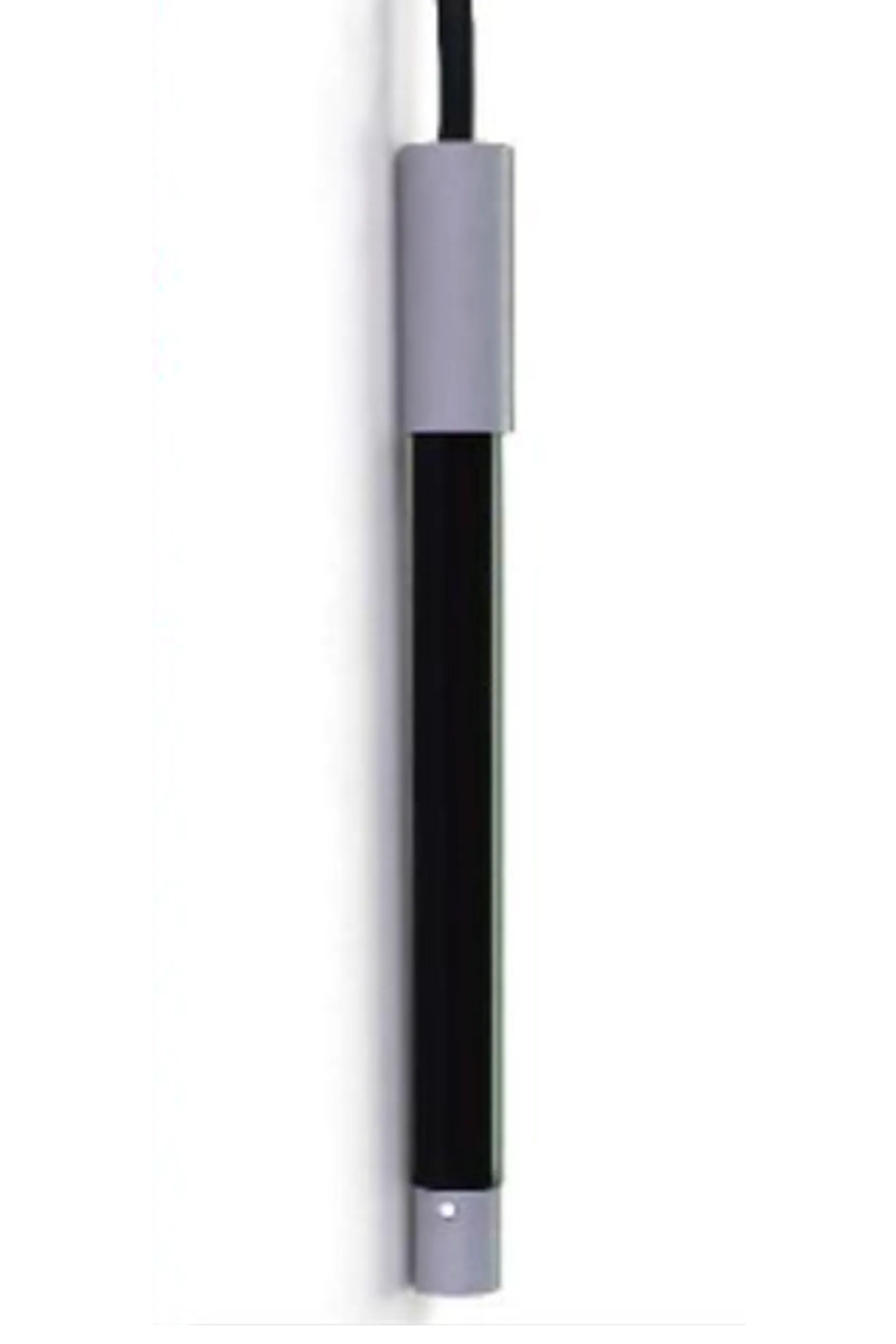
Ion Selective probes
NH4-100 Ammonium Ion-Selective Electrode
Ion Selective probes
NO2-100 Nitrite Ion-Selective Electrode
Ion Selective probes
NO3-100 Nitrate Ion-Selective Electrode
controllers
Omni Genesis IoT Controller - 4-Port, Solar, IP65
Frequently asked questions
Which RAS parameters can be measured continuously with probes in a research tank?
Can an ion-selective probe measure ammonia and nitrite at the low levels of a healthy RAS?
Does the NO3-100 report nitrate or nitrate-nitrogen?
How many probes can one Omni Genesis controller read?
How do I get the tank data into my own analysis?
Sources
The agronomy on this page comes from the publications below. Where a number is not on this list, we left it out.
- Recirculating Aquaculture Tank Production Systems: Management of Recirculating Systems (SRAC Publication No. 452, 1999 revision), M.P. Masser, J. Rakocy and T.M. Losordo, Southern Regional Aquaculture Center
- Water Quality and Its Relationship to Freshwater Recirculating Aquaculture Systems (Aquaculture Technical Brief, 2023), C. Aguilar and R. Cuhel, University of Wisconsin-Milwaukee School of Freshwater Sciences and Wisconsin Sea Grant
- Continuous nitrite and nitrate monitoring of recirculating aquaculture systems using a deployable ion chromatography-based analyser (Aquaculture International, 2023), M. Grau Butinyac, V. Arenas Montaño, J. Downes, N. Ruane, E. Ryder, F. Egan, T. Staessen, B. Paull and E. Murray
- Aquatic Life Criteria: Ammonia, U.S. Environmental Protection Agency
Other applications
Aquaculture
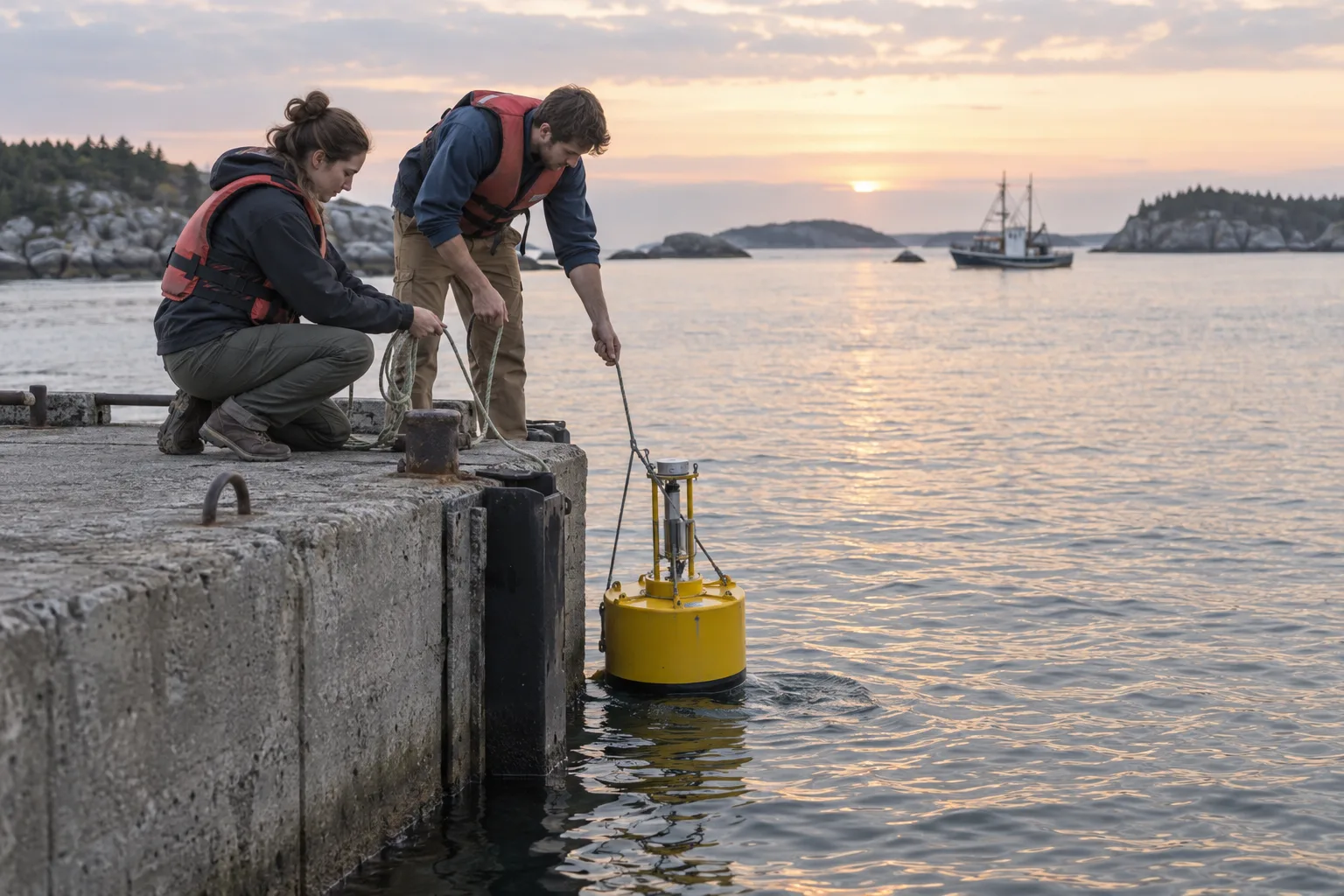
Seawater buoys
EC-120 seawater probe for student and research buoys: conductivity 0 to 200 mS/cm, salinity 0 to 100 ppt, temperature, RS485 Modbus RTU, 7 to 24 VDC, ≤0.5 W.
Orchards & plantations
Avocado orchards
Which sensors an avocado orchard needs and where to put them: tensiometers and Watermark probes at 20 and 45 cm, irrigation triggers by soil type, EC of the irrigation water, and the Agrinovo hardware that reads them remotely.
Orchards & plantations
Citrus orchards
Which sensors a citrus grove needs and where they go: two soil water sensors in the top 30 cm at the dripline, depletion and tension triggers, irrigation water EC against rootstock chloride limits, and the Agrinovo hardware.
Tell us about your plot
Soil type, crop, irrigation method and what you want to see from your phone. We reply with a sensor list and a layout, not a brochure.