Water application · Aquaculture
Seawater conductivity sensor for monitoring buoys: the EC-120 salinity and temperature probe
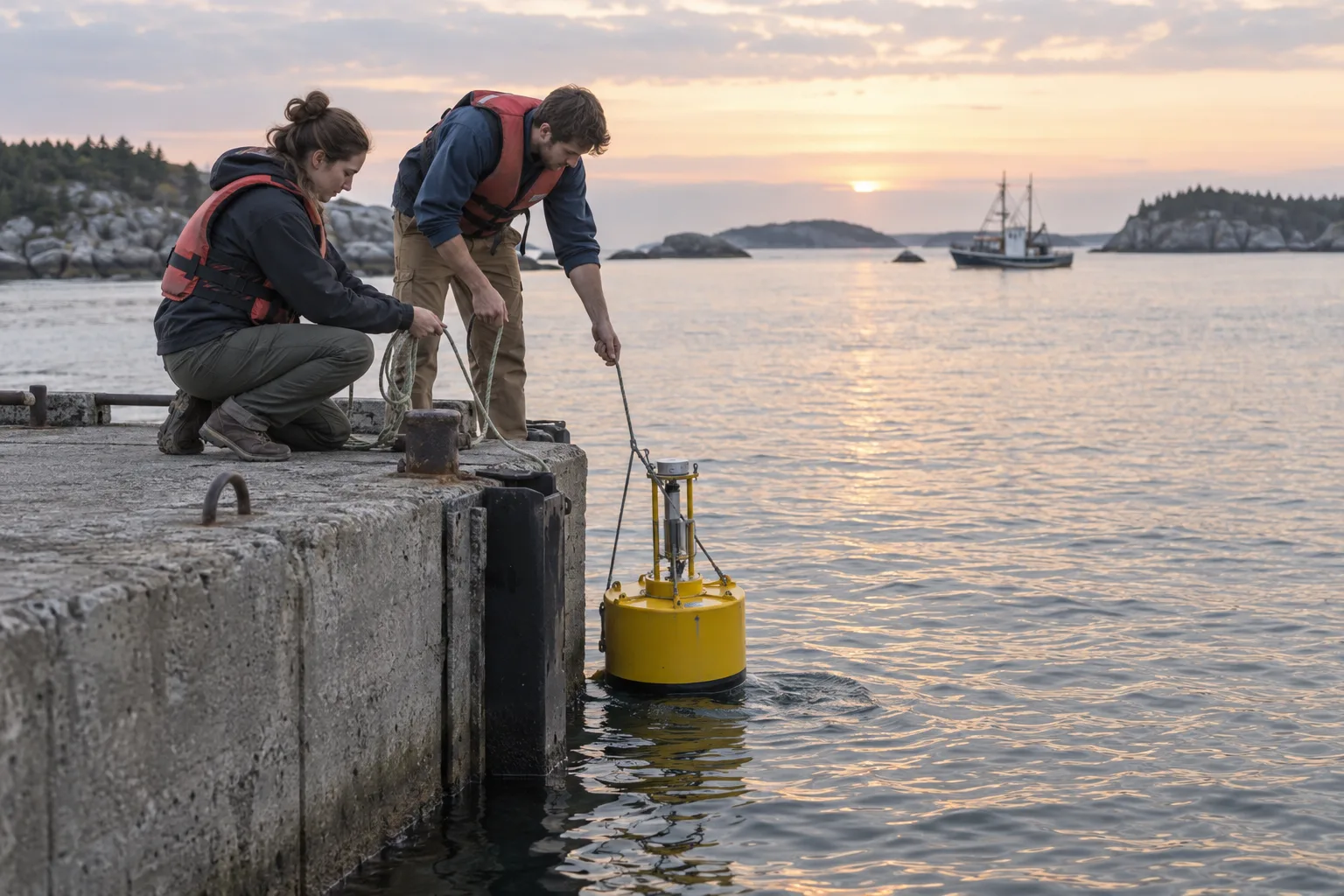
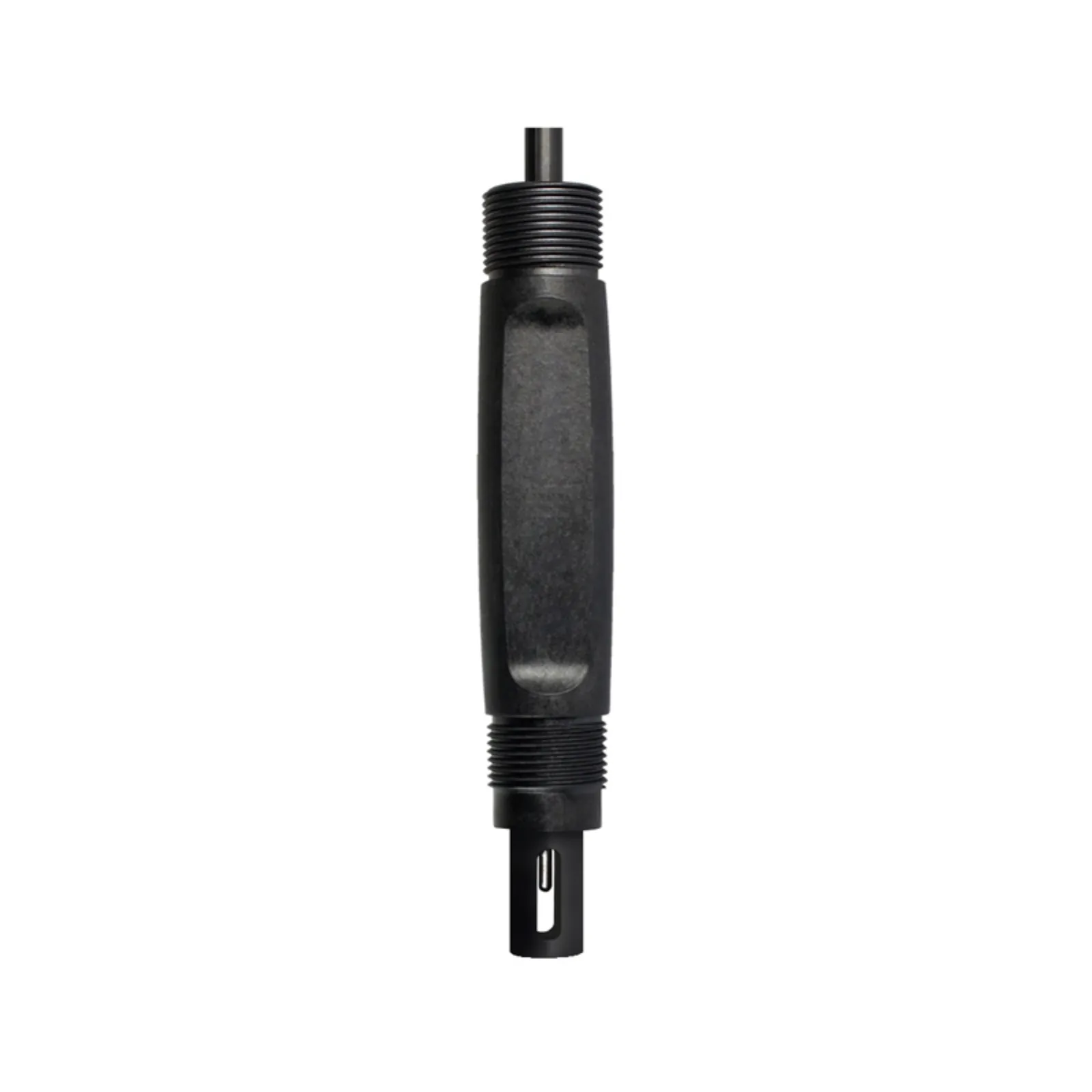
The Agrinovo EC-120 measures seawater conductivity from 0 to 200 mS/cm and salinity from 0 to 100 ppt with a graphite electrode in a PTFE body, and returns conductivity, resistivity, temperature, TDS and salinity in a single RS485 Modbus RTU read. It runs on 7 to 24 VDC at 0.5 W or less, so a student-built or research buoy can read it straight from a microcontroller with an RS485 transceiver.
At a glance
- Ranges
- Conductivity 0 to 200 mS/cm; salinity 0.00 to 100.00 ppt; operating temperature 0 to 60°C
- Accuracy
- ±1.5% FS, with automatic temperature compensation from 0 to 60°C
- Supply and power
- 7 to 24 VDC, ≤0.5 W; RS485 Modbus RTU and 4 to 20 mA outputs
- Seawater it will meet
- Open ocean 33 to 37 ppt; Red Sea and Persian Gulf around 40 ppt
A buoy project usually starts from the electronics: a microcontroller, a radio, a battery and a solar panel. The conductivity probe is the part that sits in the sea for months, and it decides whether the salinity column in the dataset can be trusted. The EC-120 is a digital salinity and conductivity sensor built for seawater and brine, with a graphite electrode in a PTFE body and a Modbus interface a student can read with a few lines of code.
What the EC-120 measures
One Modbus read returns five values: conductivity, resistivity, temperature, TDS and salinity. The specification table below is copied from the datasheet.
| Parameter | Specification |
|---|---|
| Conductivity range | 0 to 200,000 µS/cm (0 to 200 mS/cm) |
| Salinity range | 0.00 to 100.00 ppt |
| Accuracy | ±1.5% FS |
| Measured values | Conductivity, resistivity, temperature, TDS, salinity |
| Temperature compensation | 0 to 60°C (automatic) |
| Operating temperature | 0 to 60°C |
| Operating humidity | ≤85% RH |
| Electrode constant | K = 10.0 |
| Electrode material | Graphite |
| Body material | PTFE |
| Output | RS485 Modbus RTU and 4 to 20 mA |
| Supply voltage | 7 to 24 VDC (12 to 24 VDC when the 4 to 20 mA output is used) |
| Power consumption | ≤0.5 W |
The datasheet describes the graphite electrode as resistant to polarization and the PTFE body as resistant to strong acids, strong alkalis and seawater corrosion. Linearization is done digitally inside the probe, so the logger receives finished values.
Salinity in numbers
Practical salinity and PSS-78
Oceanographers report salinity on the Practical Salinity Scale of 1978. It defines salinity through a conductivity ratio, K15: the conductivity of the seawater sample divided by that of a potassium chloride solution with a mass fraction of 32.4356 × 10⁻³, both at 15°C and one standard atmosphere. A ratio of exactly 1 corresponds to a practical salinity of exactly 35. The scale is valid from 2 to 42 and, as Stewart’s oceanography text puts it, practical salinity is a dimensionless quantity with no units. The joint UNESCO, ICES, SCOR and IAPSO panel adopted it in 1980.
The EC-120 reports its salinity value in ppt, and its register holds the figure in ppm. A methods section should describe it that way: salinity in ppt from a temperature-compensated conductivity cell, with conductivity and temperature logged alongside. A study that must publish practical salinity checks the buoy against water samples run on a laboratory salinometer or a CTD cast at the same spot.
What the sea looks like
NOAA gives typical seawater as close to 35 ppt, ranging between 33 and 37 ppt, with the saltiest ocean water in the Red Sea and the Persian Gulf region at around 40 ppt, where evaporation is very high and freshwater inflow is small. Two open-access studies put numbers on those basins. A Frontiers in Marine Science paper models the Persian/Arabian Gulf at an annual mean basin-average salinity of about 40.5 g/kg, with the saltiest water, above 41 g/kg, in the southern Gulf. A study of twenty years of monthly CTD casts in the Gulf of Eilat (Aqaba) cites a span of 40.3 to 40.8 PSU there.
Every one of those waters sits inside the probe’s 0 to 100 ppt range, and so does the fresh end of a river mouth. That span is where the instrument earns its place. With accuracy specified as ±1.5% of full scale, it suits studies in which salinity moves by whole units: the tidal cycle in an estuary, a freshwater plume after rain, evaporation in a lagoon or a pond. Stewart notes that most of the ocean’s water lies between 34.60 and 34.80 parts per thousand, and the conductivity to salinity relationship of PSS-78 is good to about ±0.003.
Where it is used
Estuaries and river mouths
NOAA’s estuary tutorial describes the pattern a buoy will record: salinity varies through the tidal cycle, is highest toward the sea and lowest upstream where fresh water enters, drops in spring when snowmelt and rain raise river flow, and rises again in summer with evaporation. The reserve network it describes logs every 30 minutes at four stations in each site, and verifies the loggers with manual measurements. A student buoy can follow the same routine at one station.
Mariculture and coastal ponds
Sea cages, shellfish leases and seawater ponds see salinity shift with rain, runoff and evaporation. The datasheet lists seawater and marine aquaculture first among the EC-120’s applications, and temperature arrives in the same read.
Coastal water studies
In enclosed gulfs and lagoons the readings sit near 40 ppt and above. The 100 ppt ceiling leaves room for evaporation ponds and brine discharge zones, which the datasheet covers under seawater and brine.
Power, wiring and mounting on a buoy
The probe needs 7 to 24 VDC and draws 0.5 W or less. On a 12 V battery that is about 42 mA at most. The 4 to 20 mA output needs 12 to 24 VDC and is there for loggers with analog current inputs; a microcontroller build uses RS485.
There are five wires: red for V+, black for ground, yellow for RS485-A, green for RS485-B and white for the 4 to 20 mA output.
The datasheet’s placement notes translate to a buoy as follows. The electrode tip faces the flow and stays fully submerged in moving water, so the probe goes below the waterline on the hull or in a guarded opening that water passes through. The flow should be stable and free of air bubbles, which argues for a position below the splash zone. Dead spaces are avoided. The electrode surface is kept clean and is never touched with bare hands, oil or grease, never scraped and never disassembled. The signal cable is routed apart from power lines, and the factory cable is not extended or replaced, so the electronics housing has to sit within its reach.
Reading the probe from a microcontroller
The EC-120 needs no Agrinovo controller and no cloud account. It is a Modbus RTU slave at 9600 bps, 8 data bits, no parity, 1 stop bit, default address 0x01. Connect an RS485 transceiver to a UART on the microcontroller, power the probe from the battery rail, and read ten holding registers from 0x0000:
Request: 01 03 00 00 00 0A C5 CDEach value is a 32-bit IEEE-754 float held in two registers, low word first. Swap the two 16-bit words, then read the four bytes as a float. In the datasheet example the conductivity bytes 08 12 3E A2 become 3E A2 08 12, which is 0.316 mS/cm.
| Registers | Value | Unit |
|---|---|---|
| 0x0000 to 0x0001 | Conductivity | mS/cm |
| 0x0002 to 0x0003 | Resistivity | Ω·cm |
| 0x0004 to 0x0005 | Temperature | °C |
| 0x0006 to 0x0007 | TDS | ppm |
| 0x0008 to 0x0009 | Salinity | ppm (divide by 1000 for ppt) |
The slave address is set by writing register 0x0014, and address 0xFF finds a probe whose address is unknown when it is alone on the bus. The complete frames with checksums are on the EC-120 developer page.
EC-120 or EC-110
The EC-110 shares the K = 10.0 graphite cell, the PTFE housing, the 0 to 200 mS/cm and 0 to 100 ppt ranges and the ±1.5% FS accuracy. Its registers are 16-bit integers with fixed scaling: conductivity, temperature, TDS and salinity in four registers. It also has a slope register at 0x0004 that trims the reading against a known reference standard, stored as the slope times 1000 with a default of 1000. Choose it when the protocol calls for adjusting the probe against a standard solution from the logger, or when integer registers suit the firmware better. It runs on 12 to 24 VDC and outputs RS485 only.
Choose the EC-120 for a supply that starts at 7 VDC, float values in engineering units, the resistivity value and the 4 to 20 mA output.
A shore station with the Genesis controller
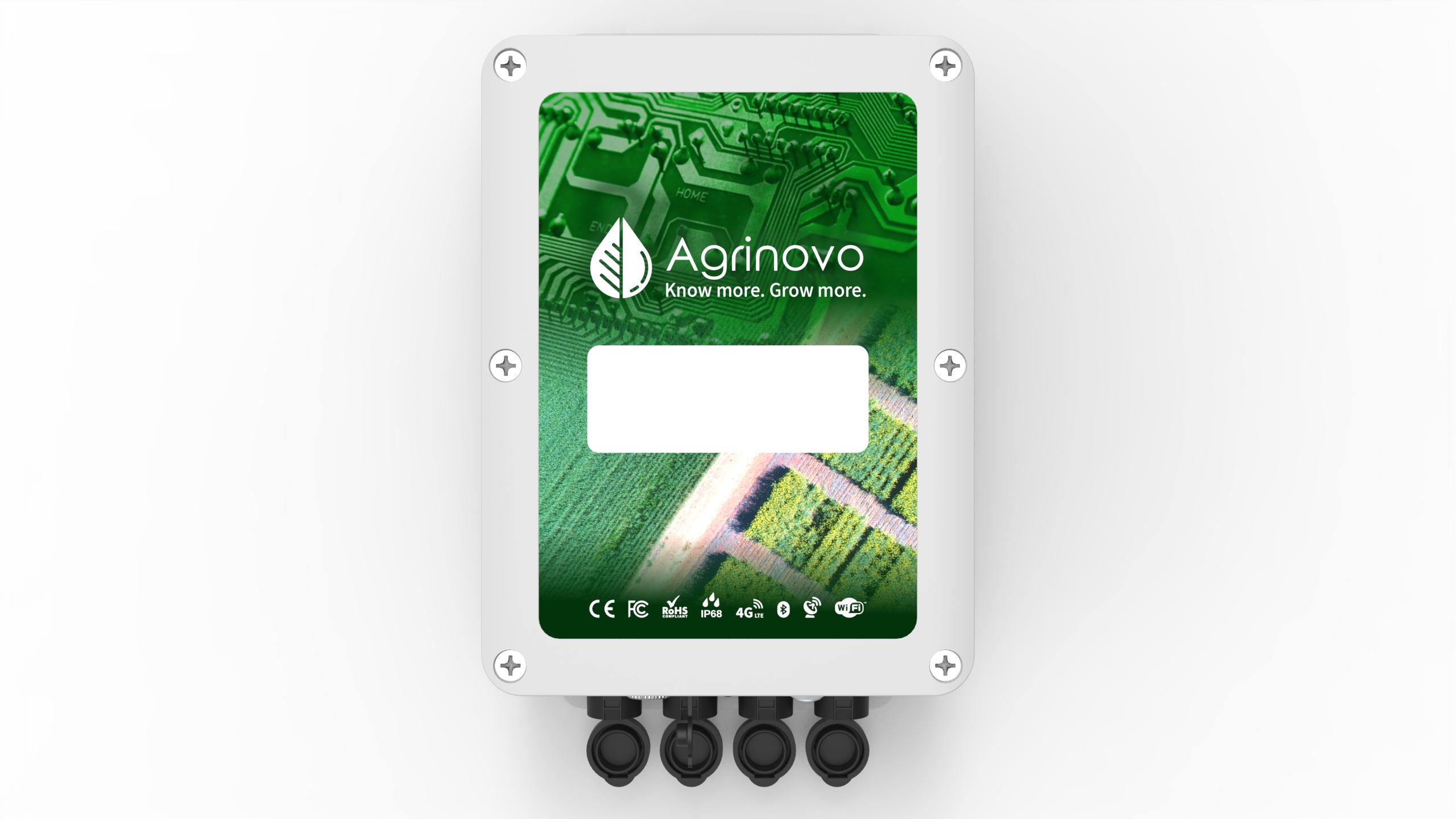
Where the measuring point is a pier, a pump intake or a pond bank, the Omni Genesis controller replaces the custom electronics. It reads RS485 Modbus RTU probes on its four ports, switches sensor power on for each reading cycle, reports over 4G-LTE and charges its batteries from a solar input. Research groups ordering through a purchasing office will find quotation and purchase order details on the research purchasing page.
Agrinovo hardware for this application
Every item links to its product page with the datasheet. Specifications on those pages come from the manufacturer documents, not from this article.

Frequently asked questions
What are the conductivity, salinity and temperature ranges of the EC-120?
Is temperature a separate value I can read from the EC-120?
Can I use the EC-120 with an Arduino, ESP32 or other microcontroller without an Agrinovo controller or cloud?
What supply voltage and power does the EC-120 need on a buoy?
What is the EC-120 made of, and how is it mounted in seawater?
When does the EC-110 fit better than the EC-120?
Sources
The agronomy on this page comes from the publications below. Where a number is not on this list, we left it out.
- Practical Salinity Scale 1978 (PSS-78), Salinometry
- Introduction to Physical Oceanography, section 6.1: Definition of Salinity, Robert H. Stewart, Texas A&M University; Geosciences LibreTexts
- Sea Water, National Oceanic and Atmospheric Administration
- Multiple Salinity Equilibria and Resilience of Persian/Arabian Gulf Basin Salinity to Brine Discharge (Frontiers in Marine Science, 2020), Hamed D. Ibrahim, Pengfei Xue, Elfatih A. B. Eltahir; Frontiers in Marine Science
- Depth-dependent warming of the Gulf of Eilat (Aqaba), Sounav Sengupta, Hezi Gildor, Yosef Ashkenazy; arXiv
- Monitoring Estuaries: Estuaries Tutorial, National Oceanic and Atmospheric Administration, National Ocean Service
Other applications
Aquaculture
RAS research tanks
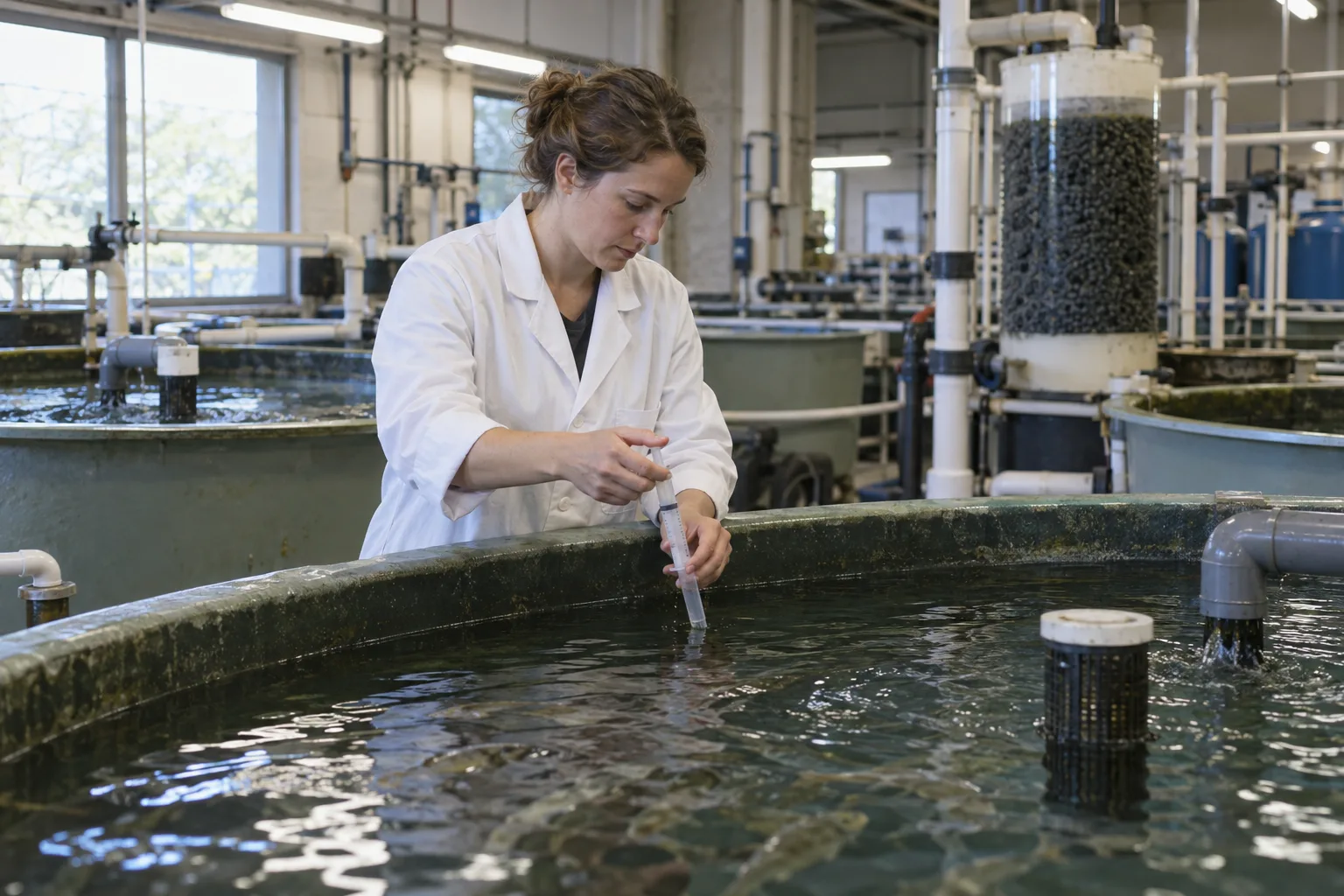
Continuous monitoring for small RAS research tanks: dissolved oxygen, pH, temperature, ammonium, nitrite and nitrate probes, working ranges and kit checks.

Orchards & plantations
Avocado orchards
Which sensors an avocado orchard needs and where to put them: tensiometers and Watermark probes at 20 and 45 cm, irrigation triggers by soil type, EC of the irrigation water, and the Agrinovo hardware that reads them remotely.

Orchards & plantations
Citrus orchards
Which sensors a citrus grove needs and where they go: two soil water sensors in the top 30 cm at the dripline, depletion and tension triggers, irrigation water EC against rootstock chloride limits, and the Agrinovo hardware.
Tell us about your plot
Soil type, crop, irrigation method and what you want to see from your phone. We reply with a sensor list and a layout, not a brochure.