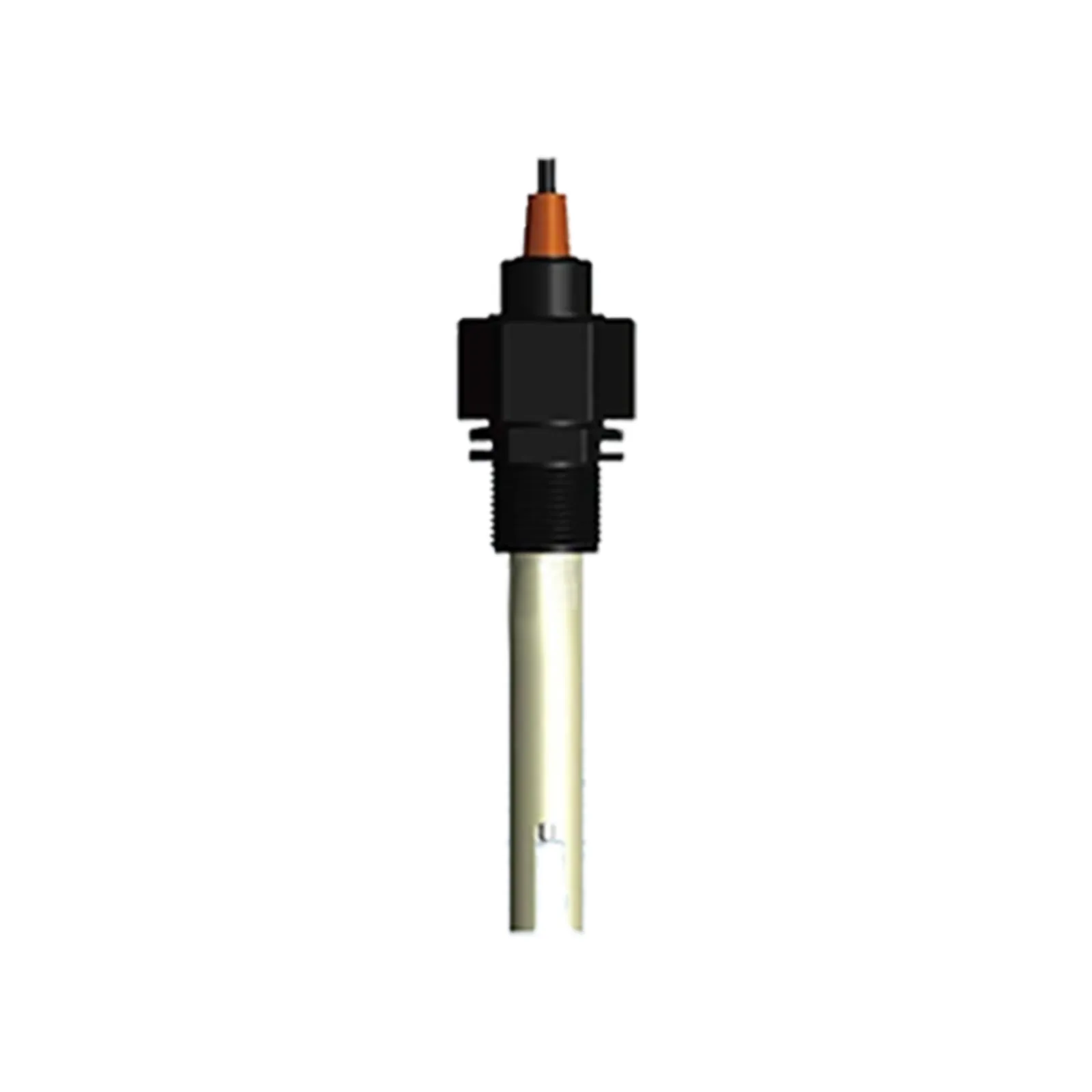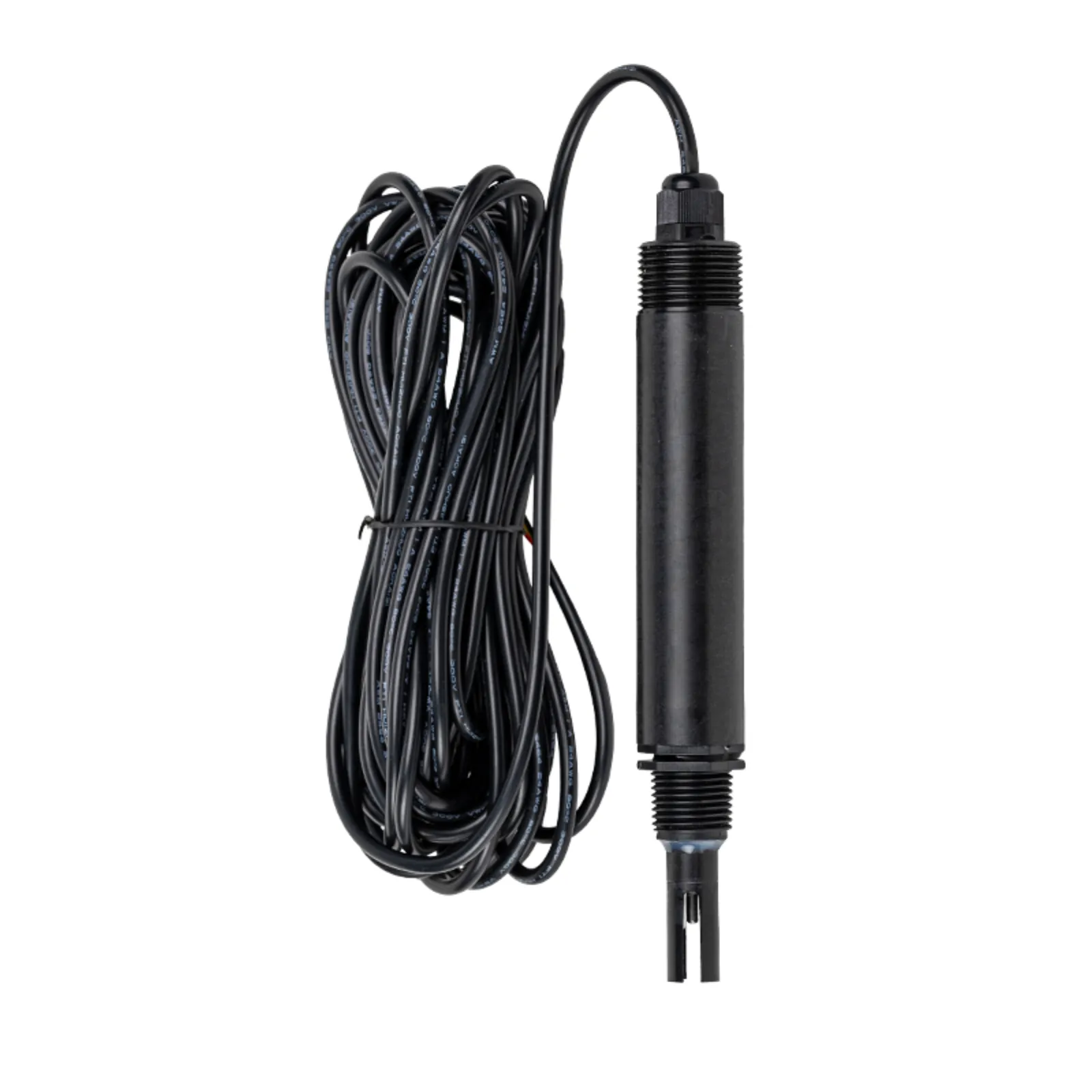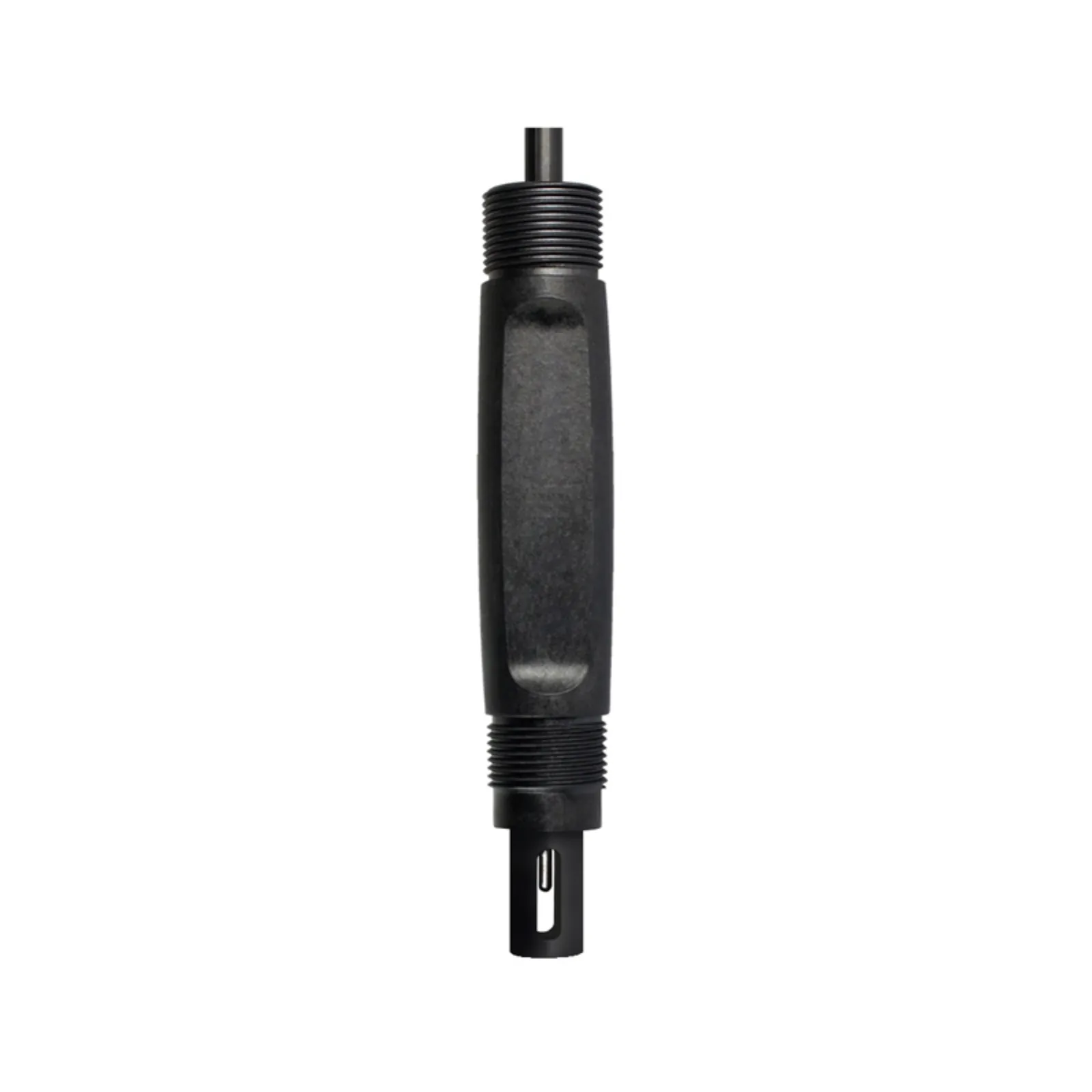
EC-120 High Conductivity Digital Probe
Digital salinity and conductivity probe with K=10.0 graphite electrode and PTFE body. 0 to 200 mS/cm, 0 to 100 ppt, TDS and temperature on RS485 Modbus.
Contact for pricing
Product Highlights
View all in Specifications tabOverview
The EC-120 is a digital salinity and conductivity probe for seawater, brine, and acid or alkali solutions. A graphite electrode with a K=10.0 cell constant measures conductivity from 0 to 200 mS/cm and salinity from 0 to 100 ppt, and the PTFE body resists strong acids, strong alkalis, and seawater corrosion. A single RS485 Modbus read returns five values: conductivity, resistivity, temperature, TDS, and salinity.
Key Features
- Five Values in One Read: Conductivity, resistivity, temperature, TDS, and salinity over one RS485 Modbus link
- High-Range Conductivity: 0 to 200 mS/cm (200,000 µS/cm)
- Salinity Readout: 0 to 100 ppt reported by the probe, no manual conversion from EC
- K=10.0 Graphite Electrode: Resists corrosion and polarization in water with a high salt content
- PTFE Body: Resistant to strong acid, strong alkali, and seawater corrosion
- Automatic Temperature Compensation: Applied across 0 to 60°C
- Floating-Point Output: Every value arrives as a 32-bit float in engineering units, with no scaling factors to apply
- 4-20mA Output: An analog current output on a fifth (white) wire, alongside RS485
- Low Power: ≤0.5 W on a 7-24V DC supply
Applications
- Seawater and marine aquaculture
- Brine and high-salinity water
- Wastewater treatment
- Chemical and process water
- Food processing
- Environmental monitoring
Technical Specifications
The EC-120 measures conductivity from 0 to 200,000 µS/cm and salinity from 0 to 100 ppt with ±1.5% F.S. accuracy. Temperature compensation is automatic across 0 to 60°C, and digital linearization is applied inside the probe.
Power consumption stays at or below 0.5 W on a 7-24V DC supply.
Connectivity and Integration
The EC-120 communicates over RS485 Modbus-RTU at 9600 bps, 8N1, with default address 0x01. Reading ten registers from address 0x0000 returns the full measurement set in one transaction. Each value is a 32-bit IEEE-754 float held in two registers, low word first:
- Register 0x0000: Conductivity in mS/cm
- Register 0x0002: Resistivity in Ω·cm
- Register 0x0004: Temperature in °C
- Register 0x0006: TDS in ppm
- Register 0x0008: Salinity in ppm (divide by 1000 for ppt)
The slave address is changed by writing register 0x0014. Broadcast discovery uses address 0xFF with one device on the bus. The datasheet lists the full frames with their checksums.
Why a K=10.0 Cell
The cell constant sets the part of the conductivity scale where a probe works. A K=10.0 cell is built for the high end: seawater, brine, and concentrated process streams. For freshwater, irrigation water, and nutrient solutions, the EC-100 is the better fit.
Installation Notes
Mount the probe fully submerged in moving water with the electrode tip facing the flow. Choose a point with stable flow and no air bubbles, and avoid dead spaces; a bypass loop is a suitable mounting. Keep the electrode surface clean and do not touch it with bare hands, oil, or grease. Do not disassemble or scrape the electrode. Route the signal cable separately from power lines, and do not extend or replace the factory cable.
Part of our IoT Aquaculture Monitoring System
See how our aquaculture sensors work together in a complete real-time water quality monitoring system for fish farming.
Related Products
Other solutions in the EC Probes category