Water application · Water treatment
Nitrate sensor for groundwater monitoring: the NO3-100 probe in wells, streams and agricultural runoff
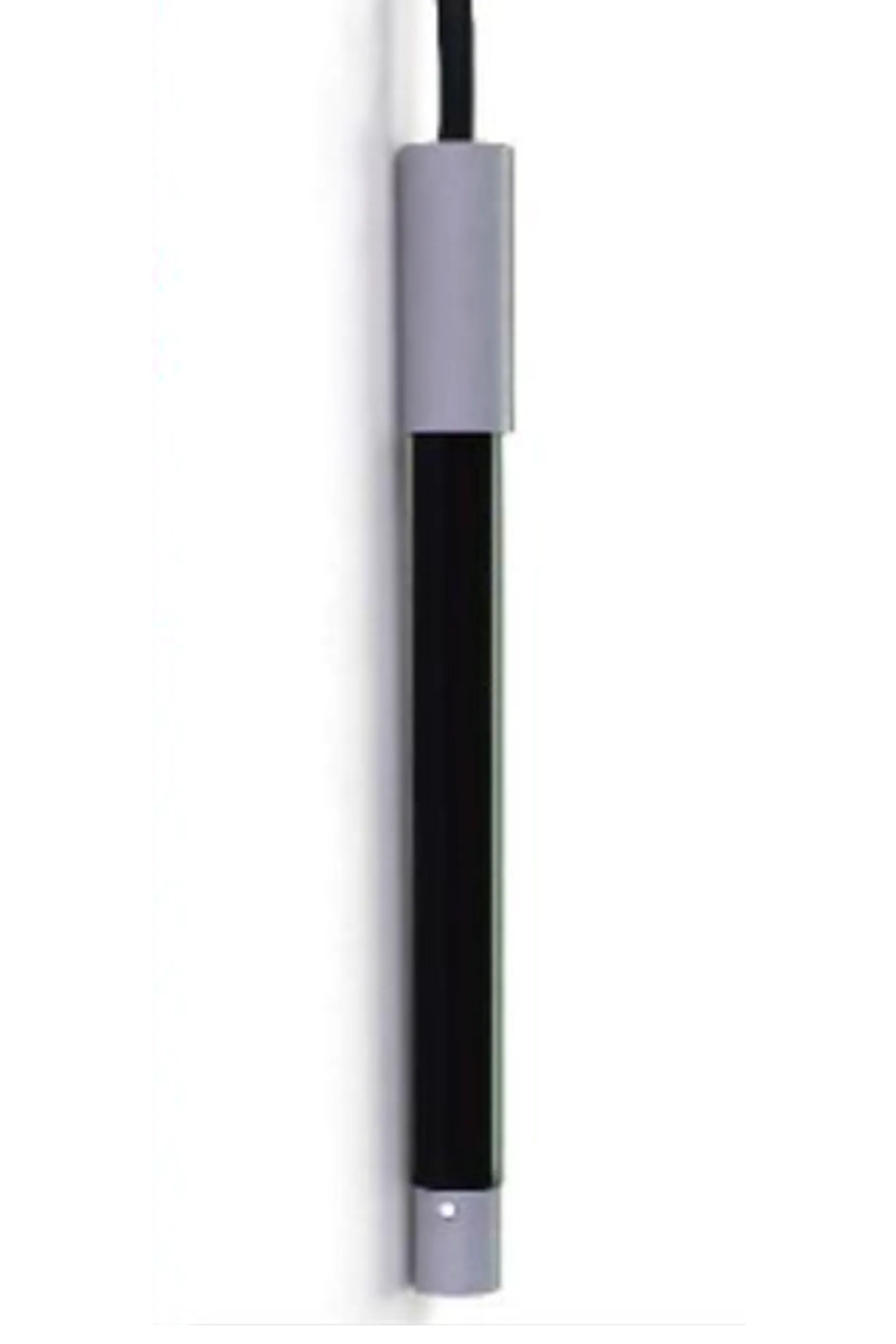
The Agrinovo NO3-100 is an ion-selective nitrate probe that reports the nitrate ion (NO3-) in mg/L over RS485 Modbus RTU, with a recommended working range of 30 mg/L and above. That range covers the WHO guideline of 50 mg/L as nitrate and the US EPA limit of 10 mg/L as nitrogen (44.3 mg/L as nitrate), so it suits continuous records in wells, drains and streams where a study expects nitrate near or above those limits and chloride stays below ten times the nitrate.
At a glance
- Reported value
- Nitrate ion (NO3-) in mg/L; divide by 4.43 for nitrate-nitrogen (NO3-N)
- Recommended working range
- 30 mg/L nitrate and above, within a 0 to 1000 mg/L measurement range
- Chloride condition
- Chloride below 10 times the nitrate concentration (selectivity coefficient 0.0056)
- Calibration
- 2 to 5 points; three points at 10, 100 and 1000 ppm recommended
Nitrate studies on aquifers and catchments usually rest on grab samples sent to a laboratory. A bottle gives an accurate number for the day it was filled. A probe left on the water adds the record between sampling rounds: the pulse after a storm, the rise after fertiliser goes on, the slow trend in a monitoring well. The NO3-100 is the Agrinovo probe for that record. It is an ion-selective electrode with its own electronics in a PPS body, it answers over RS485 Modbus RTU, and it is read either by a microcontroller on the bench or by a field controller on a pole.
What the NO3-100 reports
Each reading returns three values: the nitrate concentration, the raw electrode signal in mV and the water temperature.
Nitrate ion in mg/L
The concentration is the nitrate ion (NO3-) in mg/L. Many regulations and most hydrology papers use nitrate-nitrogen (NO3-N) instead, which counts only the nitrogen atom. The two differ by a factor of 4.43: divide the probe reading by 4.43 to get NO3-N. The WHO fact sheet gives the same relation in the other direction, 1 mg/L as nitrate equals 0.226 mg/L as nitrate-nitrogen. Put the unit in the column header of every data file, because a nitrate series labelled only “mg/L” cannot be compared with anything.
| Benchmark | As published | As the probe reports it |
|---|---|---|
| WHO drinking-water guideline value | 50 mg/L as nitrate ion | 50 mg/L |
| US EPA maximum contaminant level | 10 mg/L measured as nitrogen | 44.3 mg/L |
| Lower end of the recommended working range | 30 mg/L nitrate | 30 mg/L (6.8 mg/L NO3-N) |
Specifications from the datasheet
| Parameter | NO3-100 |
|---|---|
| Ion range | 0 to 1000 mg/L (customizable) |
| Ion resolution | 0.01 mg/L |
| Ion accuracy | ±5% F.S. |
| Recommended working range | 30 mg/L and above |
| Temperature range | -10.0 to 110.0 °C |
| Temperature accuracy | ±0.5 °C |
| Temperature compensation | Automatic / manual (NTC10K) |
| Output | RS485 Modbus RTU |
| Supply voltage | 12 to 24 V DC, 0.5 W or less |
| Housing and mounting | PPS, 3/4 inch front thread |
The working range against typical groundwater
The datasheet states accuracy as ±5% of full scale, with full scale at 1000 mg/L, and recommends using the sensor at nitrate concentrations of 30 mg/L and above. Both drinking water benchmarks in the table lie above that point, so the probe covers the band where an exceedance question is decided and everything beyond it up to 1000 mg/L: wells under intensive cropping, drainage outlets, runoff collectors and streams that receive them.
Where a given well falls depends on land use. The WHO fact sheet notes that nitrate in well water is often higher than in surface water and that concentrations often approach or exceed 50 mg/L where there are significant sources of contamination. The USGS national assessment found the standard of 10 mg/L as nitrogen exceeded in more than 20 percent of shallow domestic wells in agricultural areas. In a set of 495 wells that it resampled about ten years apart, the median rose from 3.2 to 3.4 mg/L as nitrogen (about 15 mg/L as nitrate) while the share of wells above the standard grew from 16 to 21 percent. One agricultural study area therefore holds wells on both sides of 30 mg/L.
The practical rule is to choose probe sites from existing laboratory results. Install the NO3-100 at the wells and outlets where earlier samples show 30 mg/L nitrate or more, and keep the laboratory round for the whole network.
Streams and drains behave differently from wells. According to the WHO, surface water nitrate can change rapidly through runoff of fertiliser, uptake by phytoplankton and bacterial denitrification, while groundwater concentrations generally change slowly. The USGS describes tile drains that move water off farmland quickly and carry nitrogen into streams. A drain outlet deserves a short logging interval during storms. A monitoring well can be read a few times a day.
Check the water chemistry before choosing the probe
An ion-selective membrane responds mainly to its target ion and, to a smaller degree, to others. The selectivity coefficient expresses how much smaller, and a value far below 1 means the electrode strongly prefers the target.
Chloride. The datasheet gives a selectivity coefficient of 0.0056 for chloride and one condition of use: keep the chloride concentration below 10 times the nitrate concentration. Above that ratio the measurement error is severe. A well at 45 mg/L nitrate therefore needs chloride below 450 mg/L. Harvey’s analytical chemistry text lists 0.006 for a nitrate membrane electrode against chloride, the same order as the datasheet figure. Brackish wells, coastal aquifers and effluent-fed streams are the places to check first.
Other ions. Perchlorate, iodide, cyanide, tetrafluoroborate and nitrite also interfere. The WHO notes that nitrite is normally present at less than a few milligrams per litre and is significant mainly in reducing environments, so oxygen-poor wells are where nitrite belongs on the analysis request.
How to check. Before ordering, send one grab sample from every candidate site for chloride, nitrite and nitrate. In a laboratory, interfering ions are removed with reagents: EPA Method 9210A uses silver sulfate for chloride, bromide and iodide, sulfamic acid for nitrite, and adjustment to pH 4 with boric acid for bicarbonate, carbonate, cyanide and phosphate. The NO3-100 datasheet says the same about conditioning solutions in laboratory tests and adds that they are impractical for a probe measuring continuously. The site decision is therefore made on the water composition, and the sites inside the chloride ratio get the probe.
Calibration points
The probe calculates a concentration once it holds at least two calibration points, and it stores up to five. The standards it recognises are 0.1, 1, 10, 100 and 1000 ppm. The datasheet recommends a three-point calibration at 10, 100 and 1000 ppm, which brackets the working range.
- Write 1 to the ion valence register (0x0023). Nitrate is monovalent.
- Place the electrode in the standard.
- Write the code for that standard to register 0x0043.
- Read 0x0043 until it returns 0 (accepted). A value of 3 means the signal did not settle within 180 seconds, and 4 means the electrode efficiency is outside its limits.
Check the label on each bottle. A standard sold as 100 mg/L NO3-N holds 443 mg/L of nitrate ion, and the probe works in nitrate ion. EPA Method 9210A, for example, prepares its calibration series in NO3-N. Recalibrate after cleaning the electrode and after extended use.
Temperature compensation
Electrode potential changes with temperature, which is why EPA Method 9210A requires standards and samples to be within 1 °C of each other. The NO3-100 has a built-in NTC10K thermistor and compensates automatically by default, with an offset register for trimming the temperature reading. Manual mode replaces the measured temperature with a fixed setpoint. In the field, leave compensation on automatic and bring the standards close to the water temperature before calibrating, for instance by standing the bottles in a bucket of the pumped water.
Reading the probe with an Arduino, ESP32 or your own logger
The NO3-100 is a Modbus RTU slave, so any board with a UART and an RS485 transceiver can poll it.
- Power: red to 12 to 24 V DC, black to ground. Consumption is 0.5 W or less and the supply is isolated to 2500 Vrms.
- Data: yellow is RS485-A, white is RS485-B.
- Serial settings: 9600 bps, 8 data bits, no parity, 1 stop bit, address 1 by default. Addresses 1 to 247 and baud rates from 1200 to 19200 are configurable, so several probes can share one bus.
- Request: read 10 registers from 0x0000. Function 0x04 returns scaled integers, function 0x03 returns 32-bit floats. The integer request frame is
01 04 00 00 00 0A 70 0D.
Nitrate sits at 0x0000, the electrode signal at 0x0002 and temperature at 0x0008. Logging the mV signal next to the concentration lets you spot a drifting electrode later. The full register map, float byte order and worked frames are on the NO3-100 developer page, and the protocol guide covers RS485 wiring.
Logging with the Omni Genesis controller
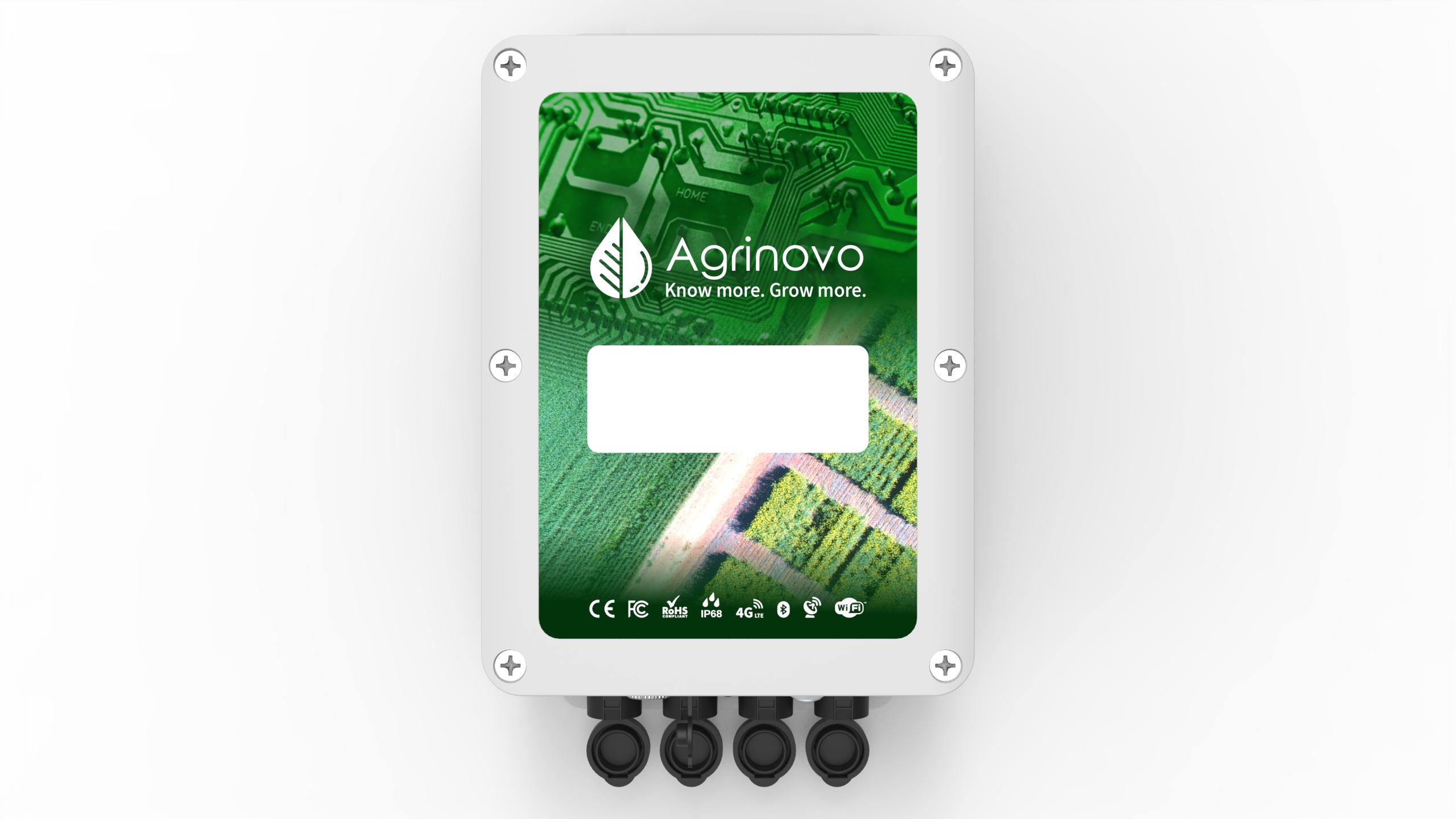
Groups that prefer a ready station use the Omni Genesis controller. Each of its four ports is assigned to RS485 Modbus RTU from the cloud, and the port supplies switched 12 V sensor power for each reading cycle. The controller runs on two rechargeable 18650 cells with a solar input, stores data locally and syncs it to the cloud over 4G-LTE or Wi-Fi from an IP65 enclosure. The sampling interval is changed from the dashboard. Because RS485 probes share a bus, the same controller can carry the NH4-100 ammonium probe and the NO2-100 nitrite probe for a nitrogen series at one point. Data leaves the platform through the API, and the purchasing page in the research section covers quotes, purchase orders and how to cite the instrument.
Installing at a well, a stream or a drain
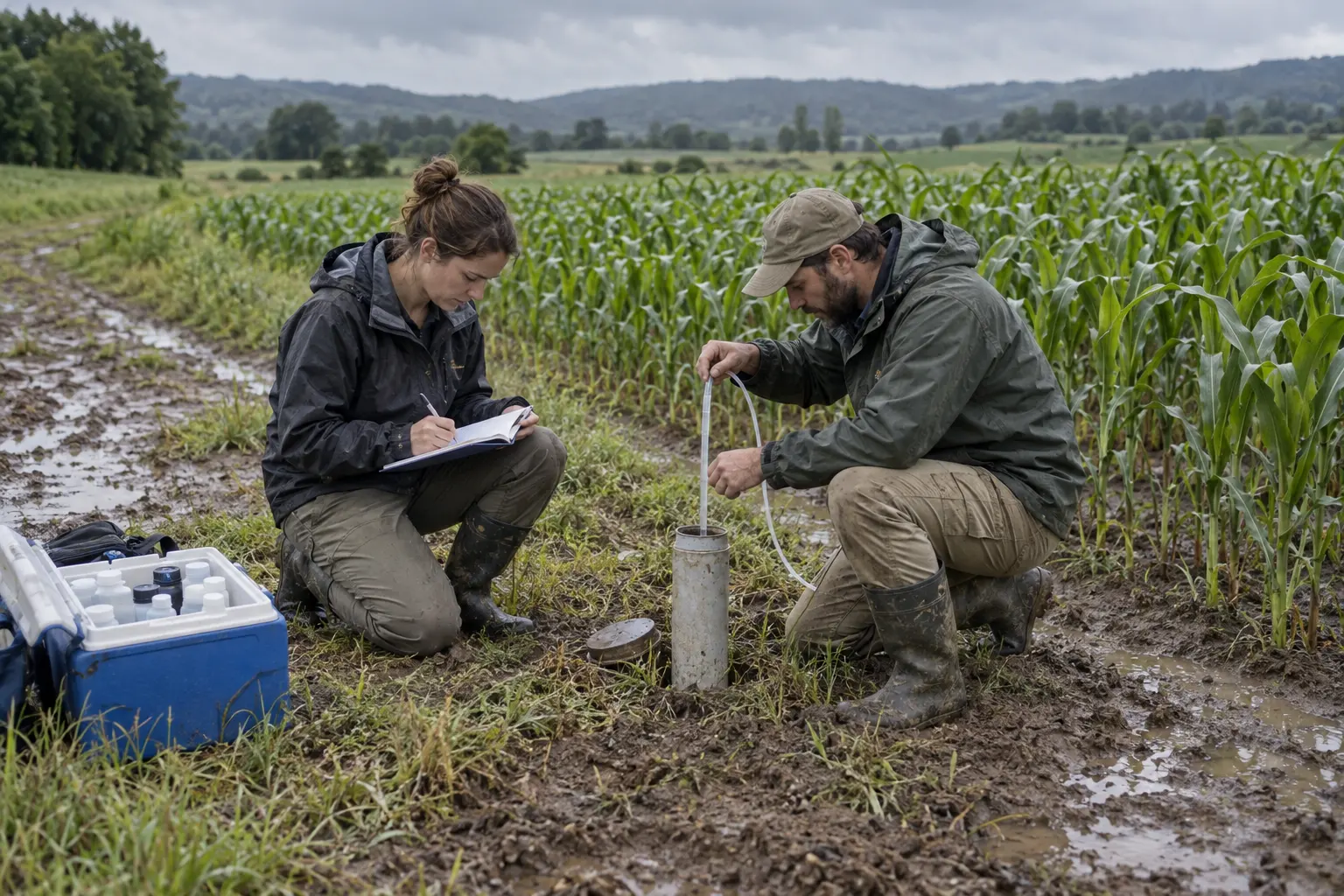
The probe mounts by its 3/4 inch thread. At a pumped well, thread it into a tee or flow cell on the sample line so the sensing tip stays fully submerged. At a stream or drain outlet, fix it where water covers the tip at low flow. Keep air bubbles off the electrode surface. Clean the electrode periodically, recalibrate afterwards, and store the probe in clean water between campaigns.
Keep the laboratory samples going after the probe is installed. Pair each sample with the probe reading logged at the same minute and report both. EPA Method 9210A preserves nitrate samples with boric acid, stores them at 6 °C or below and analyses them within 48 hours, because bacteria consume nitrate when organic matter is present.
Agrinovo hardware for this application
Every item links to its product page with the datasheet. Specifications on those pages come from the manufacturer documents, not from this article.
Frequently asked questions
Does the NO3-100 report nitrate or nitrate-nitrogen?
Can the NO3-100 follow nitrate around the drinking water limits?
How does chloride affect a nitrate ion-selective electrode?
How is the NO3-100 calibrated?
Can I read the NO3-100 with an Arduino, an ESP32 or my own data logger?
Can Agrinovo log the probe without my own logger?
Sources
The agronomy on this page comes from the publications below. Where a number is not on this list, we left it out.
- Guidelines for Drinking-water Quality, chemical fact sheet: Nitrate and nitrite, World Health Organization
- National Primary Drinking Water Regulations, United States Environmental Protection Agency
- The quality of our nation's waters: Nutrients in the nation's streams and groundwater, 1992 to 2004 (Circular 1350), N.M. Dubrovsky and others, U.S. Geological Survey
- SW-846 Test Method 9210A: Potentiometric Determination of Nitrate in Aqueous Samples with an Ion-Selective Electrode, United States Environmental Protection Agency
- Nitrogen and Water, U.S. Geological Survey, Water Science School
- Analytical Chemistry 2.1, section 11.2: Potentiometric Methods, David Harvey, DePauw University, via LibreTexts
Other applications
Water treatment
Streams and lakes
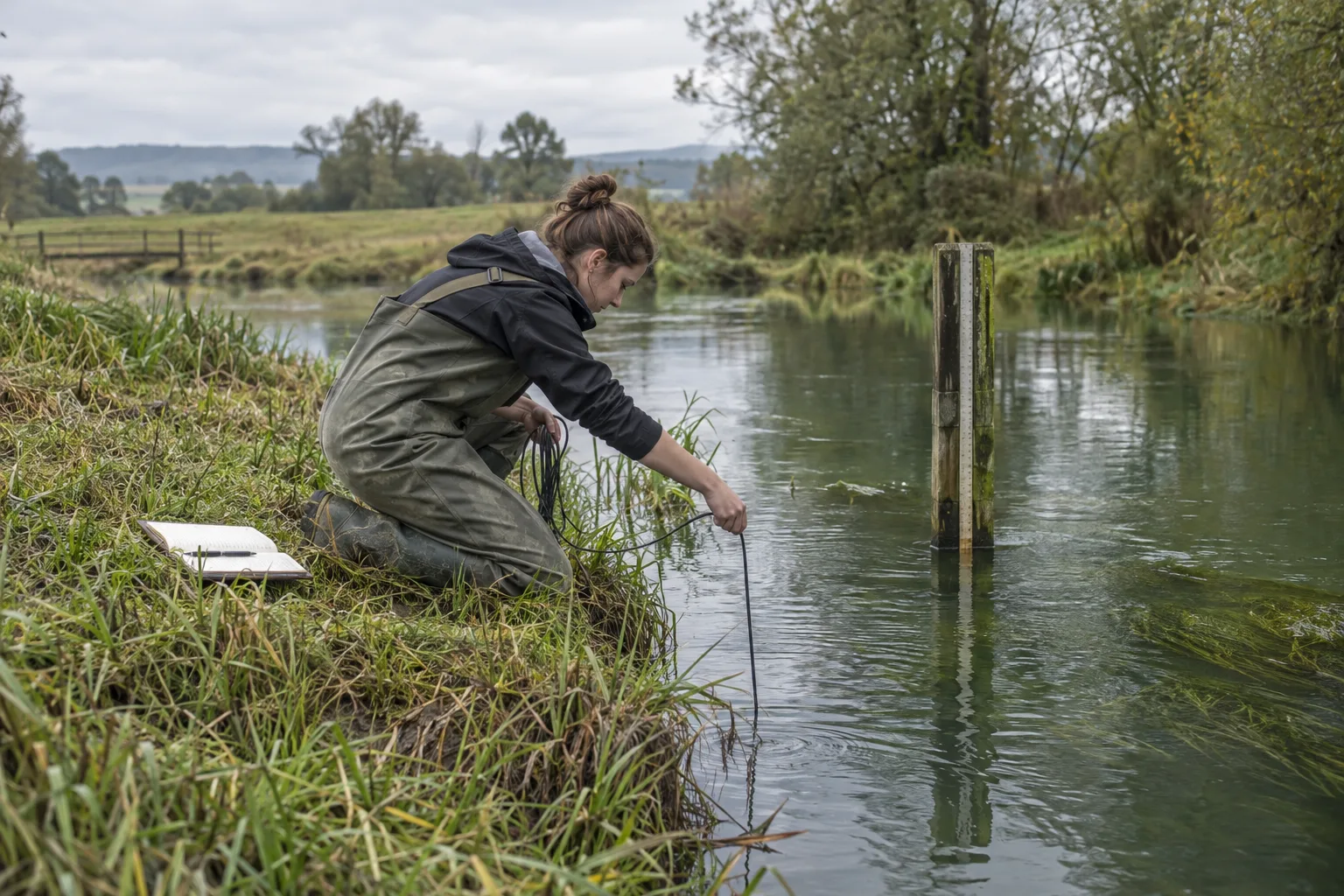
The Agrinovo DO-130 dissolved oxygen probe for long deployments in streams, lakes and ponds: brush interval, compensation, Modbus output and saturation math.
Orchards & plantations
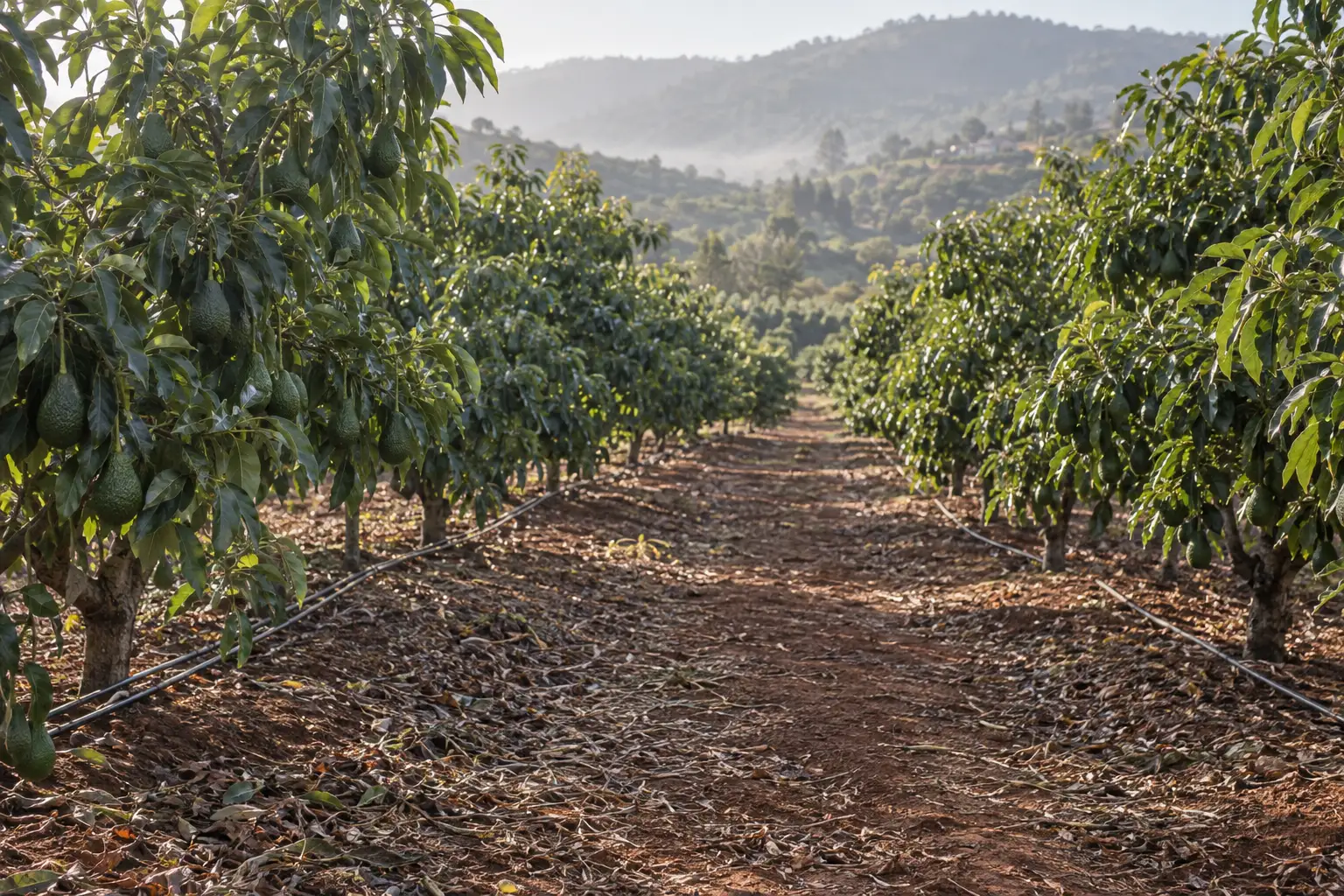
Avocado orchards
Which sensors an avocado orchard needs and where to put them: tensiometers and Watermark probes at 20 and 45 cm, irrigation triggers by soil type, EC of the irrigation water, and the Agrinovo hardware that reads them remotely.

Orchards & plantations
Citrus orchards
Which sensors a citrus grove needs and where they go: two soil water sensors in the top 30 cm at the dripline, depletion and tension triggers, irrigation water EC against rootstock chloride limits, and the Agrinovo hardware.
Tell us about your plot
Soil type, crop, irrigation method and what you want to see from your phone. We reply with a sensor list and a layout, not a brochure.