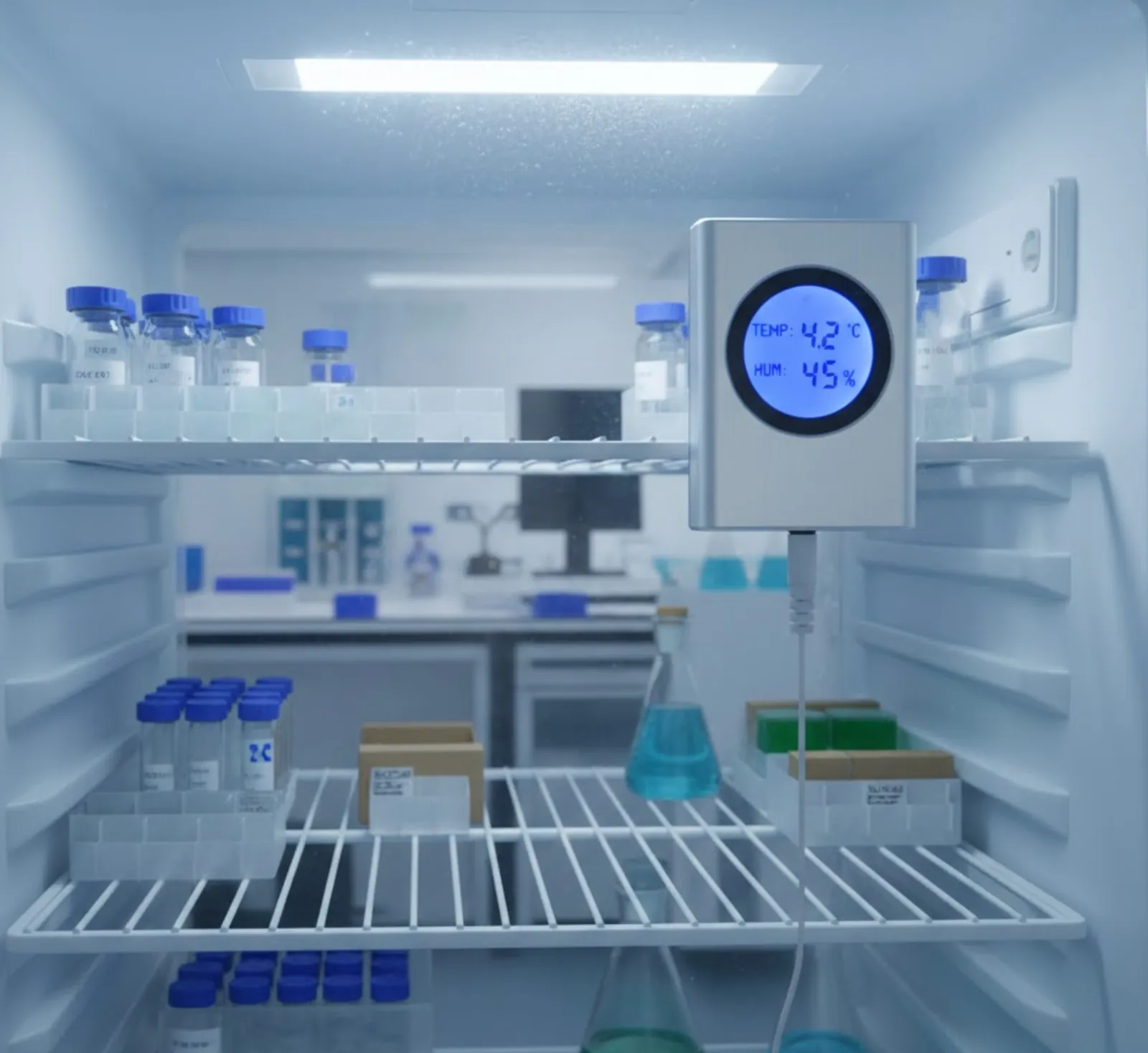
If you run a business that depends on stable temperature, whether it is a cold storage warehouse, a refrigerated truck, a commercial greenhouse, or a food production line, you already know that a deviation of a few degrees can cause serious losses. Rejected goods, medications that lost their potency, a damaged crop: all of these are direct results of a temperature control failure.
The market offers dozens of temperature monitoring solutions today, from simple data loggers to complex enterprise systems. The differences between them are not always obvious from the sales pages, and business owners often discover that the system they bought does not fit their needs only after they have already paid for it.
Across industries (agriculture, food, pharmaceutical, and logistics), the same mistakes repeat again and again. A temperature monitoring system chosen well saves money, prevents losses, and delivers peace of mind. A system chosen in a hurry becomes an ongoing headache.
This guide walks through seven core criteria to examine before you make a purchasing decision. Whether you are buying your first system or replacing an existing one, these criteria will help you choose a temperature monitoring system that serves you for years ahead.
Criterion 1: Accuracy and Reliability
Measurement accuracy is the foundation of every temperature monitoring system. A system that displays wrong values is worse than no system at all, because it gives you a false sense of security.
Accuracy levels by industry
Not every business needs the same accuracy. Here are the accepted rules:
- Food industry: ±0.5°C is sufficient in most cases. The main requirement is detecting a deviation from a defined temperature range, not measuring the last tenth of a degree.
- Pharmaceutical and laboratories: ±0.3°C or better. Many medications are sensitive to small temperature changes, and strict regulation requires precise documentation.
- Research labs and biotech processes: ±0.1°C and below. Here every tenth of a degree matters.
Sensor quality: the difference you cannot see from outside
Low-grade sensors tend to drift over time. A sensor that started out accurate can wander noticeably after a year of continuous use. Quality digital sensors like the DS18B20 hold stable accuracy over time because digital electronics are less sensitive to environmental factors. For combined temperature and humidity monitoring, a sensor like the THS-100 is specified for long-term stability of 0.1°C per year or better, which is exactly the property you want in an installation that runs unattended for years.
Calibration: do not skip it
Every sensor needs periodic calibration. Before you buy a system, check:
- How often is calibration required?
- Can you calibrate on site, or do the sensors have to be shipped to a lab?
- What does the calibration process involve?
- Does the system remind you when calibration is due?
A sensor that is calibrated properly and checked regularly is worth more than a premium sensor that everyone ignores.
Criterion 2: Connectivity and Communication
How does the data get from the sensor to your screen? The communication method affects system reliability, ongoing operating effort, and installation flexibility. Choosing a temperature monitoring system with the right connectivity is critical to success.
WiFi: simple and accessible
Advantages: uses existing infrastructure, easy to install, no separate communication hardware in most buildings. Disadvantages: limited indoor range, sensitive to interference, poorly suited to harsh refrigeration environments. Concrete walls and the insulated metal doors of cold rooms block WiFi signals badly.
WiFi fits offices, small warehouses, and sites that already have a stable wireless network.
Cellular (4G/LTE)
Advantages: works anywhere with cellular coverage, high reliability, independent of local infrastructure. Disadvantages: requires a SIM plan, and draws more power than short-range technologies.
Cellular is excellent for refrigerated trucks, remote locations, greenhouses with no network connection, and sites where WiFi cannot be trusted.
LoRa / LoRaWAN
Advantages: very long range (up to 10 km line-of-sight in open terrain), extremely low power consumption (batteries last for years), suited to large deployments of tens or hundreds of sensors. Disadvantages: requires a gateway, low data throughput (not suitable for video or images), more initial setup complexity.
LoRa is a technology that fits agriculture, logistics, and large campuses. The field-proven connectivity is cellular; the Omni Genesis controller connects over cellular, and its modular communication slot supports external modules such as LoRa/LoRaWAN.
Bluetooth / Zigbee: short range
Suitable for distances up to 10-30 meters. Mostly useful as an intermediate hop: a sensor transmits to a nearby gateway, and the gateway forwards the data onward. Widely used in portable loggers and small systems.
Which one to choose?
The most common mistake is choosing WiFi because “we already have a network” without checking that the signal actually reaches the installation points. Before buying, do a site survey: walk to the exact spots where the sensors will be mounted and check signal strength with your phone.
Criterion 3: The Alerting System
A temperature monitoring system that does not alert in real time is really just an expensive data logger. The value of the system is measured by its ability to tell you about a problem while there is still time to fix it.
Alert channels
A good system supports several alert channels in parallel:
- SMS: arrives even without an internet connection on the phone, high reliability, and gets read fast.
- Email: excellent for documentation and for updates that do not require an immediate response.
- Phone call: for critical events that demand immediate action. The system keeps calling until someone answers.
- Push notifications: through a dedicated app. Convenient and fast, but depends on the phone having a data connection.
- Messaging apps: popular in some regions, but less dependable than SMS because they depend on an internet connection.
The escalation chain: your insurance policy
What happens if the first responder does not react? A smart alerting system lets you define an escalation chain:
- Minute 0: SMS to the warehouse lead
- Minute 5: if the alert is not acknowledged, SMS to the shift manager
- Minute 15: phone call to the operations manager
- Minute 30: alert to the CEO
Without an escalation chain, an alert sent to the phone of an employee who went to sleep after the shift is worth nothing.
Alert delays: preventing false alarms
Temperature sensors can show momentary spikes, for example when a cold room door is opened. A smart system lets you define a delay: “send an alert only if the temperature stays above the threshold for 5 consecutive minutes”. This prevents dozens of false alarms a day and keeps the team’s trust in the system.
Custom alert thresholds
Every zone in the business needs different thresholds. A cold room that must hold 2-4°C is not the same as a freezer that must hold -18°C or a greenhouse that targets 25°C. Verify that the system allows separate thresholds per sensor, including early-warning thresholds before the critical limit is reached.
Criterion 4: Reporting and Compliance
Temperature monitoring is not just a convenience, it is a regulatory requirement in many industries. A good temperature monitoring system turns documentation from a burden into an automatic process.
HACCP compliance
A HACCP program (Hazard Analysis Critical Control Points) requires continuous temperature documentation at critical control points. Done manually, that means an employee walking around with a thermometer and writing in a logbook every few hours. An automated system records every minute, with no gaps, no forgetting, and no human error.
If you work in food, read our guide to automated temperature logging for food safety which details the exact requirements.
Audits and inspections
Food safety authorities and quality auditors expect businesses to keep temperature records, and during an inspection the auditor will ask to see documentation going back months. With a digital monitoring system you can pull up the reports in seconds from your phone or computer, instead of digging through binders of handwritten forms.
What to check in the reporting capabilities
- Automatic reports: the system generates a daily/weekly/monthly report automatically and sends it by email.
- Formats: export to PDF (for audits) and Excel (for data analysis).
- Charts and visualization: trend graphs that show temperature behavior over time, including pattern detection.
- Audit trail: a record of every settings change, including who changed it and when. Essential for regulatory audits.
- Long-term data retention: verify that data is kept for at least two years. Some regulations require longer retention.
Good reports do more than satisfy audits, they are a management tool. Analyzing historical data reveals patterns such as a temperature rise recurring at the same hour every day, which points to an insulation problem or a badly timed cooling cycle.
Criterion 5: Scalability
A good business grows. The system you choose today needs to support you tomorrow as well.
Start small, think big
A common mistake: buying a small system that cannot be expanded, then throwing it away two years later when the business grows. The right approach is to choose a platform that lets you start with a small number of sensors and add more as needed.
What to check
- Maximum sensor count: how many sensors can connect to each controller? And what happens when you need more?
- Multi-site support: if you have two locations today and four tomorrow, can you manage everything from one interface?
- Cloud vs on-premise: a cloud system is easier to expand and to manage across multiple sites. An on-premise system gives you full control over the data but requires IT maintenance.
- API and integrations: can the system connect to your other systems, ERP, warehouse management, or quality management?
Cloud vs local server
For most small and mid-sized businesses, a cloud-based system is the right choice. There is no local server to maintain, access works from anywhere, and updates are automatic. A cloud-based temperature monitoring system also lets field staff and management view the data simultaneously from any device.
Large organizations with strict information security requirements (pharmaceutical, defense) may prefer an on-premise or hybrid solution.
Criterion 6: Total Cost of Ownership (TCO)
The initial hardware purchase is only part of the picture. Choosing a temperature monitoring system should be based on the total cost of ownership over a 3-5 year horizon, not the sticker on the box.
The cost categories to map
One-time hardware:
- Temperature sensors: quality and accuracy grade drive the difference between models
- Controller / gateway
- Installation accessories (cabling, mounts, enclosures)
Ongoing:
- Cloud platform subscription, usually tied to the number of sensors
- SIM data plans (if the system uses cellular connectivity)
- SMS alert delivery, typically usage-based
Adjacent:
- Professional installation (or your own time for self-installation)
- Periodic calibration, typically annual
- Sensor replacement due to wear, on a multi-year cycle
The loss you are actually pricing against
Weigh all of the above against the other side of the ledger: a single refrigeration failure that goes undetected overnight can wipe out an entire room of stock, an outcome that dwarfs what a monitoring system involves. The real comparison is never “system vs no cost”, it is “system vs the first prevented failure”. For pricing matched to your specific operation, contact us.
Hidden costs worth knowing about
- Vendor lock-in: some systems work only with proprietary sensors from the same manufacturer, which limits your options and your negotiating position later.
- Upgrade cost: what happens when a new version comes out? Will you be forced to replace hardware?
- Exit cost: if you ever want to move to another system, can you export your historical data?
- Base-tier limitations: some vendors attract you with a minimal entry package, then charge extra for every feature that matters: SMS alerts, advanced reports, API access.
Criterion 7: Support and Service
A temperature monitoring system is critical infrastructure. When it is down, you are exposed. The level of support and service behind the system should be a central part of the decision.
Support that understands your operation
It may sound trivial, but when something fails at 2 AM and you need urgent help, you want to talk to someone who understands your industry and your setup. Technical support that knows the relevant regulations and the realities of your environment, cold rooms, greenhouses, livestock housing, is a real advantage over a generic call center reading from a script.
Response times
Check the vendor’s SLA (service level agreement):
- Phone support: what are the operating hours? Is there 24/7 coverage for critical failures?
- Field service: how quickly can a technician reach your site? A day? Two days? A week?
- Spare parts: is there local stock of sensors and controllers, or do replacements wait on international shipping?
Training and onboarding
An excellent system is not worth much if nobody knows how to use it. Verify that the vendor offers:
- Initial training for the team (on-site or remote)
- Documentation and training materials (guides, videos)
- Support during the initial rollout period
Warranty and terms
Check the hardware warranty period (one year? two?), what it covers and what it does not, and the replacement terms in case of failure. A vendor who believes in the product offers a longer warranty.
Comparison Table: Types of Temperature Monitoring Systems
Before you start comparing specific products, understand the three main categories of monitoring systems:
| Feature | Basic logger | Cloud system | Enterprise system |
|---|---|---|---|
| Upfront investment | Minimal | Moderate | Significant |
| Ongoing subscription | None | Modest | Substantial |
| Real-time alerts | No | Yes | Yes + escalation |
| Remote access | No (USB only) | Yes, any device | Yes + API |
| Automatic reports | No | Yes | Yes + custom |
| Scalability | Limited | High | Unlimited |
| HACCP-ready | Partial | Yes | Yes + validation |
| Escalation chain | No | Basic | Full |
| Best fit | Very small site, backup | Most businesses | Chains, regulated industry |
A basic logger works as a backup or for a very small operation with limited scope. The problem: you discover issues only after the fact, when you download the data.
A cloud system is the right choice for most businesses. It combines a practical footprint with advanced alerting, reporting, and remote access. For a deeper look at the category, see the complete guide to temperature monitoring systems.
An enterprise system is built for chains with dozens of branches, industries under strict regulation (pharmaceutical), or organizations that need deep integration with existing IT systems.
Bottom Line: Choosing a Temperature Monitoring System
There is no single system that fits everyone. The right system for your business depends on your specific combination of needs:
- Small business with one cold room? A cloud system with 2-4 sensors and WiFi connectivity delivers excellent coverage in a right-sized package.
- Food chain with several branches? An advanced cloud system with centralized management, an escalation chain, and automatic HACCP reports.
- Open-field agriculture? Temperature sensors and a cellular controller like the Omni Genesis, whose modular communication slot supports external LoRa/LoRaWAN modules, to cover large areas.
- Pharmaceutical or laboratory? An enterprise system with validation, a full audit trail, and ±0.1°C accuracy.
Need to do more than record, and actually switch equipment on and off based on temperature? That is a temperature monitoring and control system, which adds PID control, relays, and closed-loop logic on top of the monitoring layer.
The most important tip: do not buy on the purchase price alone. Think about the total cost over three years, the potential loss from one undetected failure, and the value of peace of mind.
Want to figure out which solution fits your operation? See our temperature monitoring solutions page, our temperature control solutions, or contact us for a no-obligation consultation. We will help you choose the system that actually fits your needs.