Crop · Greenhouse & substrate
Greenhouse tomato sensors: drain EC, slab pH, root zone and house climate
A substrate tomato crop is steered by what comes out of the slab: drain percentage and drain EC say whether the root zone is being flushed or salted, and slab pH says whether the nutrients in it are available. The sensors that track this are an EC probe and a pH probe in the drain, a temperature probe in the slab and an air sensor in the canopy, with a low-range tensiometer per bed where tomatoes grow in soil.
At a glance
- Drain percentage
- 15 to 30 percent of each irrigation on substrate (Wageningen); at least 10 to 15 percent (NC State)
- Feed EC on rockwool
- About 1.5 to 2.0 mS/cm, run higher to improve fruit quality
- Slab pH
- 5.5 to 6.0 on rockwool; yield fell 25 percent at pH 7.0
- Drain salinity
- Yield fell above about 3.8 dS/m in the drain in an Almería substrate trial
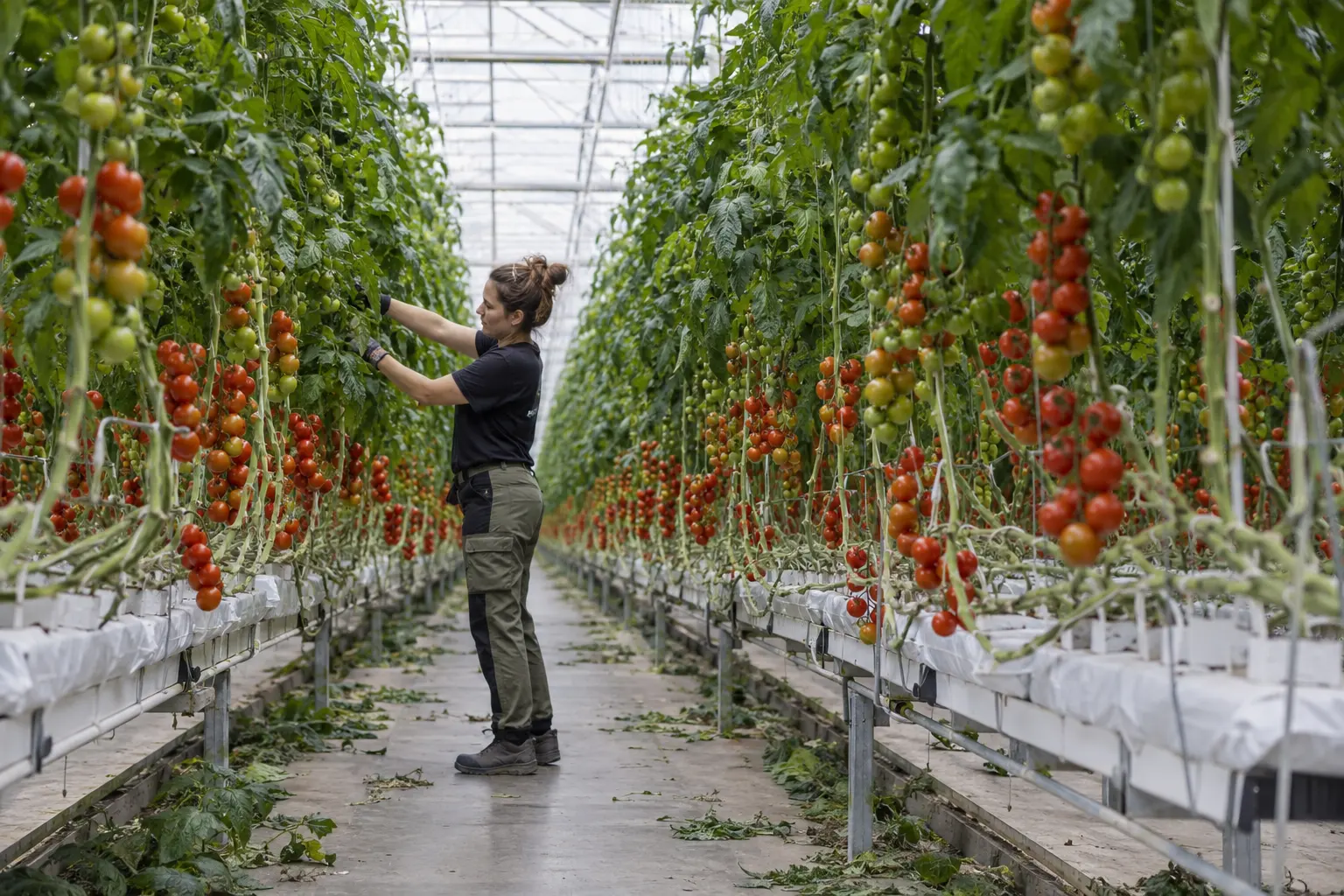
A greenhouse tomato crop on substrate can stay in the house for up to eleven months, with its roots in a small volume of slab. Everything the plant gets arrives through the dripper, and almost everything that goes wrong first shows in what drains out of the slab. That is why tomato growers on rockwool, coir or perlite steer by two numbers from the drain gutter, the percentage of each irrigation that comes back and its conductivity, and why the sensor layout for a tomato house starts at the drain rather than at the dripper.
What a greenhouse tomato needs from the root zone
A slab that is flushed, not salted. A tomato on substrate takes up water faster than it takes up salts, so the solution left in the slab concentrates between irrigations. Draining a share of every irrigation washes that excess out. The Wageningen tomato sheet sets the drain at 15 to 30 percent of each irrigation: below 15 percent the EC around the roots climbs and irrigation should become more frequent, above 30 percent it can be less frequent. NC State extension sets 10 to 15 percent as the minimum, both to stop salt building up and to cover drippers that deliver unevenly. A trial at the Autonomous University of Zacatecas on perlite tested drain levels from 25 to 60 percent: the highest yield came at 40 percent, while 25 percent gave the most sugar and salt in the fruit and the best water productivity. The same paper describes a typical substrate day as about 20 percent drain after the first irrigations and 40 to 50 percent around midday, averaging 27 percent.
An EC that is high enough for quality and low enough for yield. Tomato is the greenhouse crop where growers deliberately run a higher EC. NC State gives about 1.5 to 2.0 mS/cm for rockwool and notes the crop can be run higher to improve fruit quality, with a comparison in which raising EC from 2.6 to 3.5 lengthened shelf life from 17.5 to 19.2 days while yield fell from 12.7 to 11.9. The limit comes from the drain side. In a three-crop substrate trial at the Almería agricultural research centre, with salinity set and measured in the drain, yield held until about 3.8 dS/m and then fell by roughly 8.7 percent for each additional dS/m. Higher salinity cut blotchy ripening sharply, raised soluble solids, and produced a notable rise in fruit with blossom end rot.
Calcium reaching the fruit. Blossom end rot is calcium deficiency in the fruit tissue. The e-GRO extension alert ties it to fast growth, high nitrogen and inconsistent irrigation, and NC State adds a high EC, which keeps water from moving into the roots, and more than 20 percent of nitrogen as ammonium. Every one of those causes shows up in the root zone before it shows up on a fruit, which is the case for measuring the slab instead of waiting for the first sunken lesion.
A pH that keeps nutrients available. NC State gives pH 5.5 to 6.0 for rockwool slabs and 5.6 to 5.8 in peat bags. Above 6.5, phosphorus and micronutrients become less available, and at pH 7.0 tomato yield dropped 25 percent.
A root zone in step with the air. The e-GRO alert describes oedema in tomatoes grown in a cool, low-light house with a warm, saturated root zone: roots take up water faster than the leaves can transpire it. It also gives a minimum night air temperature of 55 to 60°F, about 13 to 16°C, for good pollination.
What to measure and where
In the drain: EC, pH and volume
Put an EC probe and a pH probe in the drain gutter at the low end of a representative row, held in the running water rather than in whatever stands at the bottom of the gutter. NC State’s check is simple: drain EC and pH should sit within 5 to 10 percent of the solution going in. A drain EC well below the feed means the crop is hungry; well above means salt is accumulating; a drain pH drifting away from the feed means the slab chemistry is changing. Pair the probes with a measured drain volume per irrigation so the percentage is known, not estimated.
In the slab: temperature
A sealed temperature probe pushed into the slab at root depth, in the same row as the drain sensors, gives root zone temperature on the same time axis as drain EC. It explains readings that otherwise look like a fertigation fault: a cold slab on a winter morning takes up less, and the drain EC rises without anything changing in the recipe.
In the canopy: air temperature and humidity
One temperature and humidity sensor at truss height in the same bay closes the loop. Night temperature below the pollination minimum, and long periods of very high humidity, are the conditions under which the e-GRO alert says problems start.
In soil-grown houses: tension and soil solution
Many tomato houses still grow in soil, and there the slab measurements do not apply. Research at the Ramat HaNegev R&D Center on winter cherry tomatoes, irrigated with brackish water diluted to about 1.5 dS/m, found the highest yield when irrigation covered the plants’ full use plus 40 percent that drained below the roots, and it sampled the soil solution at 20 cm to follow its EC. For soil beds, a low-range tensiometer at root depth shows when the bed is drying and whether an irrigation wetted it.
Agrinovo hardware for a tomato house
These are modules on one controller, chosen per house:
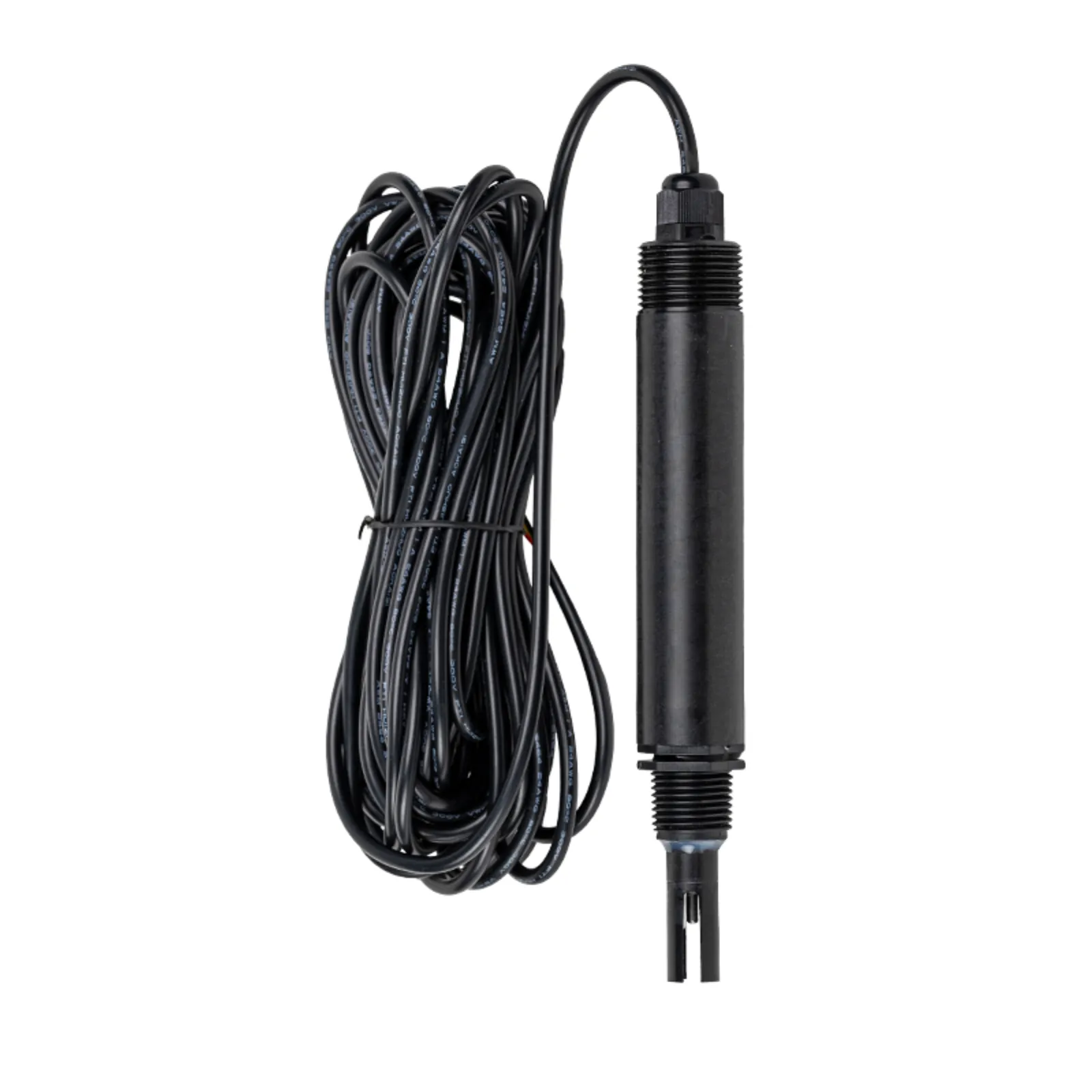
- EC-100 conductivity probe in the drain gutter, RS485 Modbus, with automatic temperature compensation from 0 to 60°C. It ships with a K=1.0 electrode that reads 2 to 10,000 µS/cm with ±1.0 percent of full scale accuracy, which covers the drain EC tomato growers work in. Above 10 mS/cm, use the EC-110.
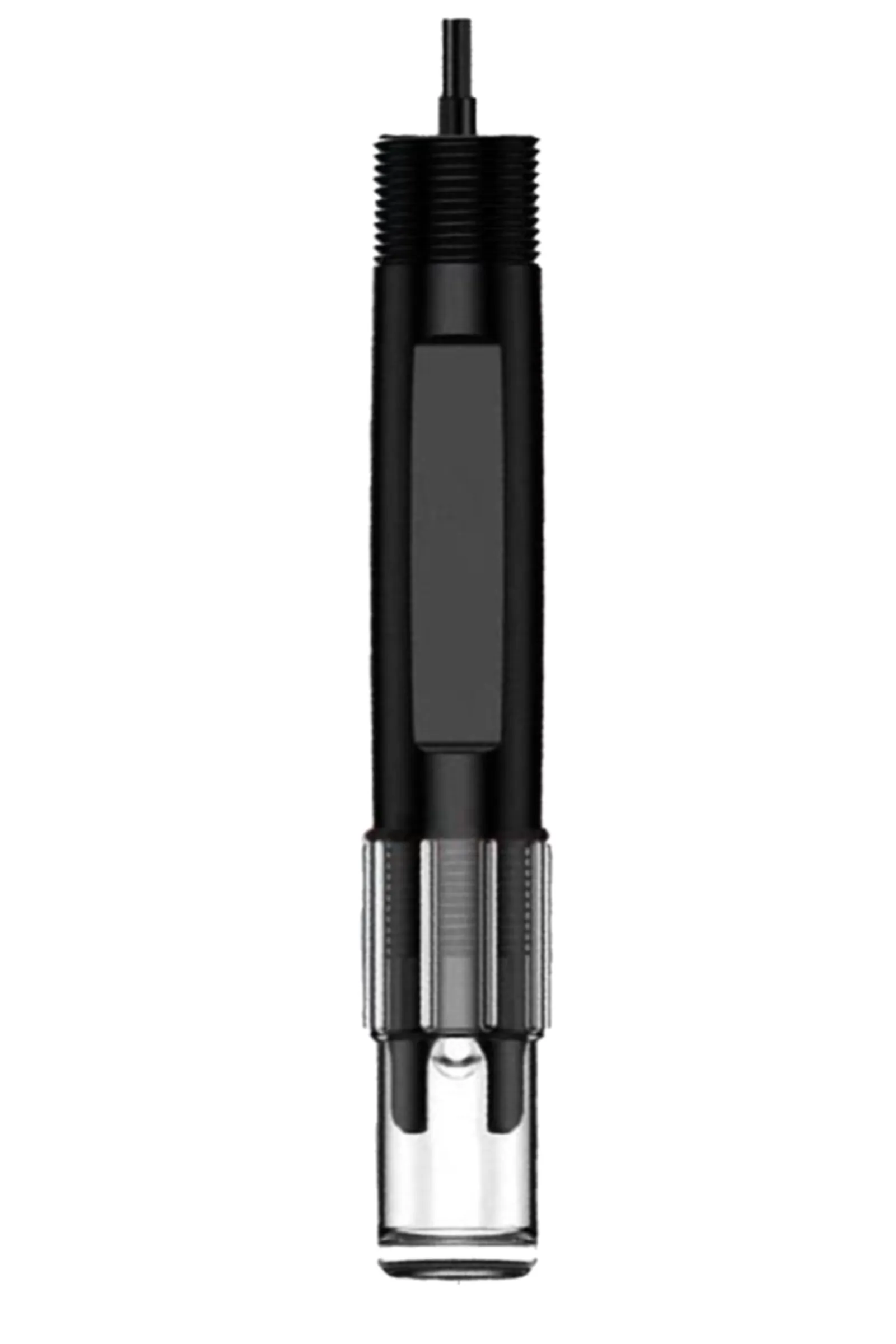
- PH-100 pH probe beside it, 0 to 14 pH, ±0.02 pH, RS485 Modbus.
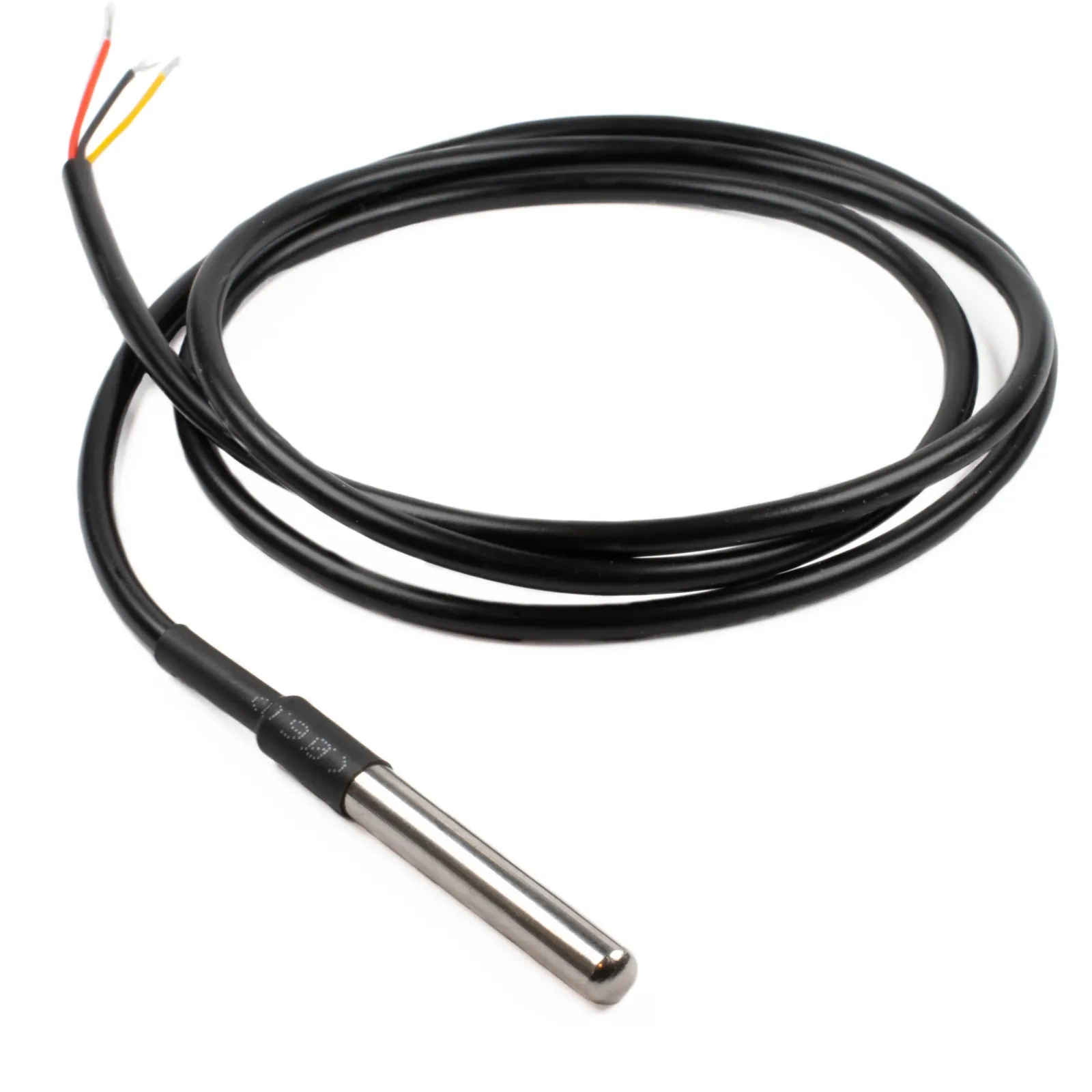
- DS18B20 temperature probe in the slab or the soil bed, sealed stainless, -55 to +125°C.
- THS-100 temperature and humidity sensor at truss height, -40 to +80°C and 0 to 100 percent RH, in a sealed housing for a humid house.
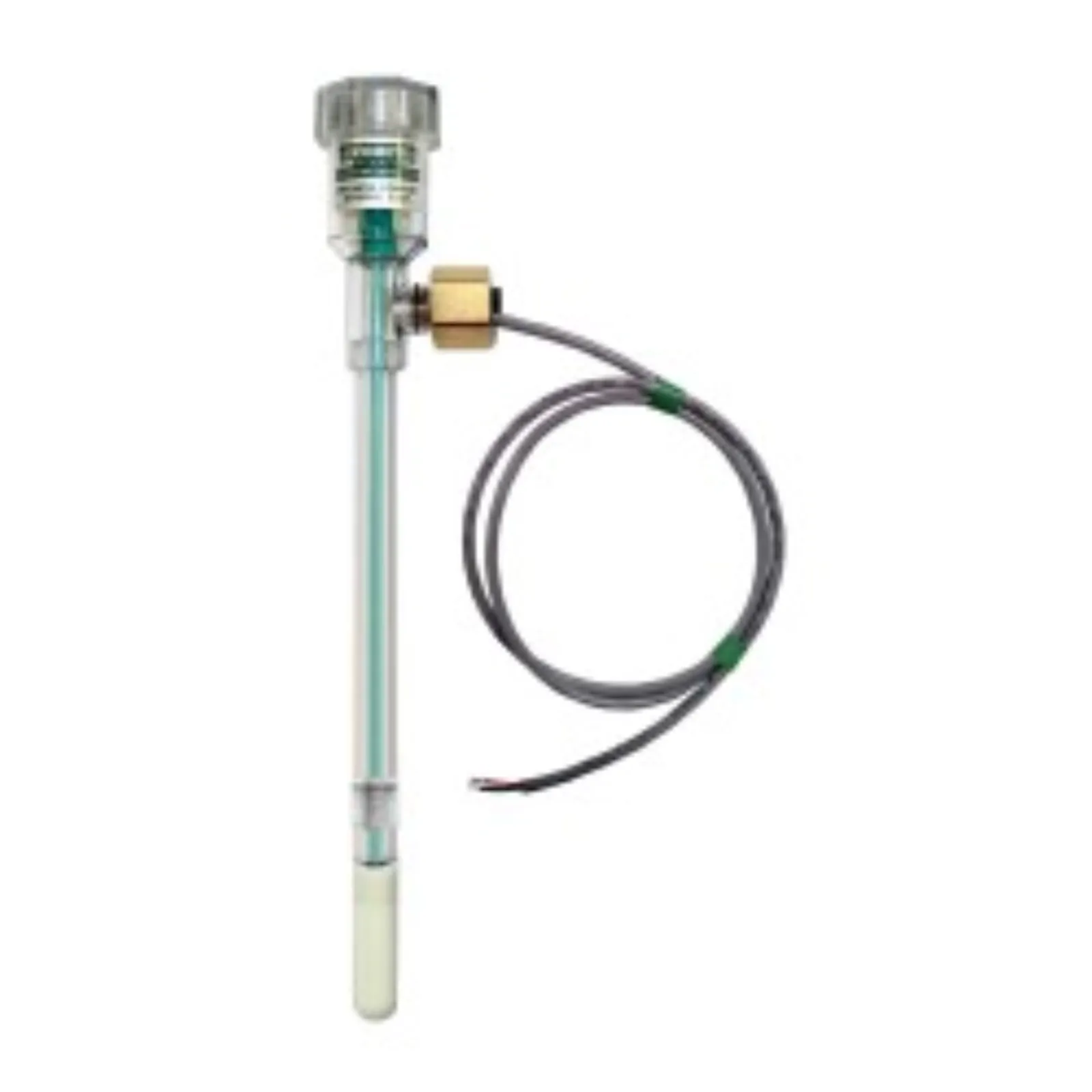
- Irrometer LT tensiometer, 0 to 40 cb, for soil beds and for growers who manage substrate by tension. Our post on substrate moisture sensing explains why a low-range tensiometer suits rockwool and coir better than a wide-range sensor.
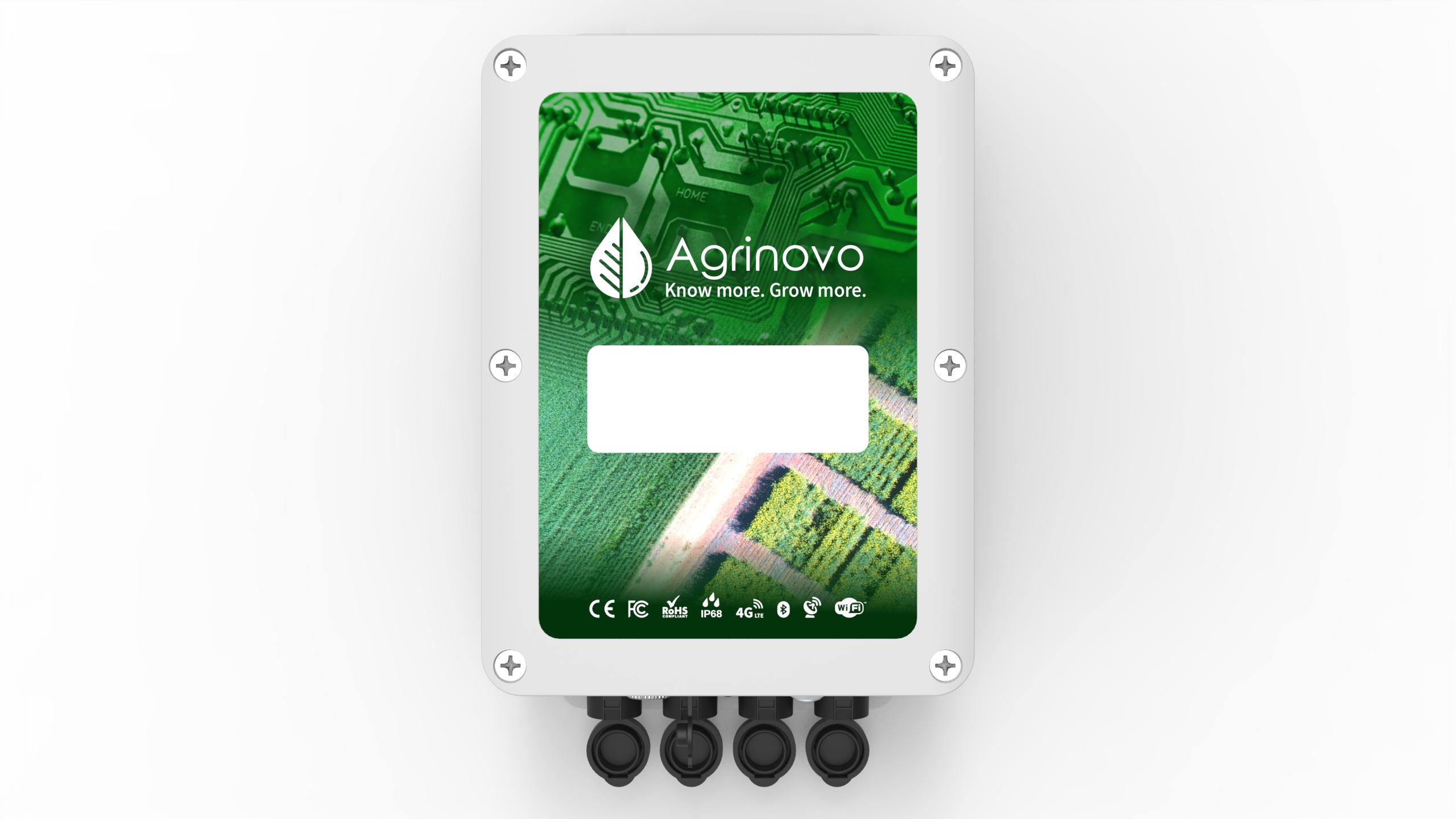
- Omni Genesis controller, four modular ports that each take any supported protocol, reporting over 4G-LTE so the readings do not depend on the greenhouse network.
On the dashboard, drain EC, drain pH, slab temperature and canopy climate share one time axis per house, and each reading can carry its own alarm limits. When a reading stays out of range longer than allowed, the users on the account get an app notification.
How the readings are used through the crop
Through the season the drain line is the one to watch. Wageningen’s sheet asks for small, frequent irrigations, more than ten a day, steered by the light the crop receives, and uses the drain percentage to adjust the frequency. A rising drain EC on a sunny afternoon with a falling drain percentage says the crop is drinking faster than it is being fed; the fix is frequency, not a stronger recipe. A drain EC that rises week after week, with the drain percentage steady, says the feed water or the recipe has changed. Growers who steer for flavour by running the drain EC higher can watch the Almería threshold as they approach it, together with the blossom end rot it brought with it.
Two things the sensors do not replace. The first is the water test and the feed analysis, which tell you what is in the solution beyond total conductivity. The second is the hand check: the raspberry case study below shows a grower who doubted his drain probes until a reagent test on site confirmed them and pointed to a fault in the fertigation upstream.
Agrinovo hardware for this application
Every item links to its product page with the datasheet. Specifications on those pages come from the manufacturer documents, not from this article.

Deployments like this
Greenhouse
Raspberry substrate runoff
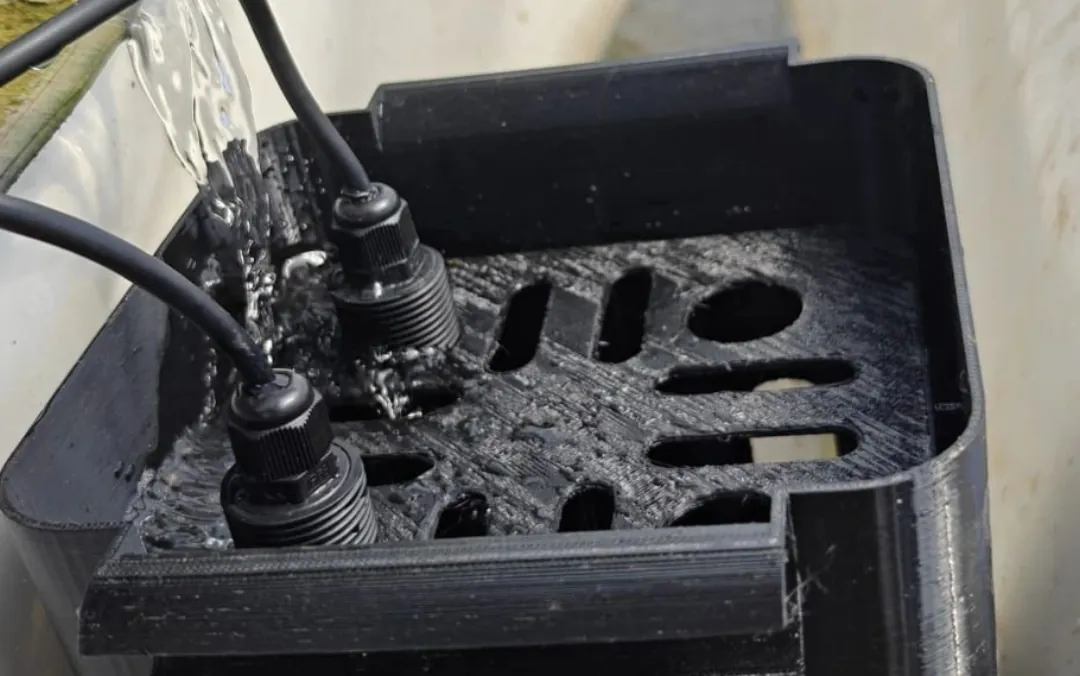
A raspberry farm on soilless substrate measures EC and pH in the drainage water. When the readings did not match what the grower expected, an independent reagent test on site backed the sensors and pointed at the fertigation system instead.
2 parameters in the drain
Greenhouse
Strawberry bed tension
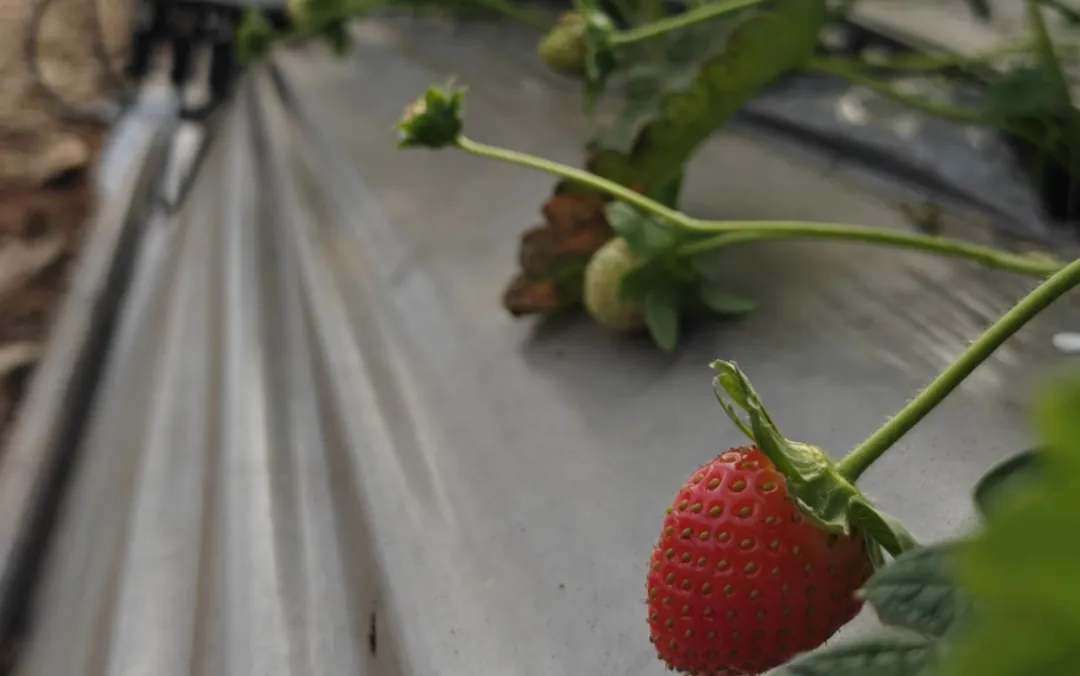
A strawberry greenhouse puts tensiometers into raised beds sealed under plastic mulch. The mulch is there for good reasons, and it removes every traditional way of judging soil moisture.
Sealed root zone
Frequently asked questions
What drain percentage should a greenhouse tomato crop run on substrate?
What should the drain EC be for tomatoes?
Does root zone temperature matter in a tomato slab?
Which sensors does Agrinovo use for greenhouse tomatoes?
Can the EC-100 read a high drain EC?
Sources
The agronomy on this page comes from the publications below. Where a number is not on this list, we left it out.
- Cultivation of Tomato, Technical information sheet No. 8, Wageningen UR Greenhouse Horticulture and ECO Consult
- Greenhouse tomato irrigation and fertilization, Mary M. Peet, North Carolina State University
- Efectos de la salinidad sobre el tomate en cultivo en sustrato en las condiciones del sureste peninsular (2003), J. J. Magán Cañadas, Centro de Investigación y Formación Agraria de Almería, published by Cajamar
- Proporción de drenaje de la solución nutritiva en el rendimiento y calidad de tomate en hidroponía (2018), Universidad Autónoma de Zacatecas, Revista Mexicana de Ciencias Agrícolas (INIFAP)
- Common issues in greenhouse tomato production, e-GRO Alert (2016), Beth Scheckelhoff, The Ohio State University, e-GRO
- Improving irrigation of winter greenhouse tomatoes in Ramat HaNegev (Hebrew, 2020), Ramat HaNegev R&D Center
Other applications
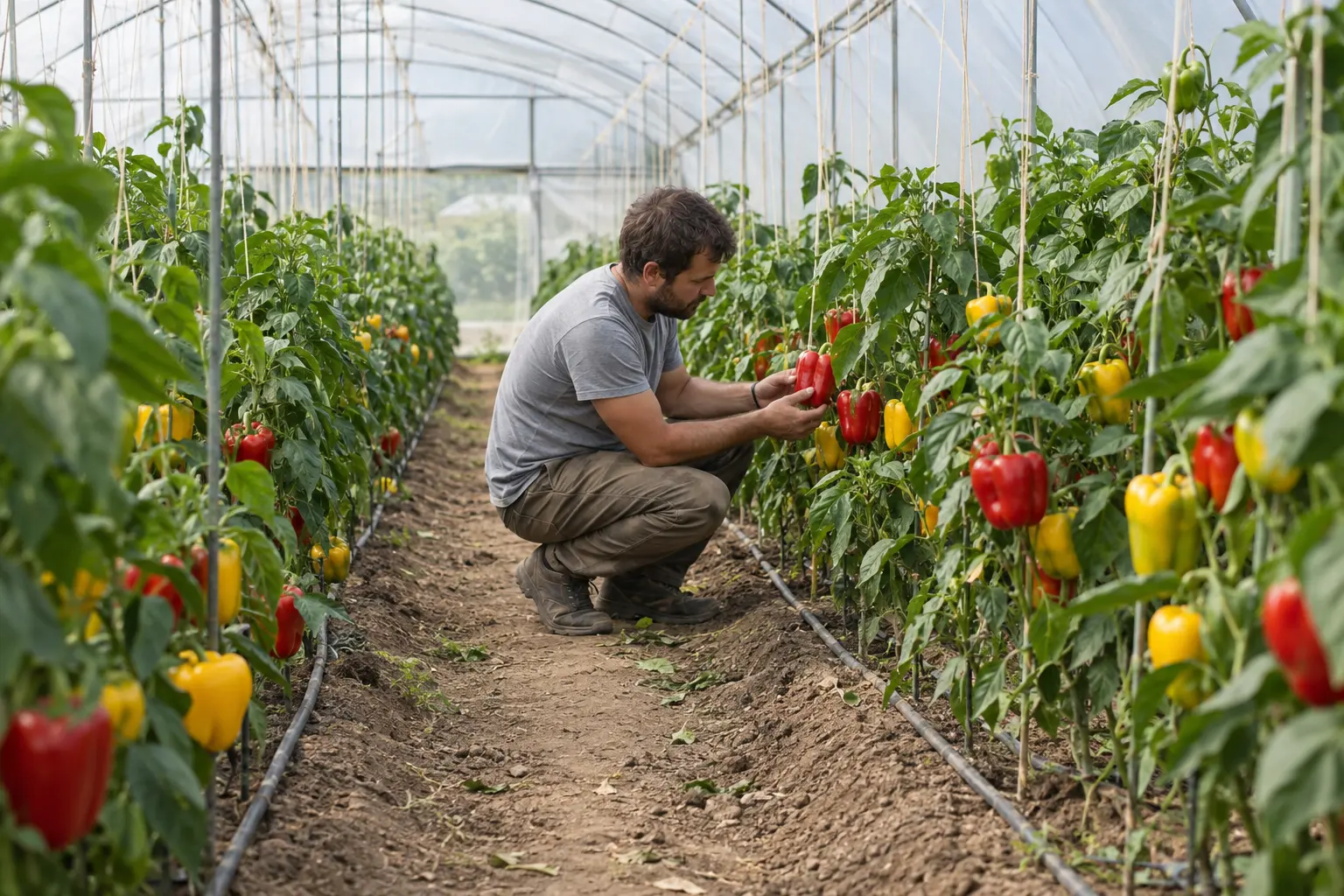
Greenhouse & substrate
Greenhouse peppers
Which sensors a greenhouse or net-house bell pepper crop needs: soil tension near the dripper, EC and pH of the feed and the drain, air humidity, and the Agrinovo hardware that logs them.
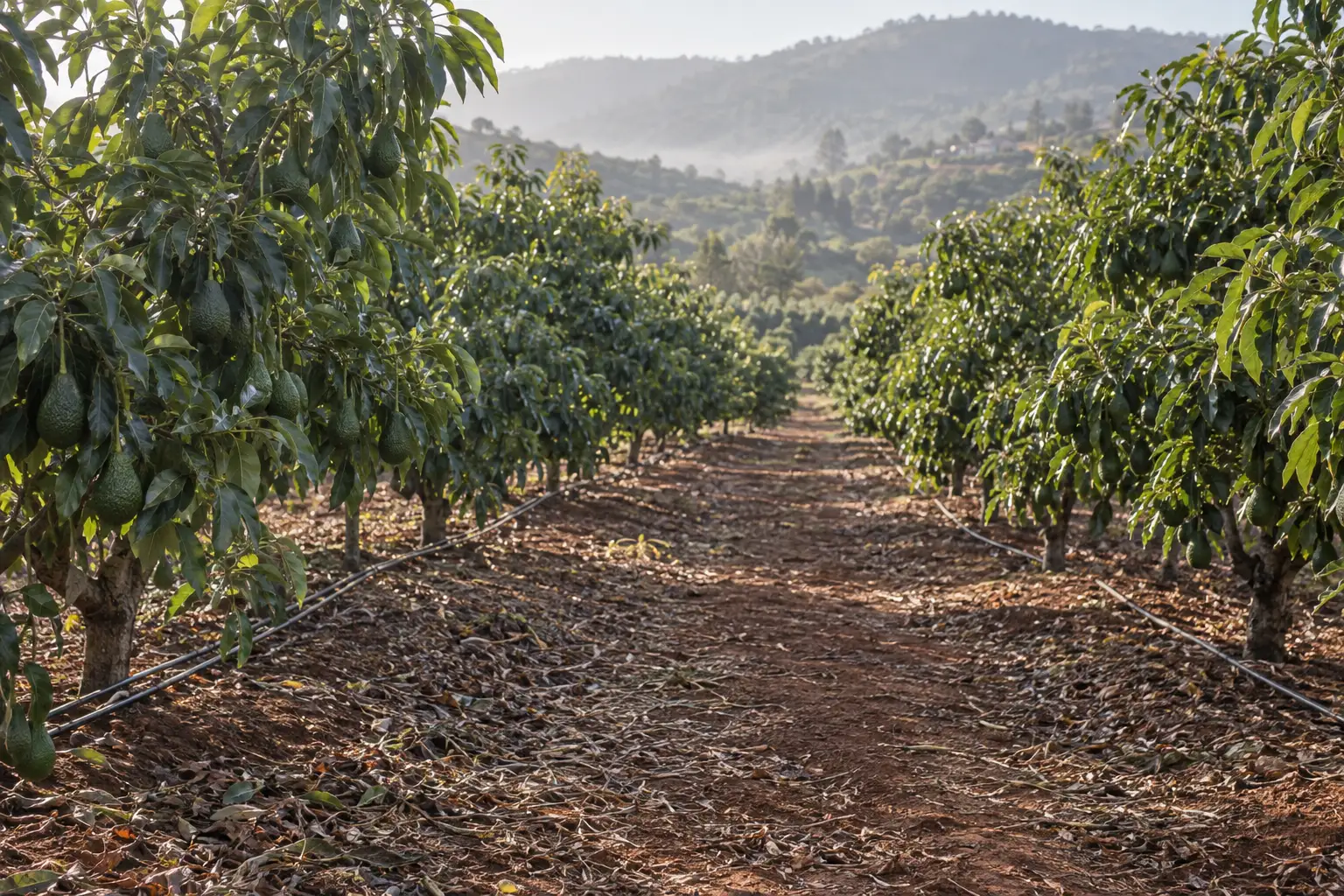
Orchards & plantations
Avocado orchards
Which sensors an avocado orchard needs and where to put them: tensiometers and Watermark probes at 20 and 45 cm, irrigation triggers by soil type, EC of the irrigation water, and the Agrinovo hardware that reads them remotely.
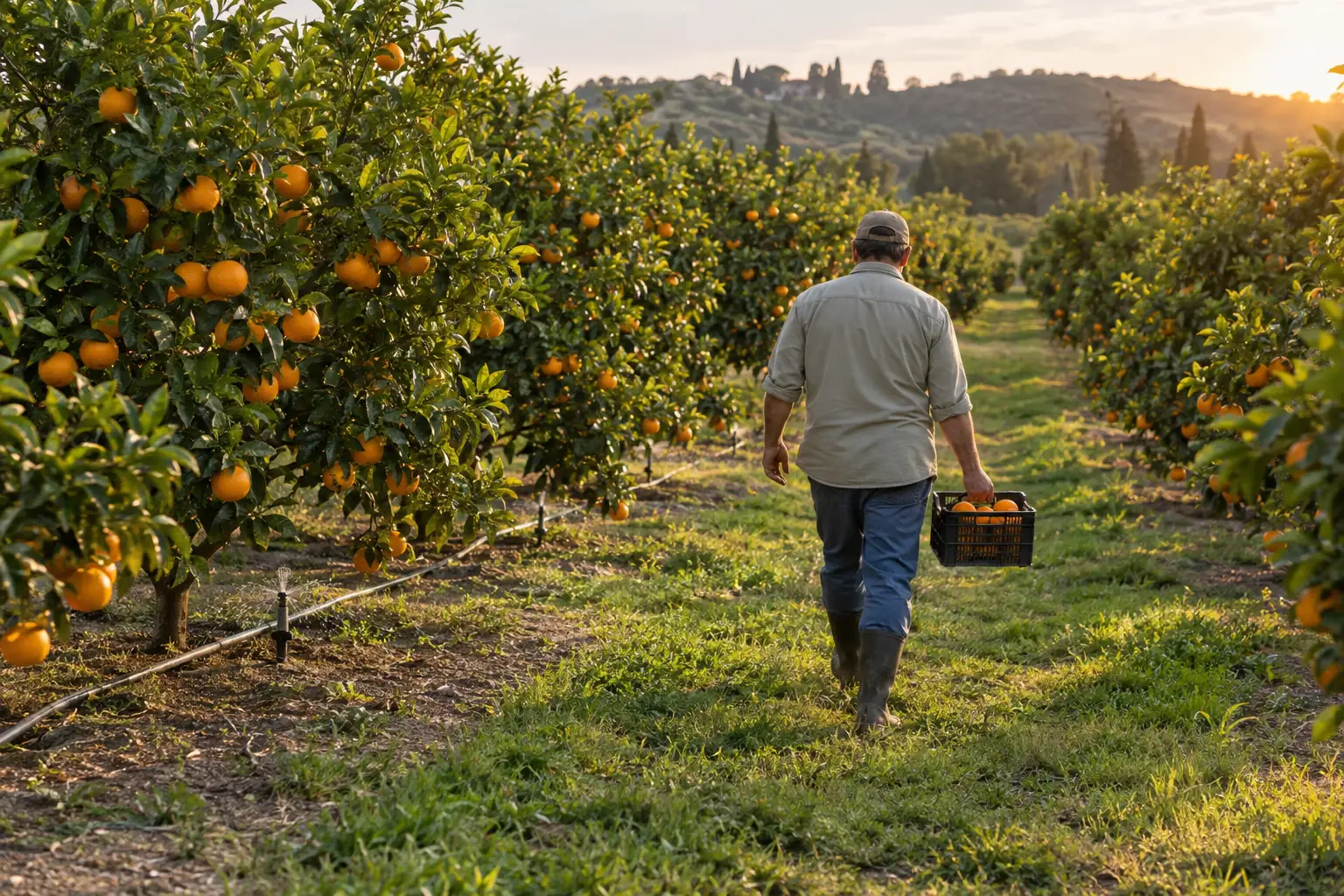
Orchards & plantations
Citrus orchards
Which sensors a citrus grove needs and where they go: two soil water sensors in the top 30 cm at the dripline, depletion and tension triggers, irrigation water EC against rootstock chloride limits, and the Agrinovo hardware.
Tell us about your plot
Soil type, crop, irrigation method and what you want to see from your phone. We reply with a sensor list and a layout, not a brochure.