Greenhouse
A raspberry grower was certain the EC and pH sensors were lying, so we tested the water by hand
A raspberry farm on soilless substrate measures EC and pH in the drainage water. When the readings did not match what the grower expected, an independent reagent test on site backed the sensors and pointed at the fertigation system instead.
Results on site
- 2
- parameters in the drain
- Reagent
- independent cross-check
- Fertigation
- where the fault actually was
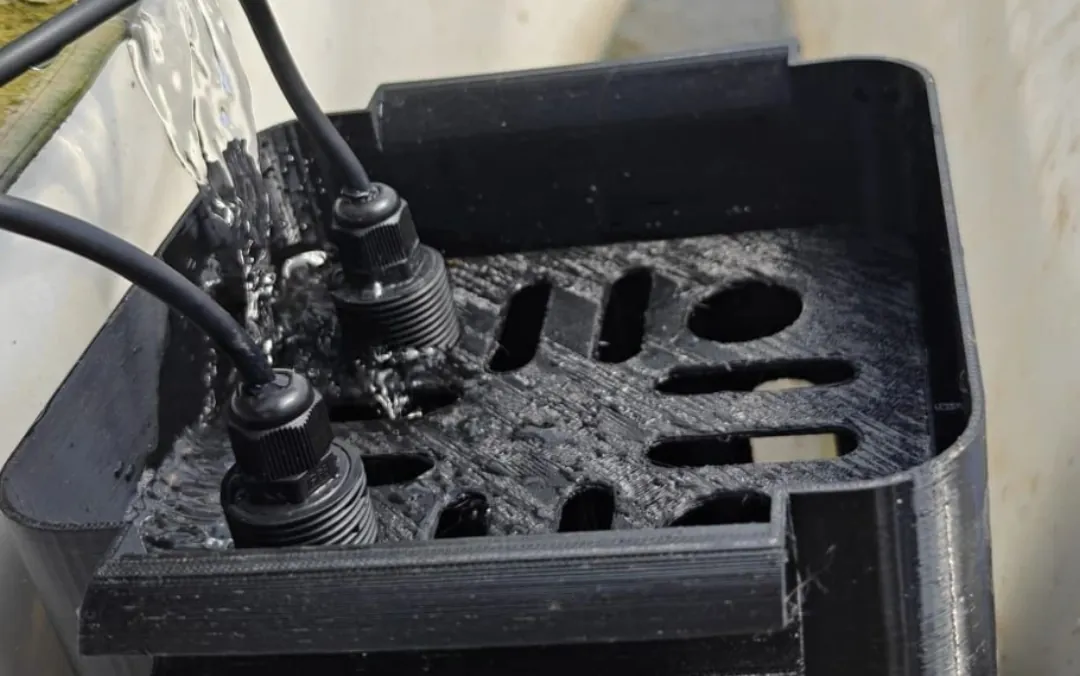
EC and pH held in the flow by one printed housing
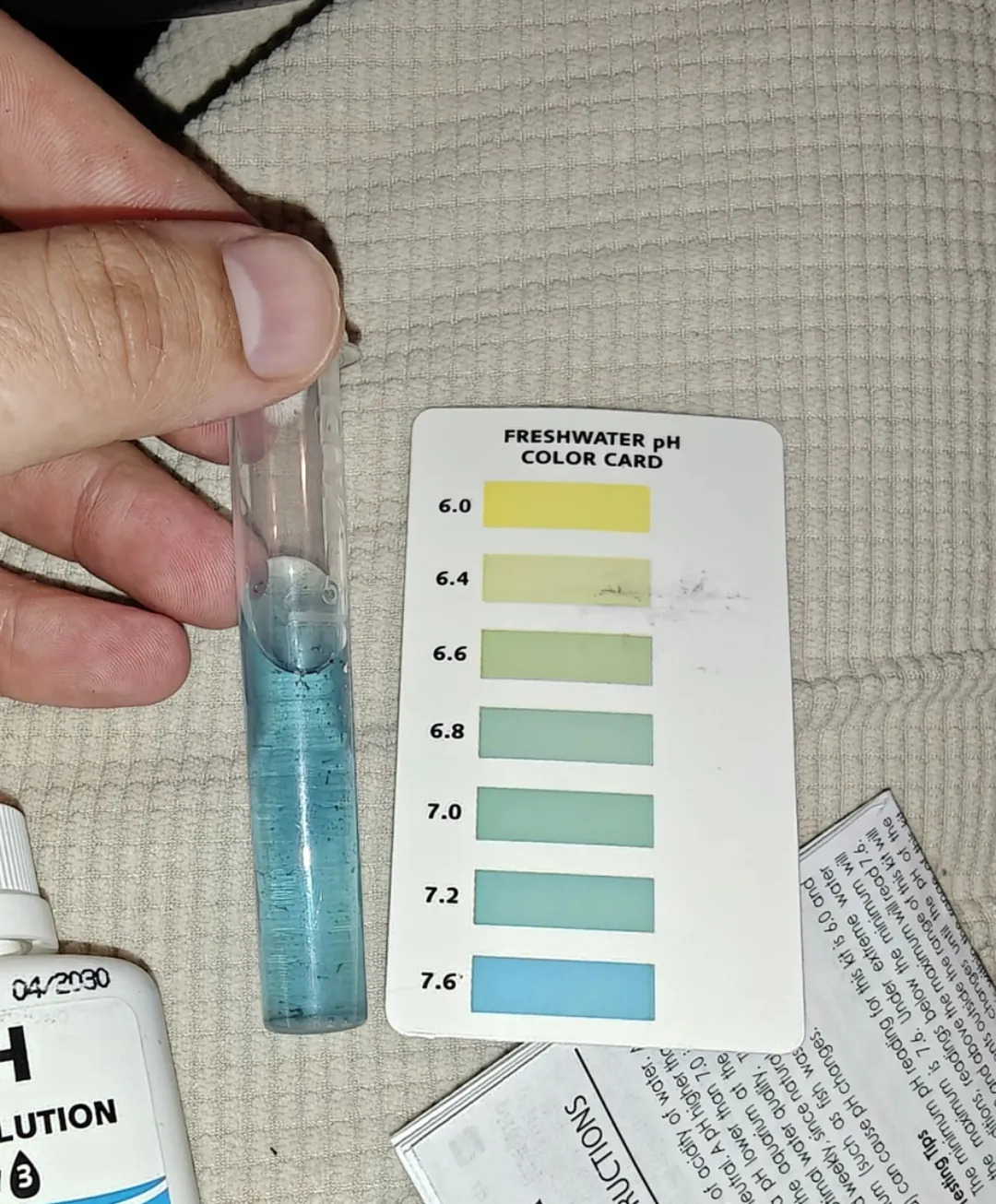
Wet chemistry, a different principle from the probe, run on site
The monitoring was right, the dosing was not
- The challenge
- The drain readings did not match what the grower expected, and his first conclusion was that the new instruments were faulty. Until that was settled, the data was worth nothing to him.
- What we installed
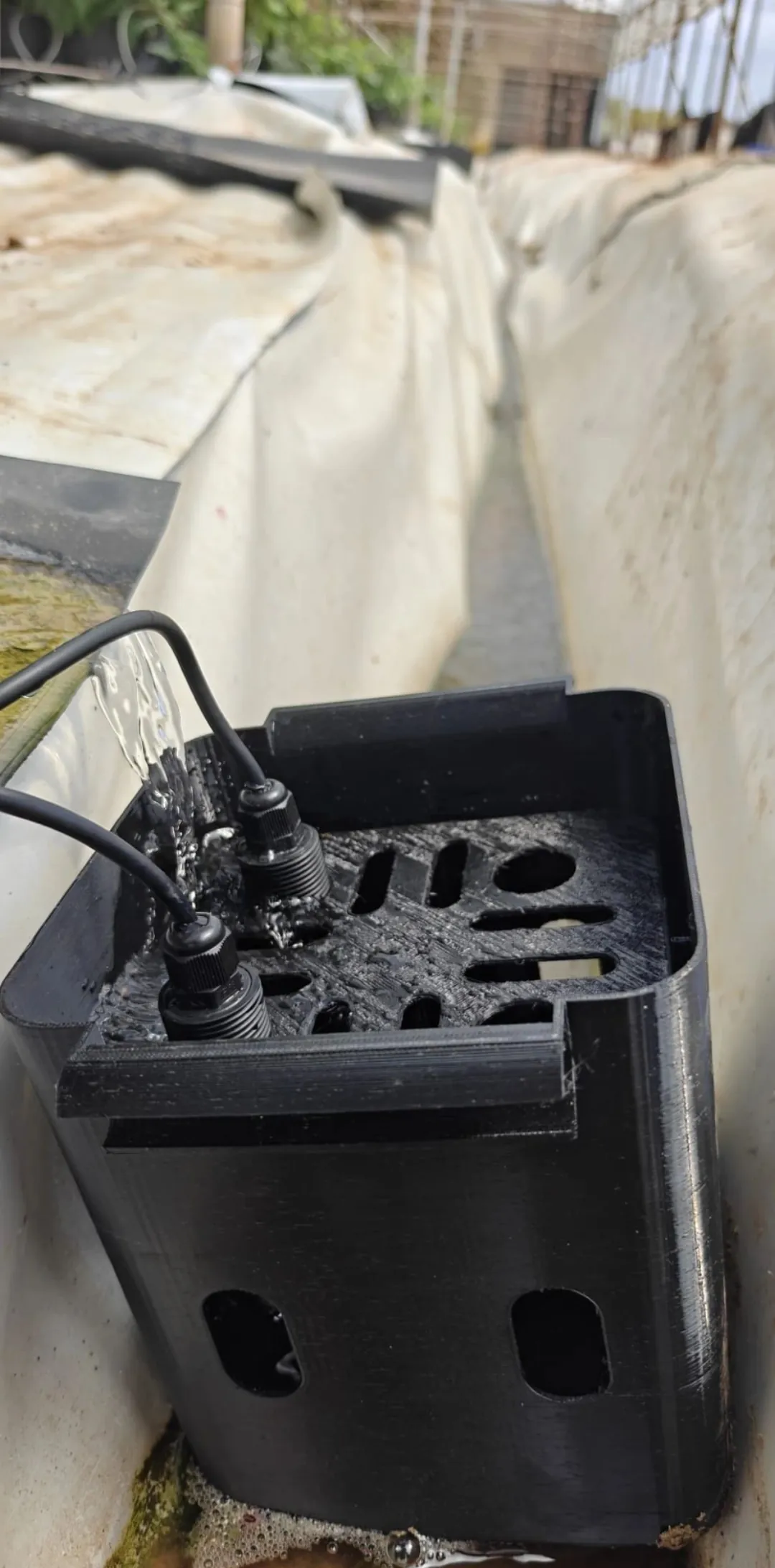
- EC and pH probes held in a purpose-printed housing in the drainage channel, plus an independent reagent test run on site, in front of the grower, using a different measurement principle.
- The result
- The reagent test agreed with the sensors. The anomaly was real, and the fault was found upstream in the irrigation and fertigation system rather than in the monitoring.
The situation
Raspberries here are grown on soilless substrate: the roots sit in a contained volume of growing media rather than in the ground, and everything the plant gets arrives dissolved in the irrigation water. That arrangement gives a grower precise control, and it removes the safety net. Soil is a large, slow buffer that dilutes mistakes. A bag of substrate is not. Whatever the fertigation system delivers reaches the roots on the next irrigation, at close to full strength.
Which is why the interesting measurement is not the feed line but the drain. What comes out of the substrate has already been through the root zone, so it carries the result rather than the intention. A dosing unit reports what it meant to do. The runoff reports what happened.
So EC and pH probes went into the drainage channel that runs between the beds, held in a housing printed for the purpose. That detail matters more than it sounds: drainage is shallow and comes in pulses, and a probe just laid in a channel spends half its life in still water and half in air. The fixture holds both probes at a fixed depth in the moving stream, which is the difference between a time series and a set of unrelated numbers.
The call
Then the readings moved somewhere the grower did not expect, and he phoned to say the sensors were lying.
That reaction is the correct one, and it is worth saying so plainly. When an instrument disagrees with an experienced grower’s understanding of their own farm, the instrument is the newest and least proven thing in the room. He had been growing this crop for years. The probes had been in the channel for a fraction of that. Doubting them first is not stubbornness, it is reasonable inference.
It also means the data is worth nothing until the doubt is resolved. A monitoring system that is suspected of lying does not get acted on, and a system that does not get acted on may as well not be installed. Every argument about accuracy, cadence and coverage is downstream of one question: does the grower believe the number.
Settling it
There are only two possibilities when a reading contradicts expectation. Either the instrument is faulty, or the reading is real and something in the system has changed. Nothing useful happens until you know which, and the way to find out is to measure the same water by a method that shares nothing with the first one.
So the test was reagent chemistry rather than an electrode. A sample from the same drain, treated and read against a colour card, on site, with the grower watching the colour come up. No shared electronics, no shared calibration, no shared failure mode, and no need for anyone to take our word for the result. He could see it himself.
The reagent agreed with the sensors.
That single fact reassigned the entire problem. The anomaly was not an artefact of a probe. It was a true description of what was coming out of the substrate, which meant something upstream was putting something different in. The fault was in the irrigation and fertigation system, and it was found because a continuous measurement caught a change that nothing else on the farm was positioned to see.
Why it matters
The useful lesson here is not about EC or pH. It is that the first real job of a new instrument on a farm is to survive being disbelieved, and that the way it survives is by being checkable.
This is also the argument for measuring the drain at all. Fertigation faults are quiet. An injector losing suction, a dosing channel drifting, a solenoid passing when it should be closed, a stock tank mixed wrong: none of them stop the irrigation, none of them raise an alarm on the controller, and none of them look like anything from the pump house. They change what reaches the root zone. On substrate, where there is no buffer to absorb the error, that change reaches the plant immediately and shows up in the crop weeks later, by which point the cause is long gone.
A continuous reading on the runoff is the only place that story is visible while it is still happening. In this case it was visible, it was doubted, it was checked by an independent method, and it turned out to be right.
From the site
Hardware in this deployment
Every sensor below connects to the same controller. That is what makes a mixed site possible.
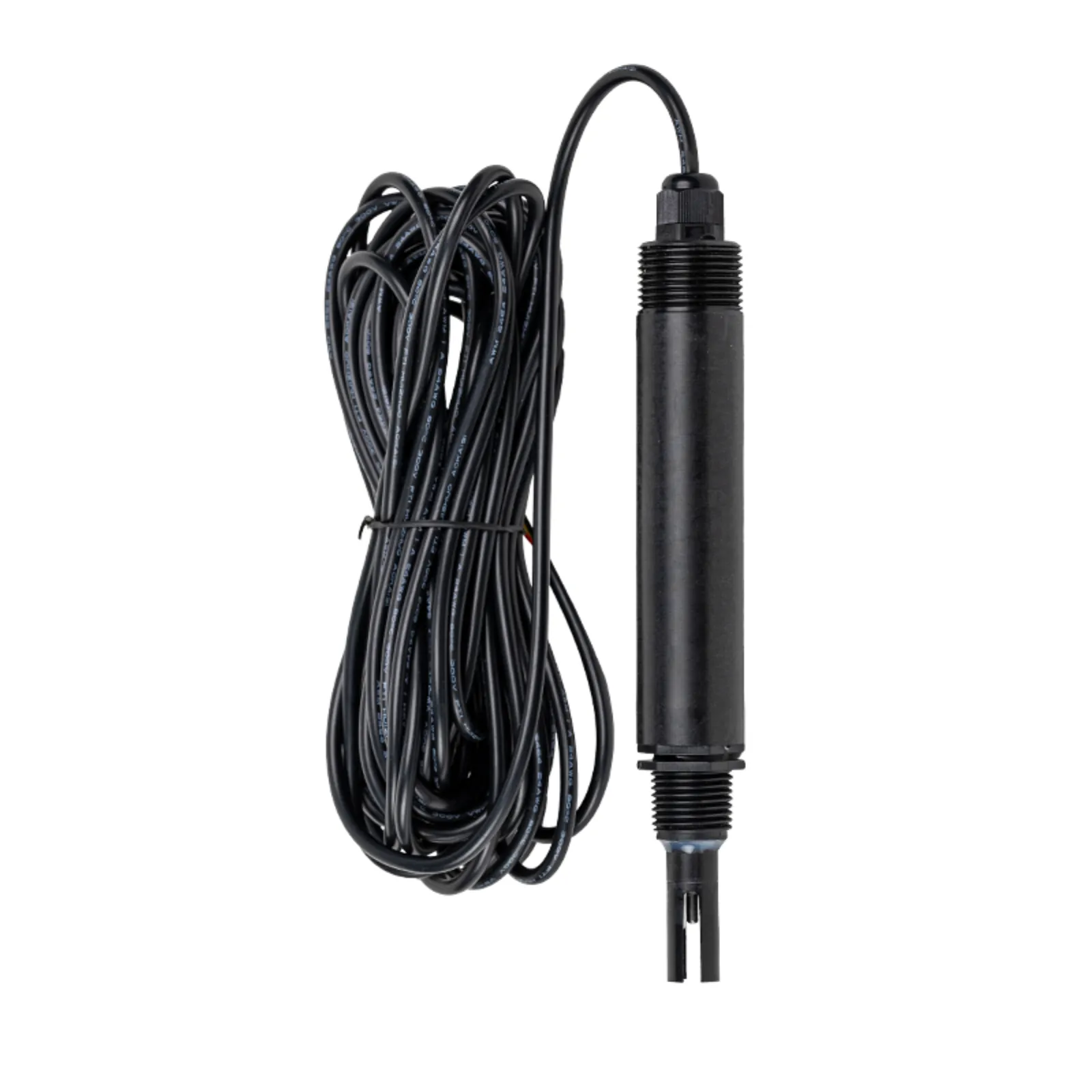
EC Probes
EC-100 Digital Conductivity Probe
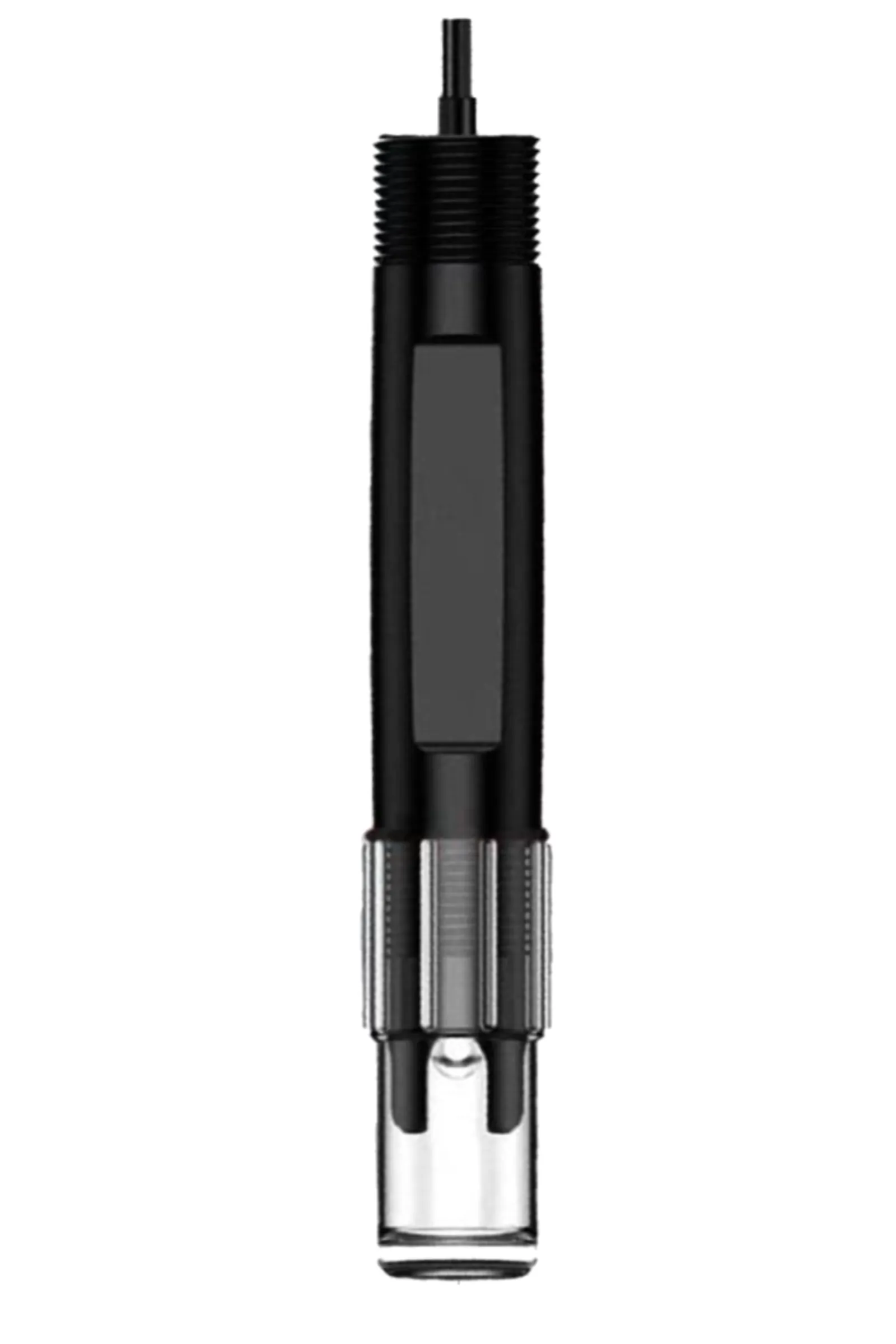
pH probes
PH-100 Digital pH Probe - RS485 Modbus
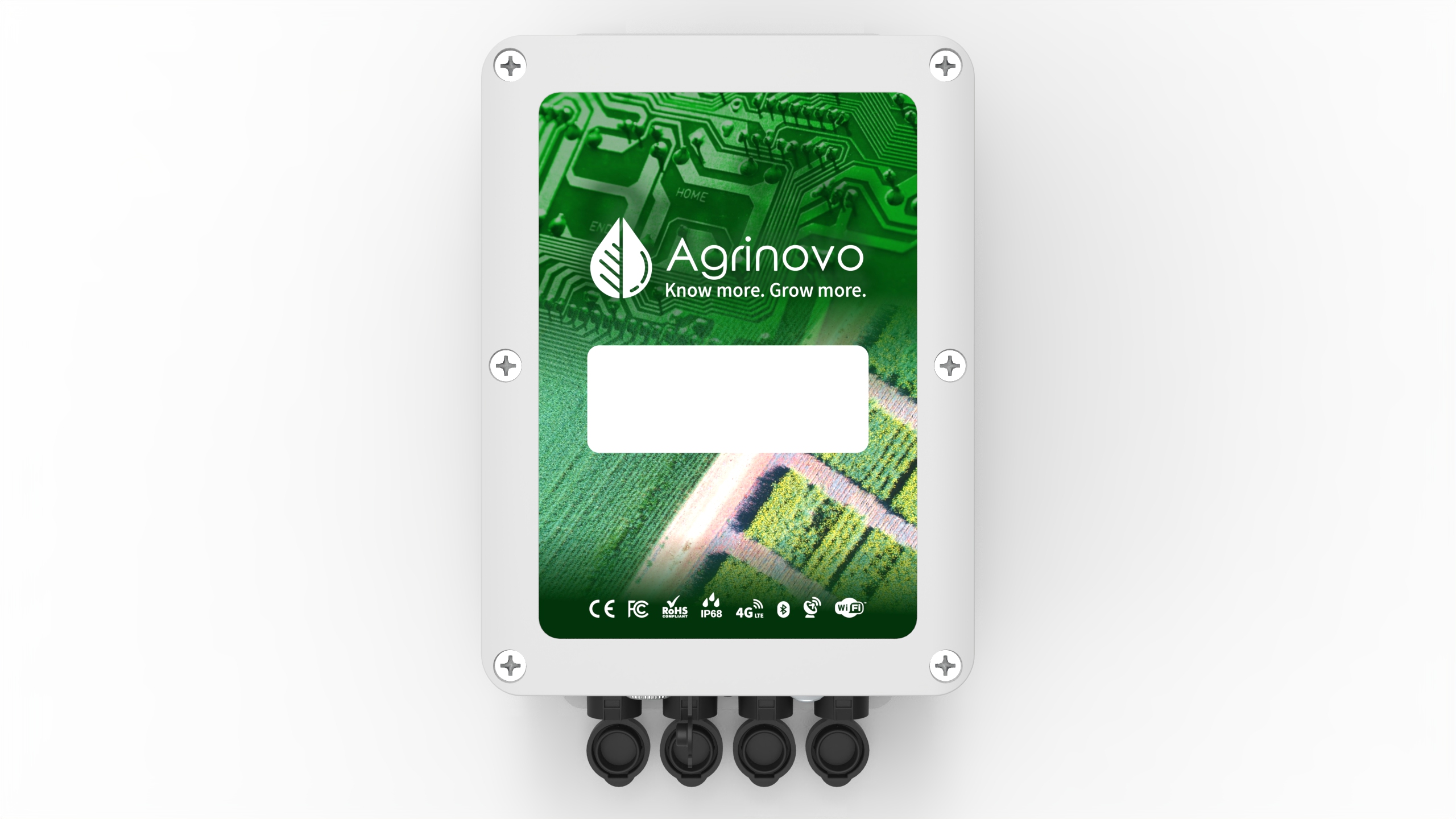
controllers
Omni Genesis IoT Controller - 4-Port, Solar, IP65
Custom build
Printed in-channel probe housing
Questions about this deployment
Why measure the drainage water instead of the feed line?
What do you do when a grower says the sensor must be broken?
Does a reagent test prove the sensor is accurate?
Why does growing on soilless substrate need this more than growing in soil?
How do you get a stable reading out of a shallow drainage channel?
What kind of fertigation faults does drain monitoring catch?
More deployments like this
Greenhouse
Bell pepper soil tension
A bell pepper greenhouse adds soil water tension to a house that already manages climate closely, because peppers are sensitive to how consistently water arrives, not only to how much.
kPa the unit that matters
Greenhouse
Flower farm chiller fault
A cut flower grower chills its irrigation water. Instrumenting both systems in the root zone rather than at the chillers showed which of the two units was failing, in time to repair it.
2 systems instrumented identically
Greenhouse
Hydroponic lettuce monitoring
A commercial hydroponic lettuce operation monitors pH, EC, dissolved oxygen and temperature on one controller. Dissolved oxygen is the parameter most nutrient systems never measure, and the one that couples to temperature.
4 parameters, one controller
Planning something similar?
Tell us what needs monitoring and we will scope a right-sized system with you.