Greenhouse
A pepper greenhouse that controlled its air precisely and its root zone on a timer
A bell pepper greenhouse adds soil water tension to a house that already manages climate closely, because peppers are sensitive to how consistently water arrives, not only to how much.
Results on site
- kPa
- the unit that matters
- In-row
- station placement
- Continuous
- between irrigations
How hard the roots work for water, not how wet the soil looks
At the plants, because sensor cable is what limits where a station can go
The gap between events is where a scheduling error becomes visible
- The challenge
- The house managed its air closely and irrigated its soil on a schedule. Peppers respond to how evenly water arrives at the root zone, and nothing was measuring that.
- What we installed
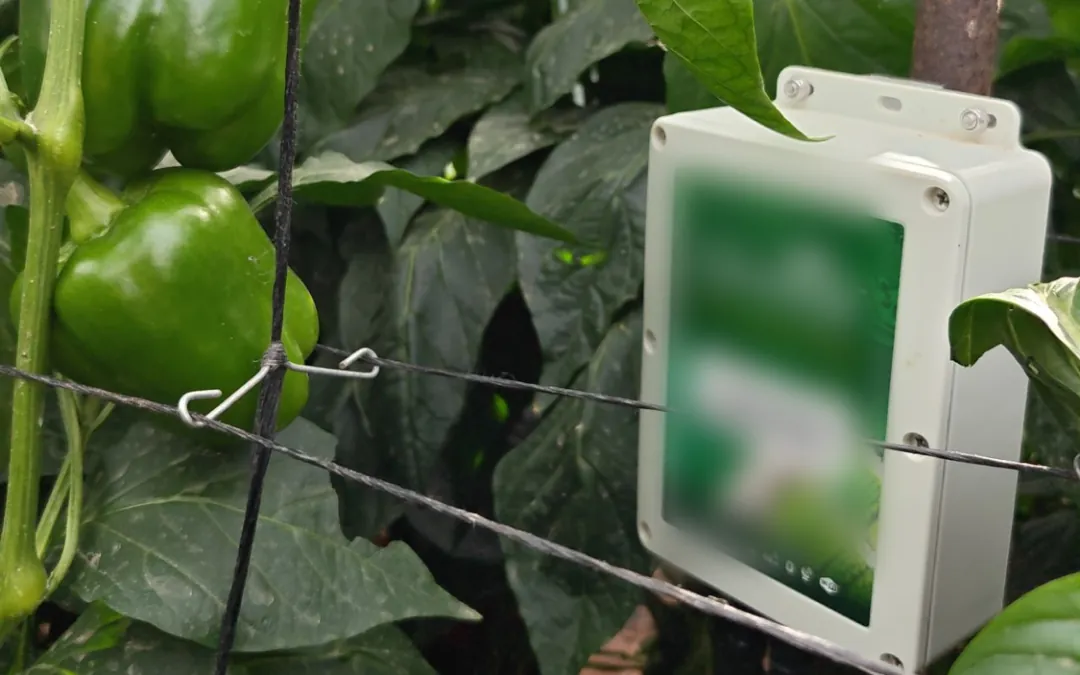
- Tensiometers reading soil water tension in the bed, on an Omni Genesis controller mounted in the row.
- The result
- Irrigation is set against what the root zone is actually doing between events, rather than against a timetable that was correct when it was written.
The situation
A modern pepper house is a well-instrumented place above ground. Temperature, humidity and ventilation are measured continuously and acted on automatically, because everyone accepts that the aerial environment moves fast and needs feedback.
Below ground the same house often runs on a schedule. Someone sets an irrigation programme early in the season, based on experience and the crop stage, and adjusts it by judgement as the weather turns. That is a reasonable way to work and it is how most of the industry operates. It is also open loop: the programme describes what the grower intends to deliver, and nothing reports what the root zone actually received.
Why peppers in particular
Bell peppers punish inconsistency more than they punish moderate stress.
The plant carries fruit and vegetative growth simultaneously across a long harvest, and it is moving calcium into fruit that are actively expanding. That movement depends on water arriving steadily. A crop that gets the right seasonal volume delivered unevenly, wet then dry then wet, produces fruit disorders and uneven grading that a correct seasonal total does not prevent.
So the useful question is not how much water was applied. It is what the root zone was doing in the hours between irrigations, which is exactly the period a schedule says nothing about.
What was installed
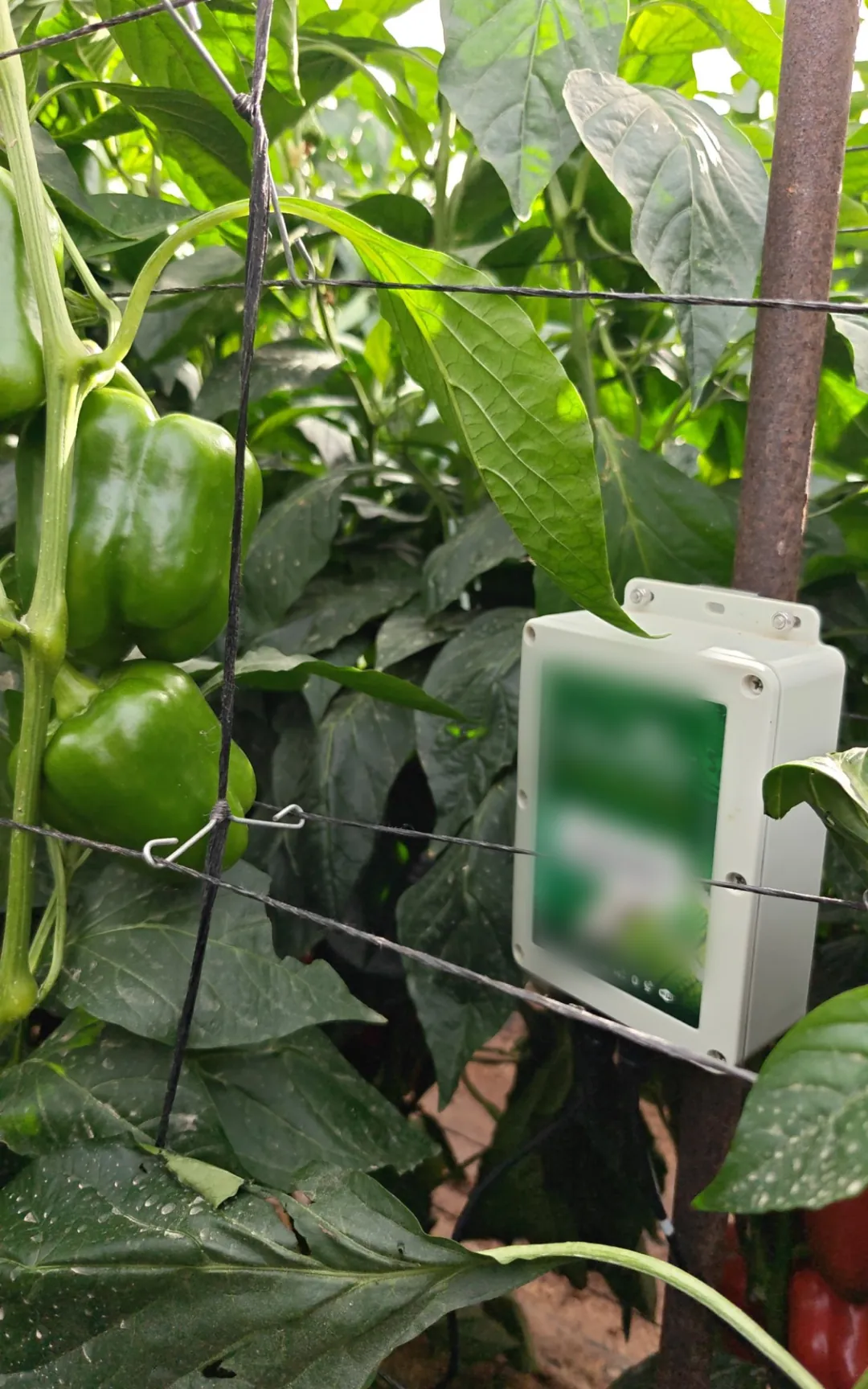
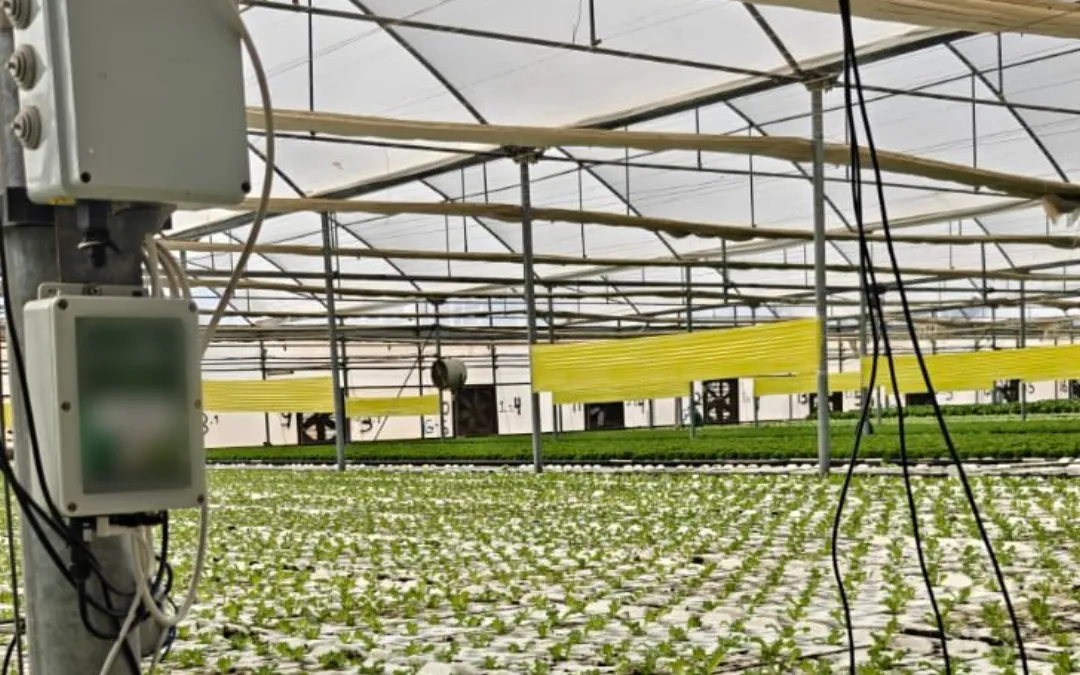
Tensiometers reading soil water tension in the bed, wired to an Omni Genesis controller mounted on the trellis inside the row.
Tension is reported in kPa, a measure of how hard the roots have to work to draw water out of the soil. That is the quantity the plant responds to, and it is why a tension threshold travels between houses and soil types in a way a moisture percentage does not. Irrometer tensiometers come in lengths from 15 to 120 cm, so the instrument is matched to where the roots actually are. The model is a separate choice that follows the soil: the SR for medium to heavy soils, the LT for sandy soils and potting media, and the MLT for pots.
The station sits among the plants rather than at the end of the house. Sensor cable is the practical constraint on where a station can go, and a reading taken away from the drippers and the roots describes somewhere the crop is not.
Why it matters
The pattern here is one that recurs across protected cropping: the visible half of the environment gets closed-loop control and the invisible half gets a timetable.
That split is not really about technology. Air is easy to instrument and its effects are immediate and legible, so it earned feedback first. The root zone is out of sight, its effects arrive with a delay, and by the time a problem is visible in the fruit the irrigation that caused it happened weeks ago. Which is a good argument for measuring it rather than a good argument for leaving it alone.
From the site
Hardware in this deployment
Every sensor below connects to the same controller. That is what makes a mixed site possible.
controllers
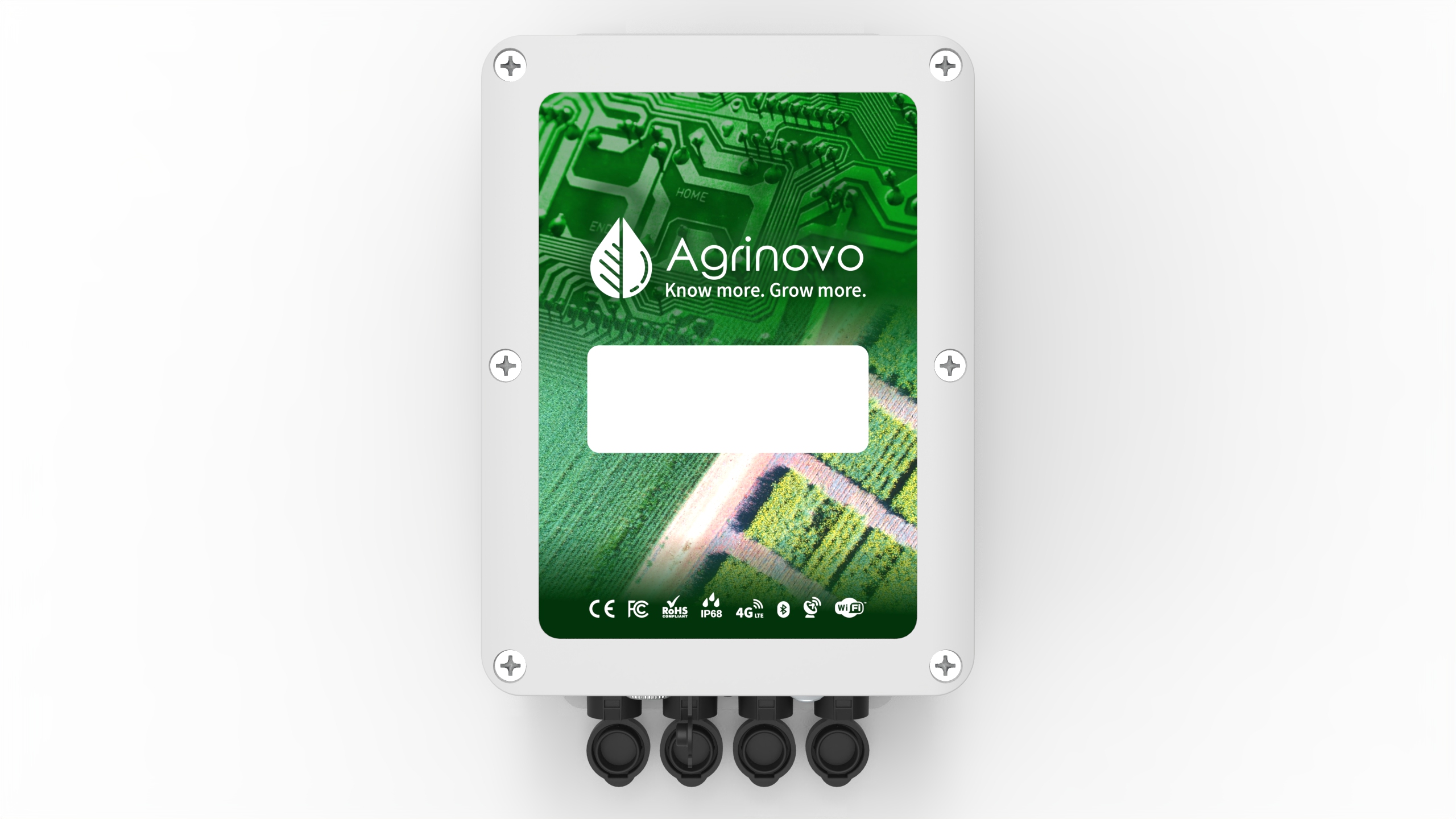
Omni Genesis IoT Controller - 4-Port, Solar, IP65
Soil water tension
Irrometer tensiometers
Questions about this deployment
A greenhouse already controls its climate. Why add soil sensors?
Why does consistency matter so much in peppers?
Why tension rather than moisture percent?
Why is the controller in the row instead of at the end of the house?
Does it change the irrigation system?
More deployments like this
Greenhouse
Flower farm chiller fault
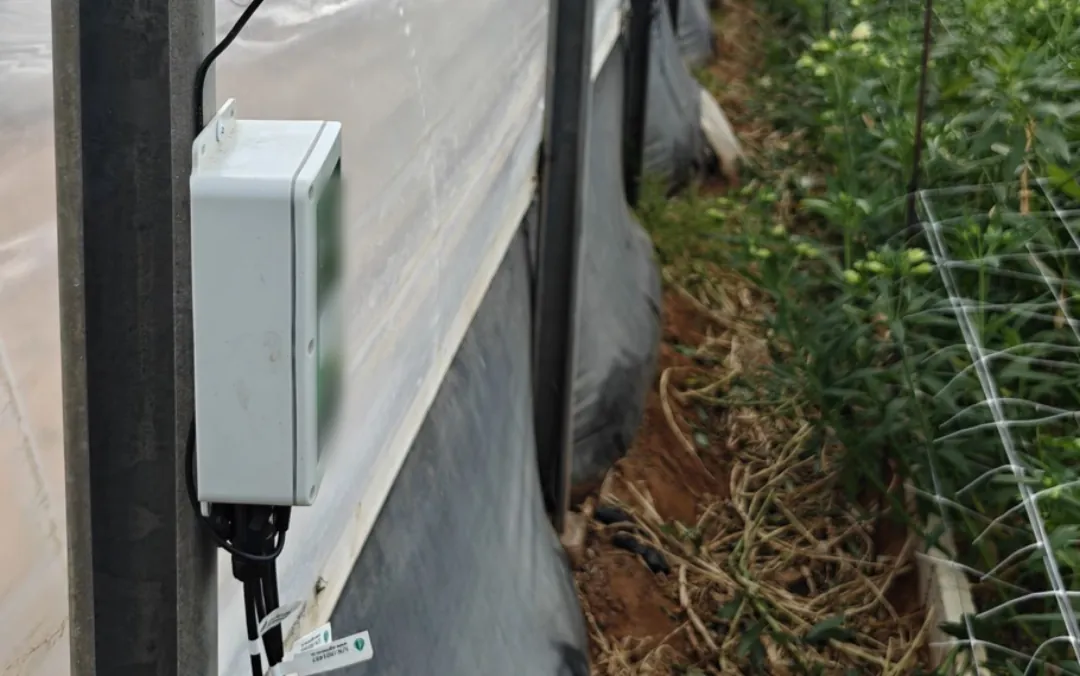
A cut flower grower chills its irrigation water. Instrumenting both systems in the root zone rather than at the chillers showed which of the two units was failing, in time to repair it.
2 systems instrumented identically
Greenhouse
Hydroponic lettuce monitoring
A commercial hydroponic lettuce operation monitors pH, EC, dissolved oxygen and temperature on one controller. Dissolved oxygen is the parameter most nutrient systems never measure, and the one that couples to temperature.
4 parameters, one controller
Greenhouse
Hydroponic EC spot checks
A hydroponics greenhouse measures EC in its nutrient channels with an EC-100 probe on a phone, so every spot check is recorded, located and attributed.
1 probe covers the whole house
Planning something similar?
Tell us what needs monitoring and we will scope a right-sized system with you.