Greenhouse
Hydroponic EC checks that land in the platform, not in a notebook
A hydroponics greenhouse measures EC in its nutrient channels with an EC-100 probe on a phone, so every spot check is recorded, located and attributed.
Results on site
- 1 probe
- covers the whole house
- Every reading
- located and attributed
- 0
- notebooks in the loop
The instrument walks the greenhouse instead of one sensor per channel
The app records where a measurement was taken and who took it
Manual checks land in the same platform as fixed sensor data
- The challenge
- EC in a hydroponic channel decides the crop, but checking it meant a handheld meter and a number that lived in someone's memory, with no record of where it was taken or by whom.
- What we installed
- An EC-100 probe connected to a phone running the Agrinovo app, so a walk down the house produces logged readings tied to a location, a time and the person who took them.
- The result
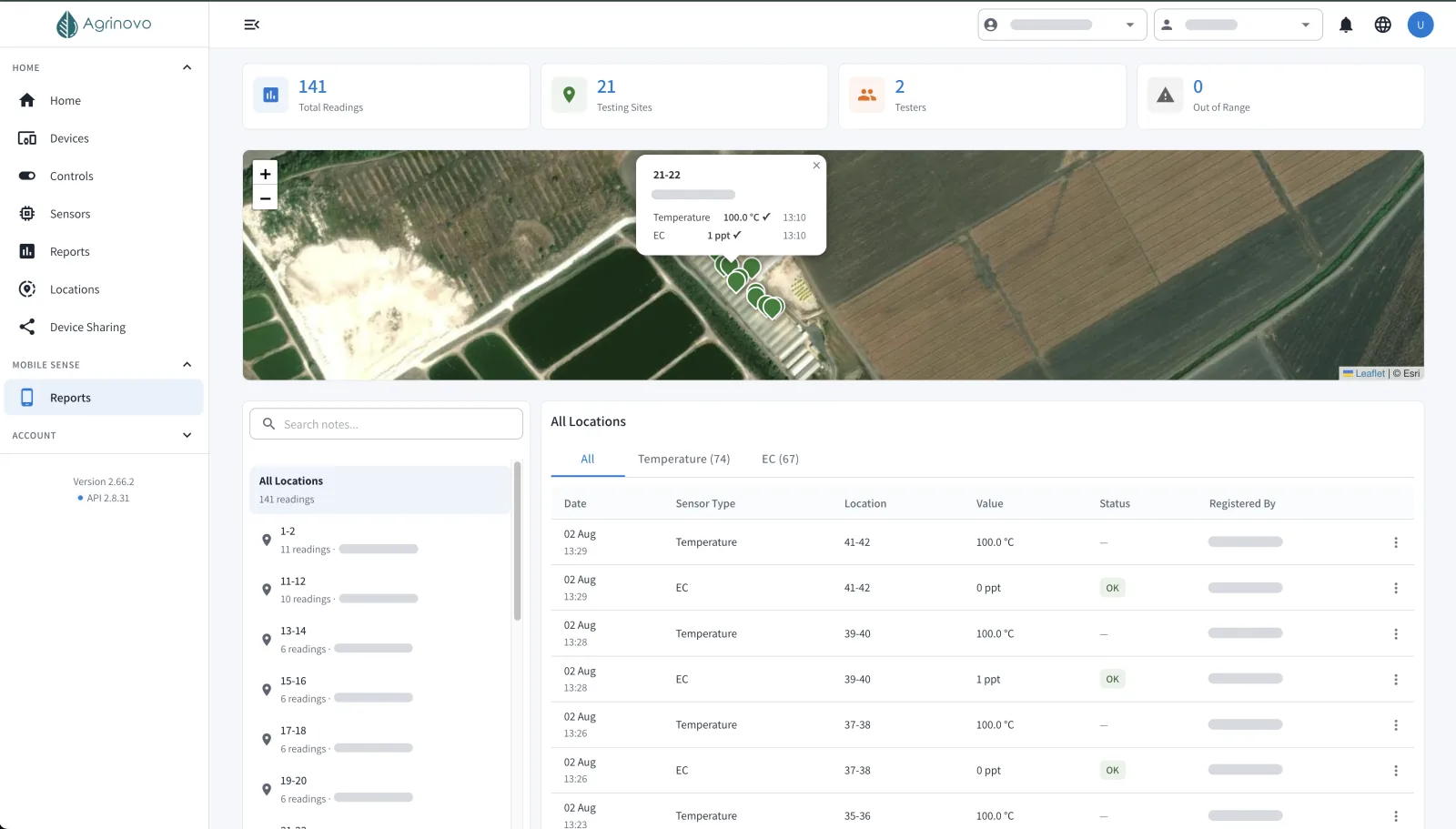
- Spot checks became data. The same platform that holds fixed sensor readings now holds the manual ones, mapped by testing site and grouped by location.
The situation
In deep water raft production, the crop sits on floating panels over channels of nutrient solution and the roots hang directly in it. That solution is the growing medium, all of it, and its EC is the number that says how much fertiliser is actually available to the plants.
It does not stay where you put it. Plants take up water and dissolved nutrients at different rates, evaporation concentrates what is left, top-ups dilute it, and every channel in a house does this slightly differently. The value drifts on its own, and by the time the crop shows the consequence, the drift has been going on for a while.
Checking it was never the hard part. A handheld meter reads EC in seconds. The problem was everything after the reading: a number in someone’s head, or a notebook, with no record of which channel it came from, when, or who took it. Two people checking the same house produced two sets of numbers that could not be compared.
What was installed
Nothing was installed. That is the point.
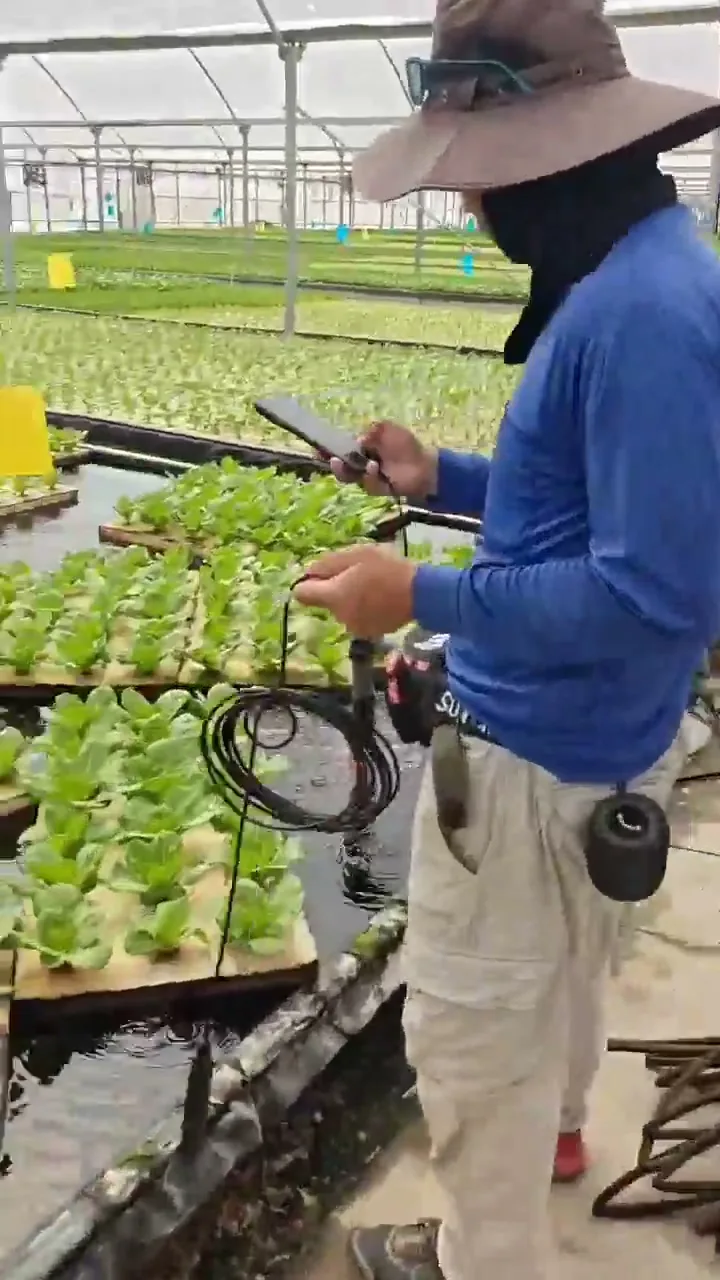
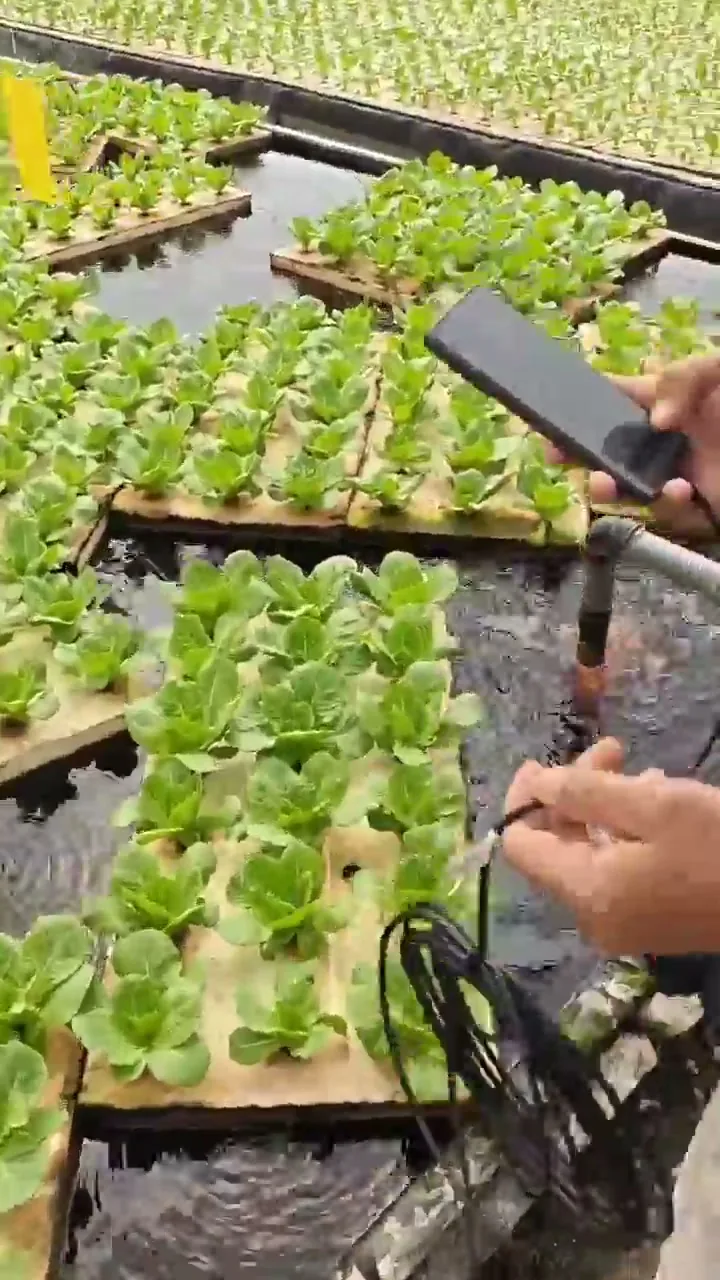
An EC-100 probe connects to a phone through an adapter, and the Agrinovo app reads the sensor directly. A worker walks the house with the probe in one hand and the phone in the other, lowers it into a channel, and saves the reading. It takes about as long as using a pen meter.
What is different is where the reading goes. Each one is stored against the testing site it came from, timestamped, and attributed to the person who took it. By the time the walk is finished the readings are in OmniCloud: mapped by site, grouped by location, listed with values and times, sitting in the same account as the data from fixed sensors.
Why this shape fits hydroponics
A greenhouse is not one volume of water, it is many separate ones. Instrumenting every channel permanently is a real cost and a lot of cable for a value that a grower mostly wants confidence about rather than continuous control over.
One good probe that visits all of them inverts that. The instrument is the expensive part, and it gets used across the whole house instead of sitting in one channel. Coverage becomes a matter of walking, and the record builds up per site so each channel accumulates its own history.
Where a value genuinely needs watching continuously, or needs to drive dosing, a fixed sensor is still the right answer. The useful thing is that it is the same probe. The EC-100 carried around the greenhouse is a standard RS485 Modbus instrument, so it can be wired to a controller later without buying a different sensor.
Why it matters
The gap this closes is not measurement. Growers already measure. The gap is that manual measurements normally live outside the system, which means they cannot be trended, cannot be compared between people, and cannot be checked afterwards.
Putting a professional probe on a phone makes a spot check a data point. It also means the first sensor a grower buys does not have to be committed to one location on day one.
From the site
Hardware in this deployment
Every sensor below connects to the same controller. That is what makes a mixed site possible.
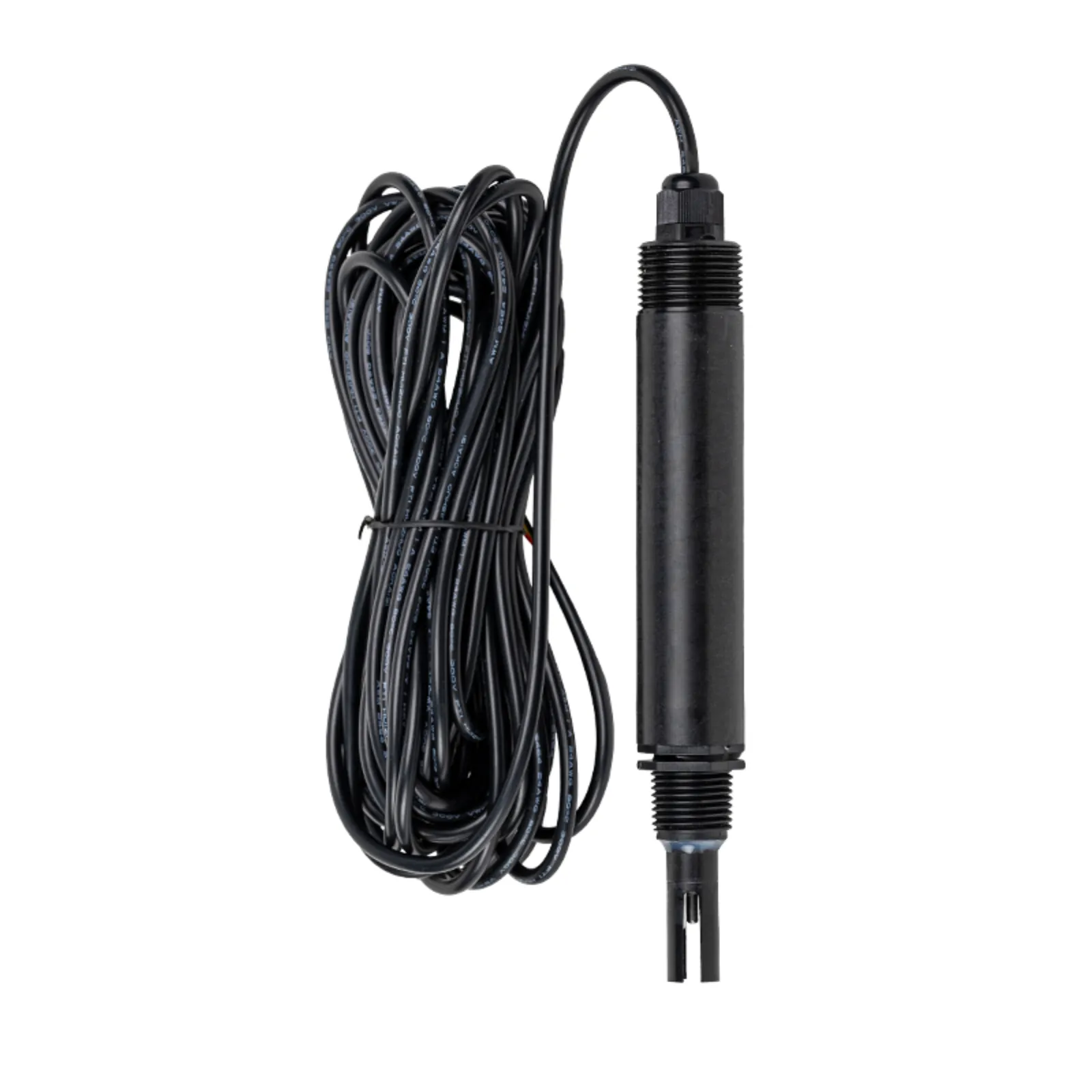
EC Probes
EC-100 Digital Conductivity Probe
Mobile measurement
MobileSense phone interface
Questions about this deployment
What is MobileSense?
Why not just use a handheld EC pen?
Does a hydroponic operation need a sensor in every channel?
Why does EC matter so much in hydroponics?
Can the same probe be installed permanently later?
More deployments like this
Greenhouse
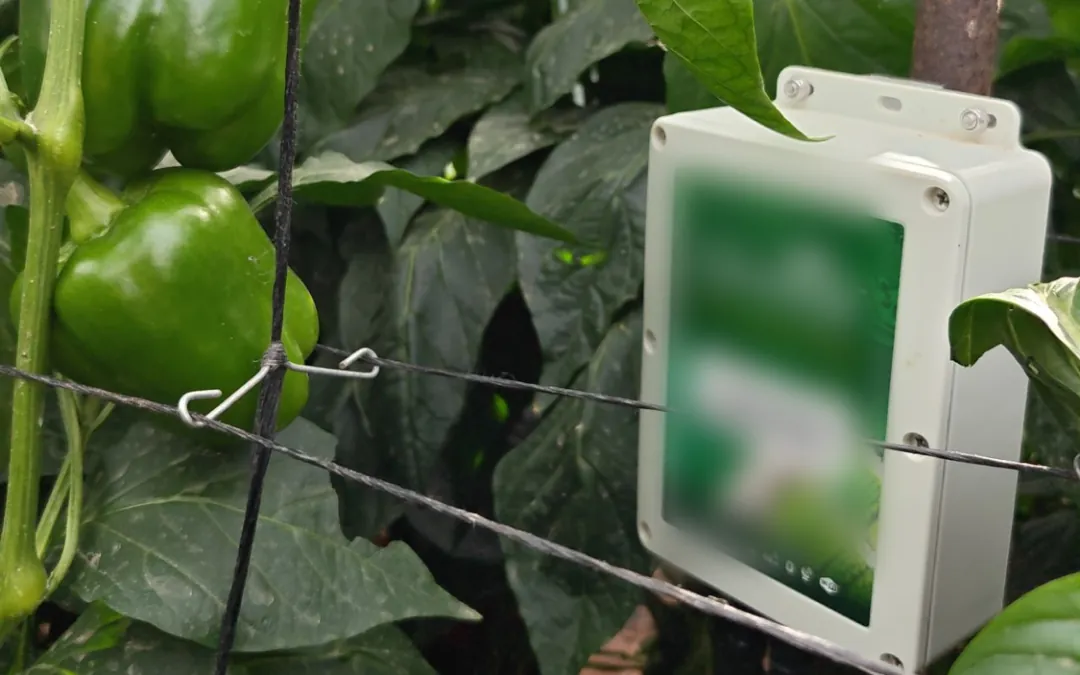
Bell pepper soil tension
A bell pepper greenhouse adds soil water tension to a house that already manages climate closely, because peppers are sensitive to how consistently water arrives, not only to how much.
kPa the unit that matters
Greenhouse
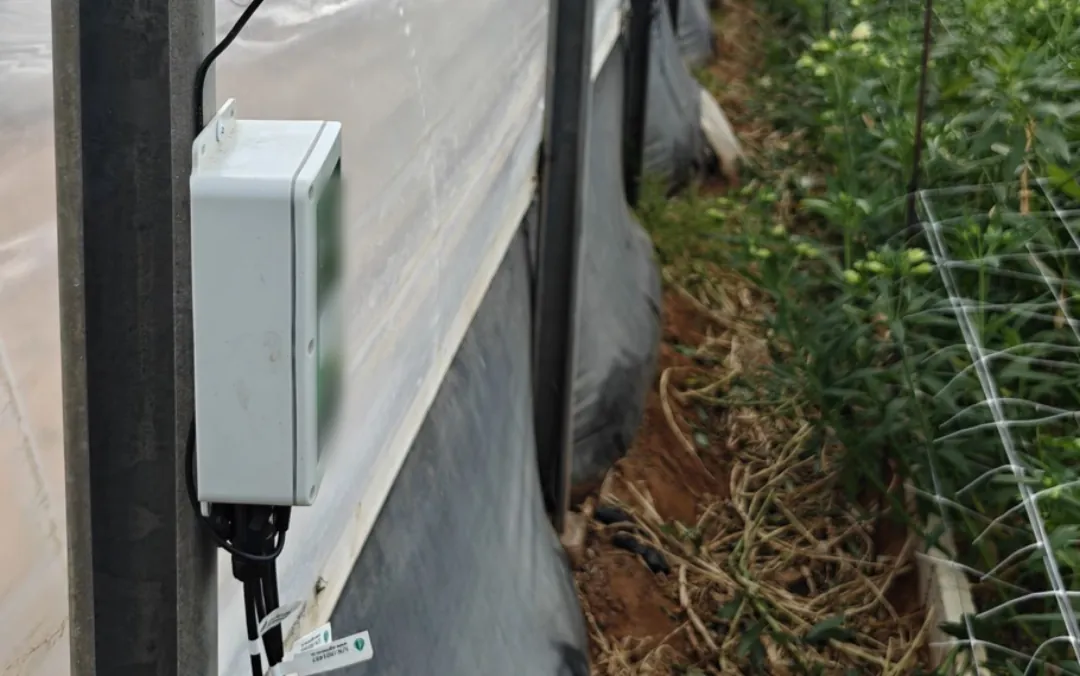
Flower farm chiller fault
A cut flower grower chills its irrigation water. Instrumenting both systems in the root zone rather than at the chillers showed which of the two units was failing, in time to repair it.
2 systems instrumented identically
Greenhouse
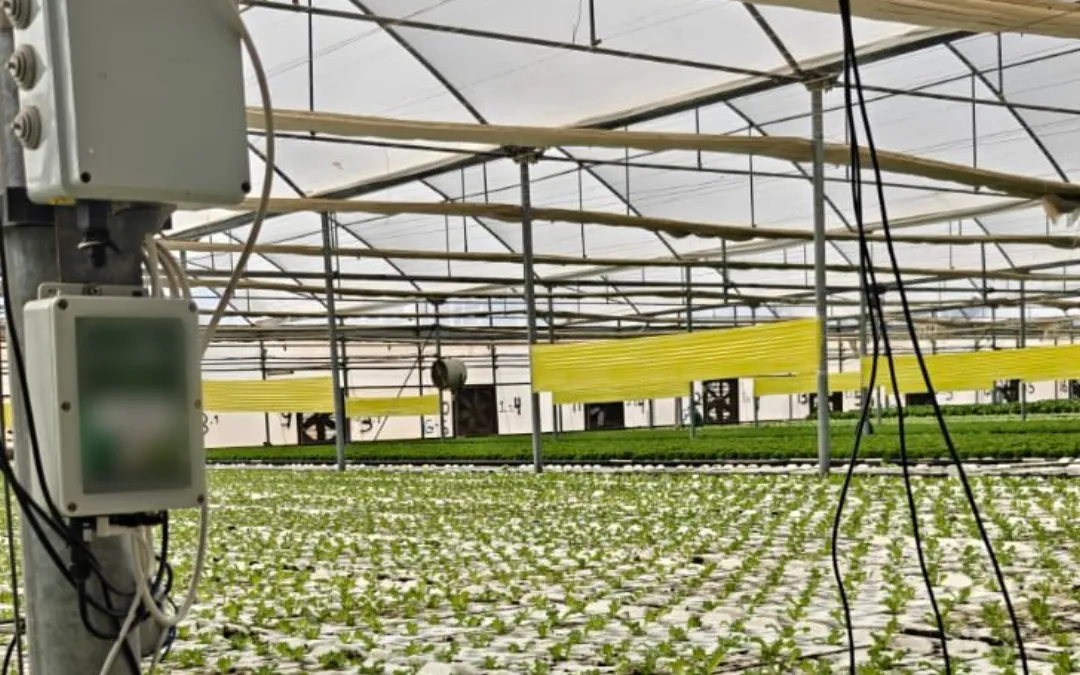
Hydroponic lettuce monitoring
A commercial hydroponic lettuce operation monitors pH, EC, dissolved oxygen and temperature on one controller. Dissolved oxygen is the parameter most nutrient systems never measure, and the one that couples to temperature.
4 parameters, one controller
Planning something similar?
Tell us what needs monitoring and we will scope a right-sized system with you.