Crop · Greenhouse & substrate
Greenhouse pepper sensors: soil tension, drain EC and pH for even fruit
Bell pepper loses fruit to blossom end rot when water reaches the roots unevenly, and loses yield once irrigation water passes about 1.0 dS/m. The sensors that manage both are a low-range tensiometer beside the dripper in soil crops, EC and pH on the feed and the drain in substrate, and air humidity in the house.
At a glance
- Blossom end rot
- Calcium shortage in the fruit tip, driven by uneven water supply more than by soil calcium
- Water salinity
- Full yield up to about 1.0 dS/m in the irrigation water, about 90 percent at 1.5 dS/m
- Soil tension
- 15 to 30 cb in spring, 20 to 40 cb in autumn and winter, sensor 0 to 12 cm from the dripper
- Substrate drain
- 10 to 15 percent of each irrigation, drain EC and pH within 5 to 10 percent of the feed
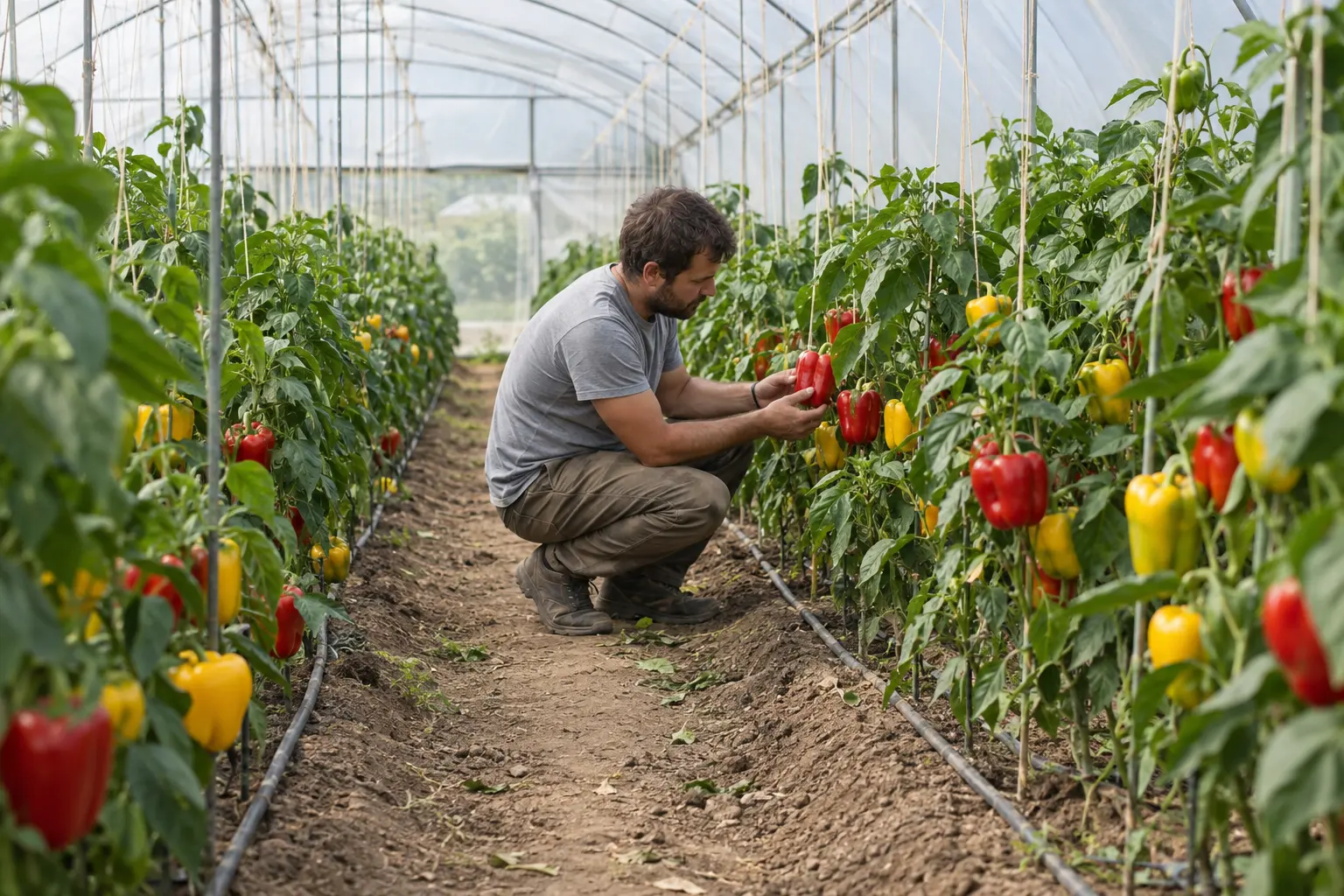
A pepper plant carries flowers, young fruit and fruit close to harvest at the same time, for months. That long overlap is why the crop is so sensitive to consistency: every swing in the root zone lands on some fruit that is expanding at that moment. The disorder that shows it is blossom end rot, and the measurements that prevent it are the ones that show how evenly water and nutrients reach the roots. In soil that means soil tension next to the dripper. In substrate it means the EC and pH of what goes in and what comes out. In both it means the air, because humidity decides how much water the fruit pulls.
What a pepper crop needs from the root zone
An even water supply. University of Kentucky extension describes blossom end rot as a calcium shortage at the blossom end of the fruit, and is clear about the cause: calcium enters the plant with the flow of water, so a shortage in the fruit does not mean a shortage in the soil. When the root zone dries, the water that would carry calcium to the fruit tip is not there. The first fruit of the season are often hit hardest, when fast growing plants meet their first water stress. Root growth also slows in soil that is too wet or too dry, which cuts calcium uptake from the other side.
The right nitrogen balance. The same factsheet links excess nitrogen to the disorder: more leaf growth means more transpiration in the leaves, and calcium follows water there instead of into the fruit. The North Carolina State guidance on greenhouse vegetables is specific about the nitrogen form: keep ammonium to no more than 10 percent of the nitrogen, because calcium uptake falls and blossom end rot appears at around 20 percent.
Moderate humidity. Kentucky notes that high humidity slows water movement through the plant and therefore movement of calcium into the fruit. A closed house on a still, humid day is a calcium problem as well as a disease problem.
Water that is not too salty. Pepper is one of the more salt sensitive vegetables. FAO Irrigation and Drainage Paper 29 gives full yield up to an irrigation water salinity of about 1.0 dS/m, 90 percent at 1.5 dS/m, 75 percent at 2.2 dS/m and half the yield at 3.4 dS/m. Many pepper regions irrigate with brackish or recycled water close to or above those values, so the salinity of the water and of the root zone needs watching all season.
What to measure and where
Soil crops: tension beside the dripper
In a soil house, soil tension is the reading that tells you when the next irrigation is due. The guidance from the Cajamar experimental station in Almería for soil greenhouses gives two working bands: 15 to 30 cb in spring, avoiding 40 cb, which brings water stress, and 20 to 40 cb in autumn and winter, avoiding 10 to 15 cb, which keeps the soil too wet. A study on fertigated bell pepper in a Brazilian greenhouse tested tensions from 15 to 65 kPa and recommended 15 kPa for protected cultivation. Both point to the same thing: pepper wants a wet, steady root zone, closer to field capacity than an orchard.
Where the sensor goes matters as much as the number. The Cajamar guidance places the tensiometer between 0 and 12 cm from the dripper, further out as the irrigation dose grows, so it reads the wetted zone the roots actually use. A second tensiometer below the root zone shows whether irrigations are pushing water past the roots: in the sand-mulched soils of Almería, the same guidance uses about 30 cb at 25 to 30 cm below the sand layer as the point where drainage losses stay small.
Tensiometers tell you when to irrigate, not how much, as the University of California tensiometer factsheet puts it. They read from 0 kPa in saturated soil to about 85 kPa, where they leave their working range. For pepper, that working range covers every trigger above.
Substrate crops: EC and pH in the feed and the drain
In rockwool, coir or perlite, the root zone is small and changes fast, so the useful readings are the feed and the drain. North Carolina State’s guidance for greenhouse vegetables:
| Reading | Target |
|---|---|
| Feed EC | 1.0 to 3.0 mS/cm; rockwool 1.5 to 2.0 mS/cm, somewhat higher for fruit quality |
| Drain volume | 10 to 15 percent of each irrigation |
| Drain EC and pH | Within 5 to 10 percent of the feed |
A drain much saltier than the feed means salts are building up in the slab. A drain much weaker means the plants are taking up more than the feed supplies. A pH drift in the drain means nutrients are becoming unavailable.
A coir trial with bell pepper published in PLOS ONE shows what happens when the drain is skipped. Without drainage, the substrate solution passed the crop’s upper EC limit in every treatment by 181 days after planting, and earlier at the highest nitrogen and potassium rates. With a drain of 10 to 20 percent, yield was higher in the late and total harvest and blossom end rot was lower. The difference appears late in the season, which is exactly when a monthly hand check is most likely to miss it.
Water used per unit of light
North Carolina State gives a rule for computer controlled irrigation in substrate: about 100 to 120 ml per plant for each MJ of radiation for pepper. A light sensor is not part of this kit, but the rule explains why drain volume and drain EC change with the weather even when the program does not, and why they are worth logging continuously.
The air
Air temperature and humidity at canopy height complete the picture. They are already part of most climate control systems, but logging them on the same time axis as tension and drain EC lets you see whether a run of fruit with blossom end rot followed a dry root zone, a humid week, or both.
Agrinovo hardware for a pepper house
The sensors above are modules on one controller:
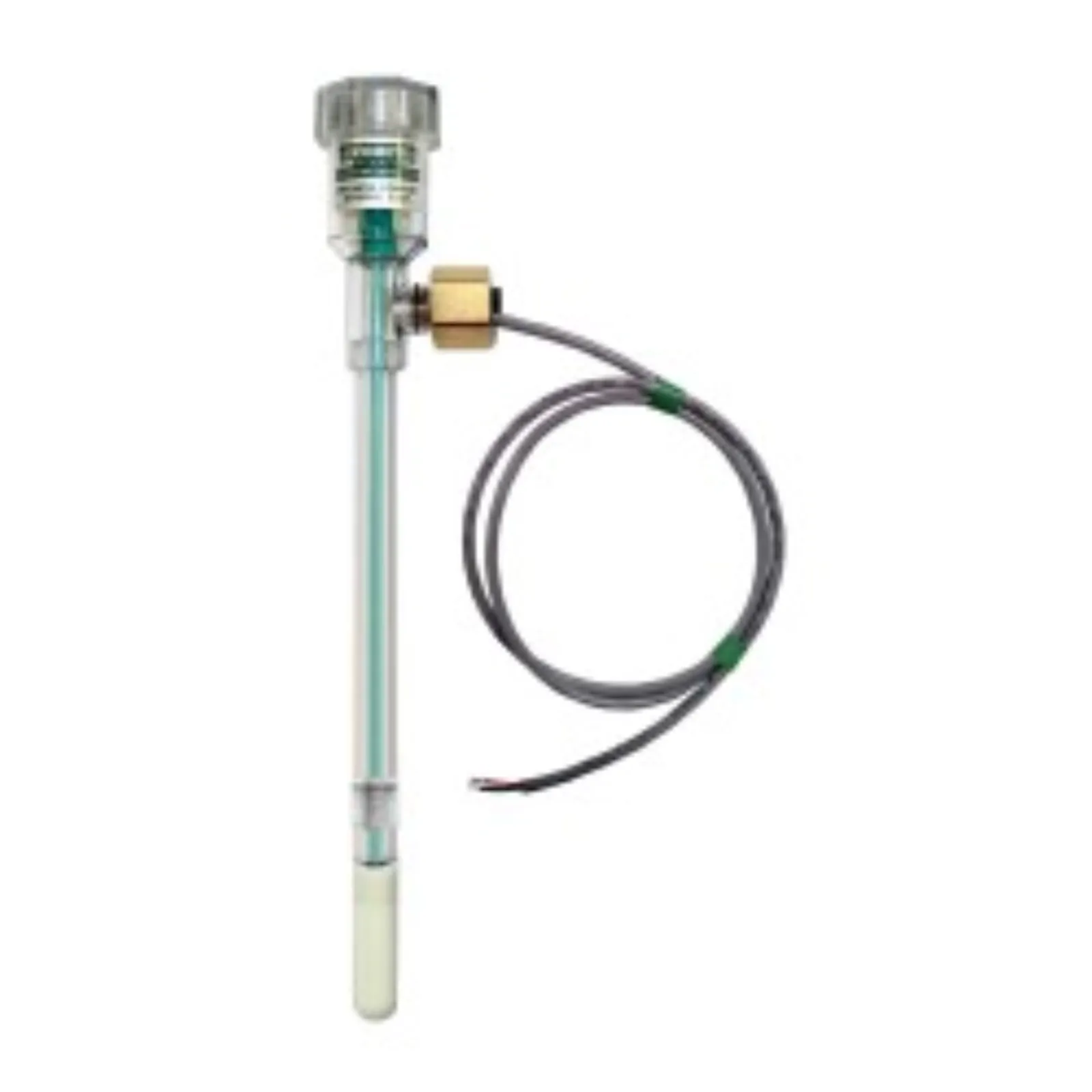
- Irrometer LT tensiometer (0 to 40 cb) for soil houses, where the 15 to 40 cb triggers sit inside its range with resolution to spare.
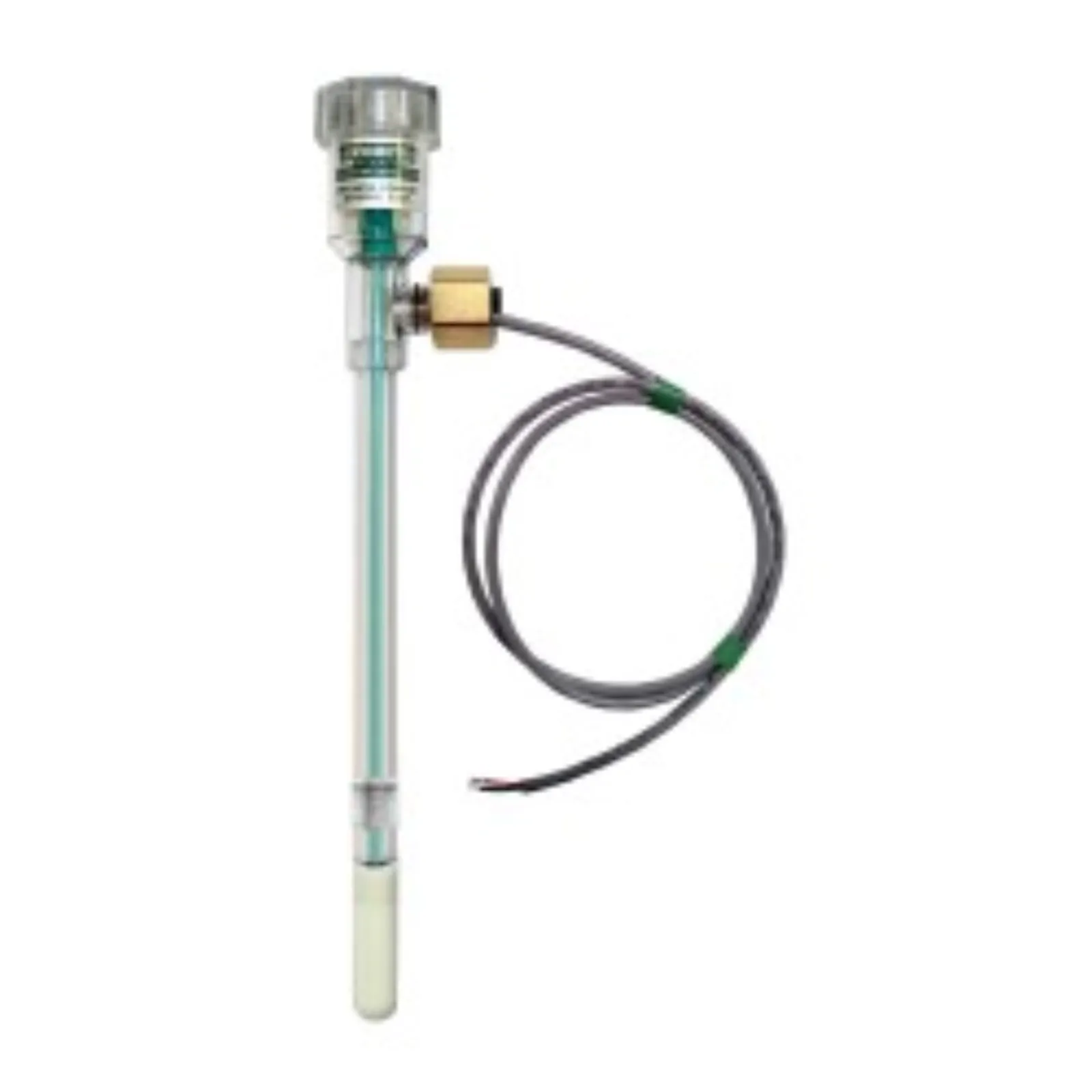
- Irrometer SR tensiometer (0 to 100 cb) for the deeper drainage check, or for heavier soils that run drier between irrigations.
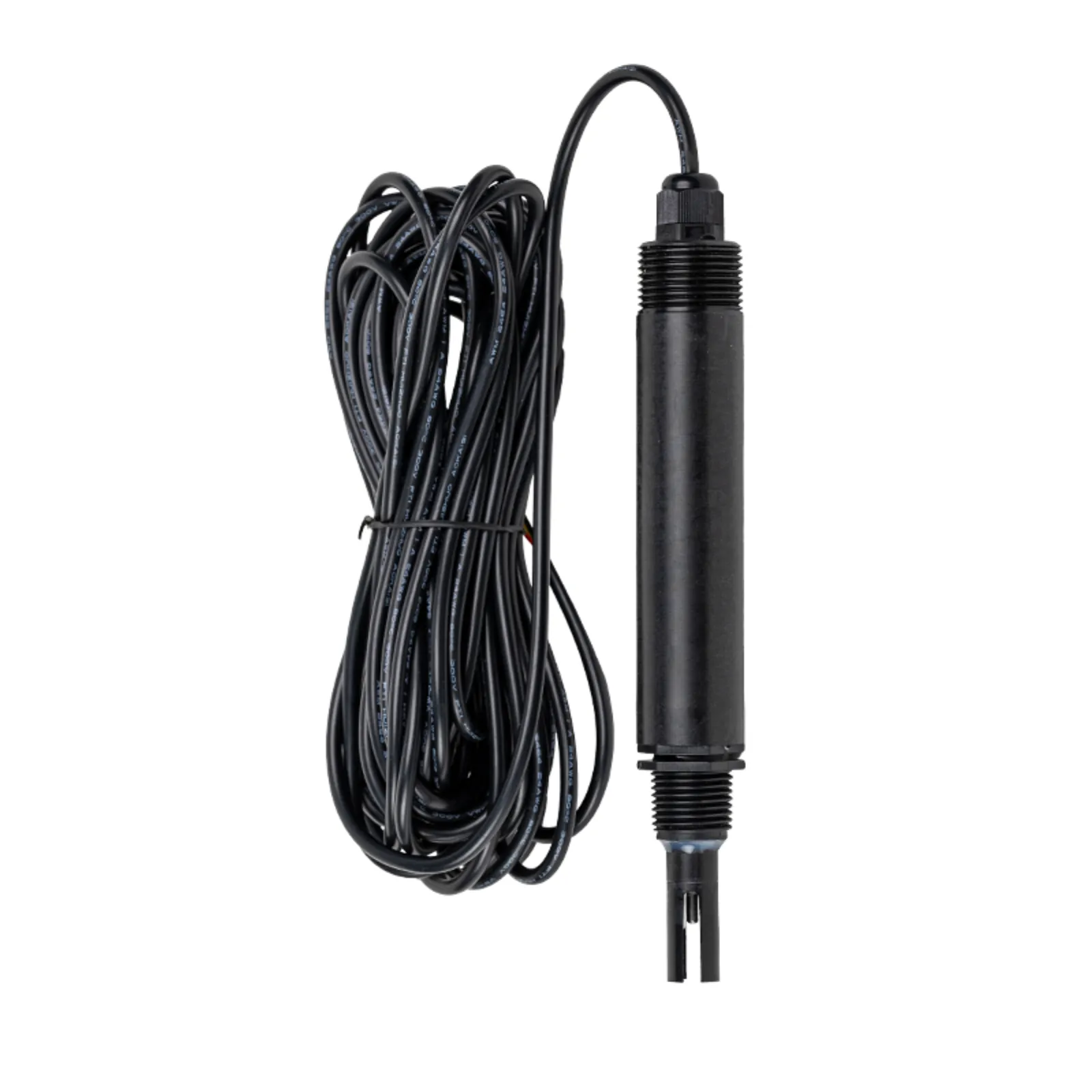
- EC-100 conductivity probe, RS485 Modbus, with automatic temperature compensation. It ships with the K=1.0 electrode, which reads 2 to 10,000 µS/cm, so it covers feed, drain and brackish irrigation water up to 10 dS/m; above that, the EC-110 takes over.
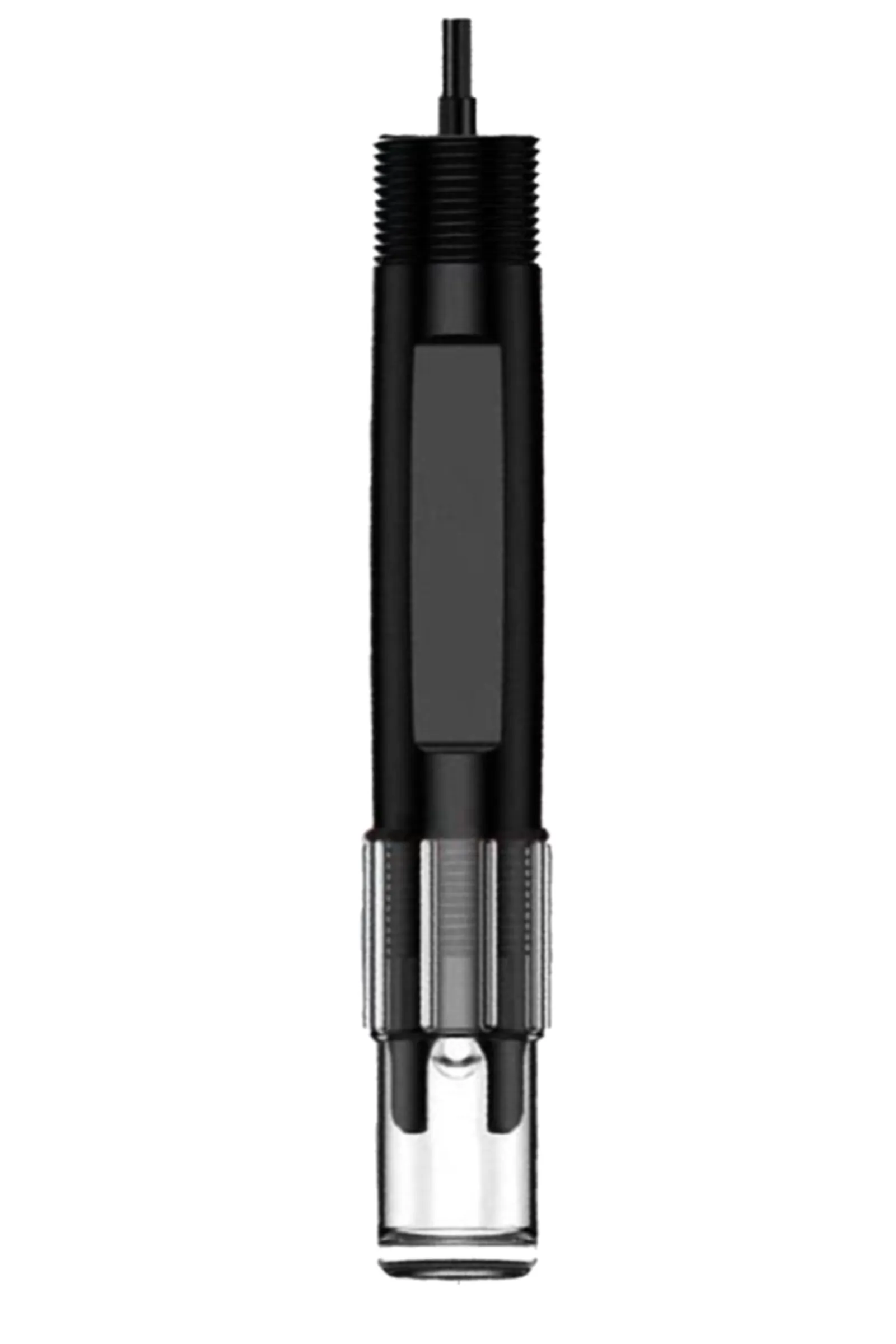
- PH-100 pH probe, RS485 Modbus, 0 to 14 pH with ±0.02 pH accuracy, for the feed and the drain.
- THS-100 temperature and humidity sensor, RS485 Modbus, -40 to +80°C and 0 to 100 percent RH, at canopy height.
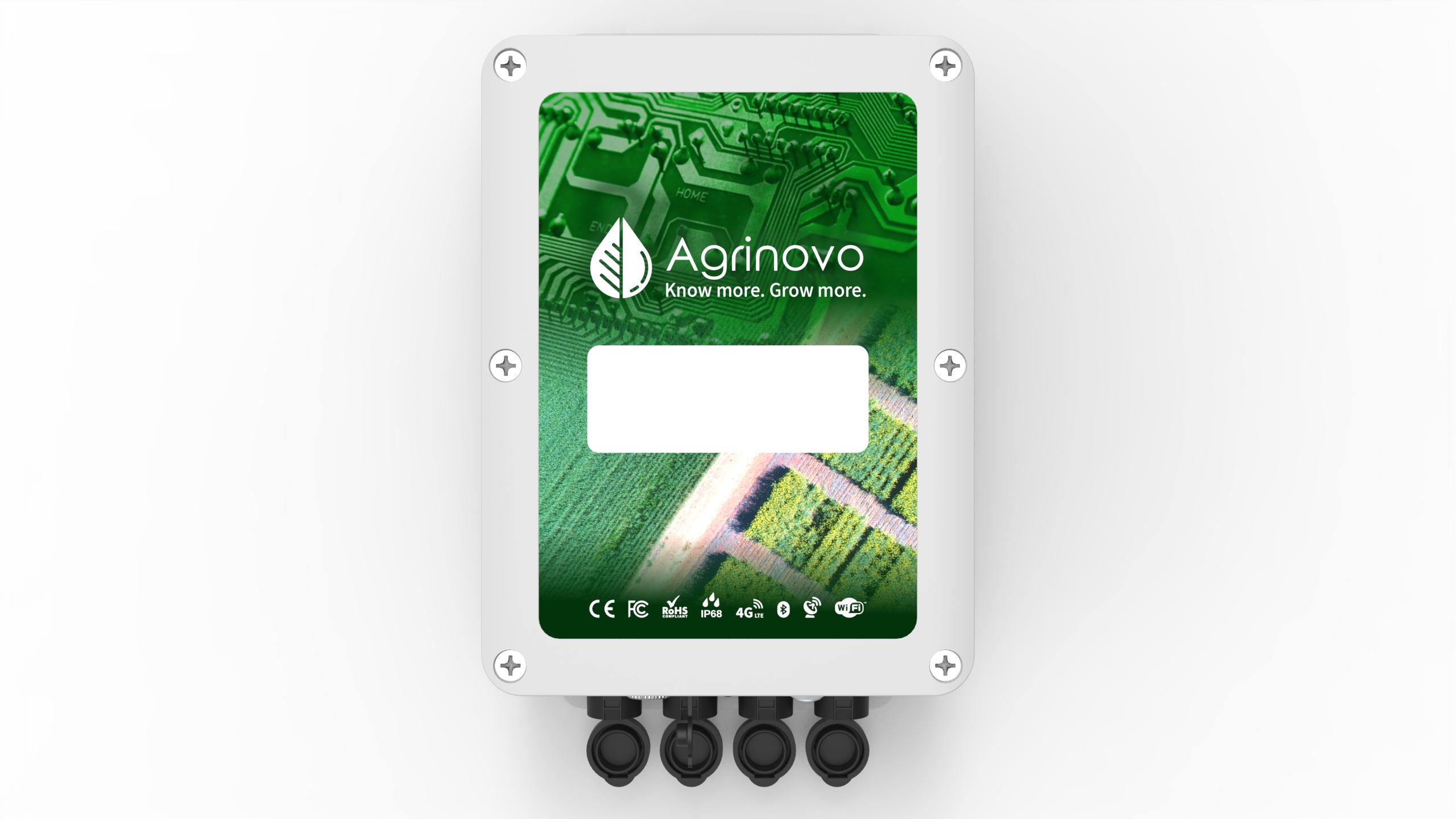
- Omni Genesis controller, reading the tensiometers as analog inputs and the probes on one RS485 bus, and reporting over cellular.
Each reading gets its own range and an allowed time out of range. When a reading stays outside its range longer than allowed, the users on the account get an app notification.
How the readings are used through the season
In a soil house, the tension curve between irrigations is the record of how even the water supply was. A sawtooth that climbs well past the band before each irrigation is the pattern that precedes blossom end rot on the next fruit set. In substrate, the line to watch is the gap between feed EC and drain EC: when it widens week after week, the drain fraction is too small for the water you have.
Two things sensors do not replace. One is the soil or water analysis that tells you whether the salinity is sodium, chloride or boron, which matters for pepper. The other is walking the rows: fruit with a soft, dark blossom end is unmarketable and should come off the plant, and its timing is the best check that the readings are telling you the truth.
Agrinovo hardware for this application
Every item links to its product page with the datasheet. Specifications on those pages come from the manufacturer documents, not from this article.
soil
Irrometer LT Tensiometer - Low Tension, 0-40 cb
soil
Irrometer SR Tensiometer - Standard Range, 0-100 cb
EC Probes
EC-100 Digital Conductivity Probe
pH probes
PH-100 Digital pH Probe - RS485 Modbus

environmental
THS-100 RS485 Temperature & Humidity Sensor
controllers
Omni Genesis IoT Controller - 4-Port, Solar, IP65
Frequently asked questions
What causes blossom end rot in greenhouse peppers?
What EC should a greenhouse pepper drain have?
At what soil tension should I irrigate peppers in a soil greenhouse?
How salty can irrigation water be for peppers?
Can one Agrinovo controller read tensiometers, EC, pH and humidity together?
Sources
The agronomy on this page comes from the publications below. Where a number is not on this list, we left it out.
- Blossom End Rot, Center for Crop Diversification Fact Sheet CCD-FS-11, Rachel Rudolph, University of Kentucky Cooperative Extension
- Irrigation and Fertilization (greenhouse vegetable production), Mary M. Peet, North Carolina State University
- Influence of drainage and nutrient-solution nitrogen and potassium concentrations on bell pepper in a substrate (PLOS ONE, 2017), Wamser, Cecílio Filho, Nowaki, Mendoza-Cortez and Urrestarazu
- Water quality for agriculture, FAO Irrigation and Drainage Paper 29, Table 4, Food and Agriculture Organization of the United Nations
- Yield of fertigated bell pepper under different soil water tensions and nitrogen fertilization (Revista Caatinga, 2020), Santos, Lima Junior, Silva, Castro and Gomes
- Manejo eficiente de la fertirrigación en invernaderos, Juan José Magán Cañadas, Estación Experimental Cajamar Las Palmerillas
- Soil Moisture Monitoring with Tensiometers, University of California Agriculture and Natural Resources
Other applications
Greenhouse & substrate
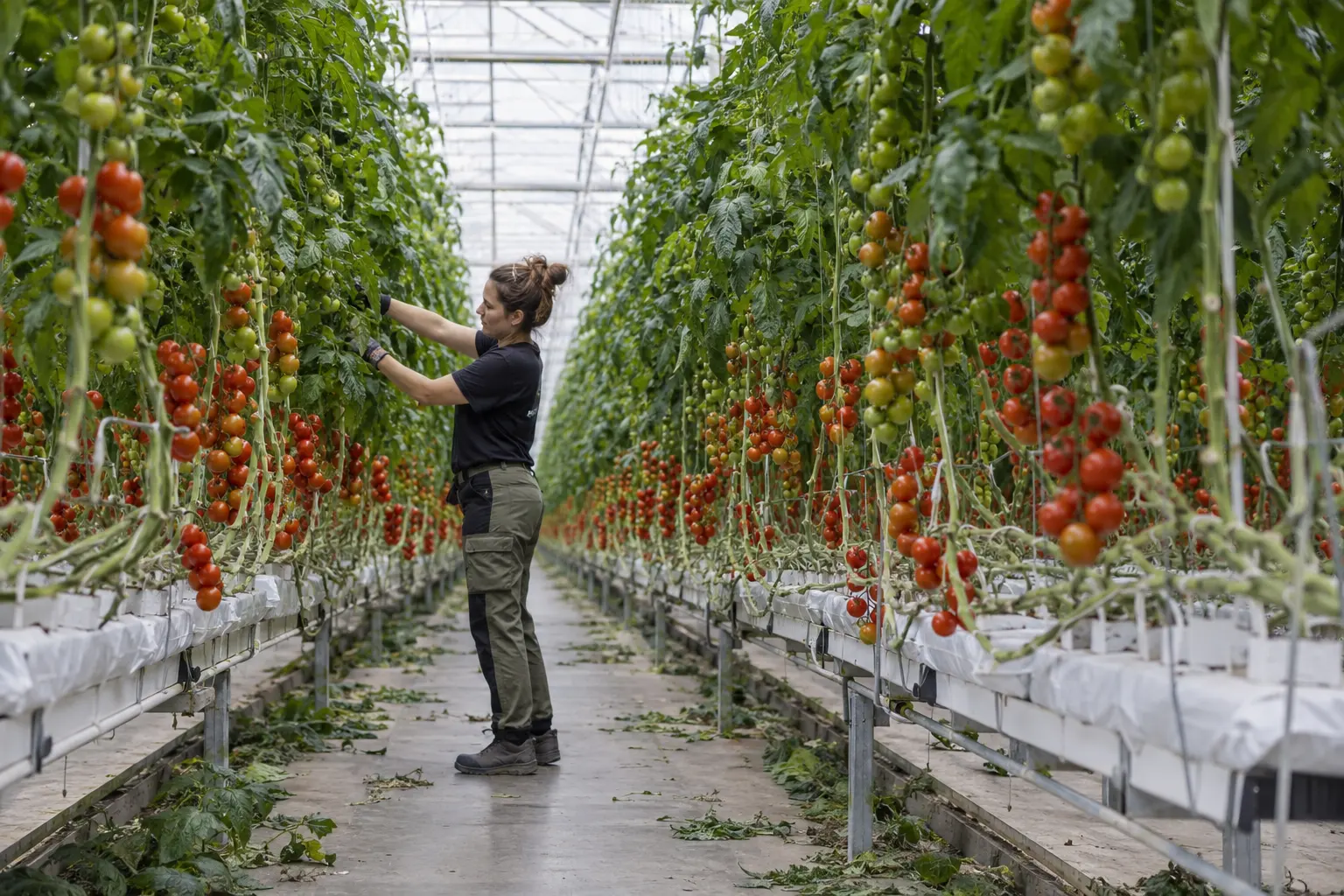
Greenhouse tomatoes
Which sensors a greenhouse tomato crop needs and where they go: drain EC and drain percentage on substrate, slab pH, root zone temperature, soil tension for soil-grown houses, and the Agrinovo hardware that reads them.
Orchards & plantations
Avocado orchards
Which sensors an avocado orchard needs and where to put them: tensiometers and Watermark probes at 20 and 45 cm, irrigation triggers by soil type, EC of the irrigation water, and the Agrinovo hardware that reads them remotely.
Orchards & plantations
Citrus orchards
Which sensors a citrus grove needs and where they go: two soil water sensors in the top 30 cm at the dripline, depletion and tension triggers, irrigation water EC against rootstock chloride limits, and the Agrinovo hardware.
Tell us about your plot
Soil type, crop, irrigation method and what you want to see from your phone. We reply with a sensor list and a layout, not a brochure.