Greenhouse
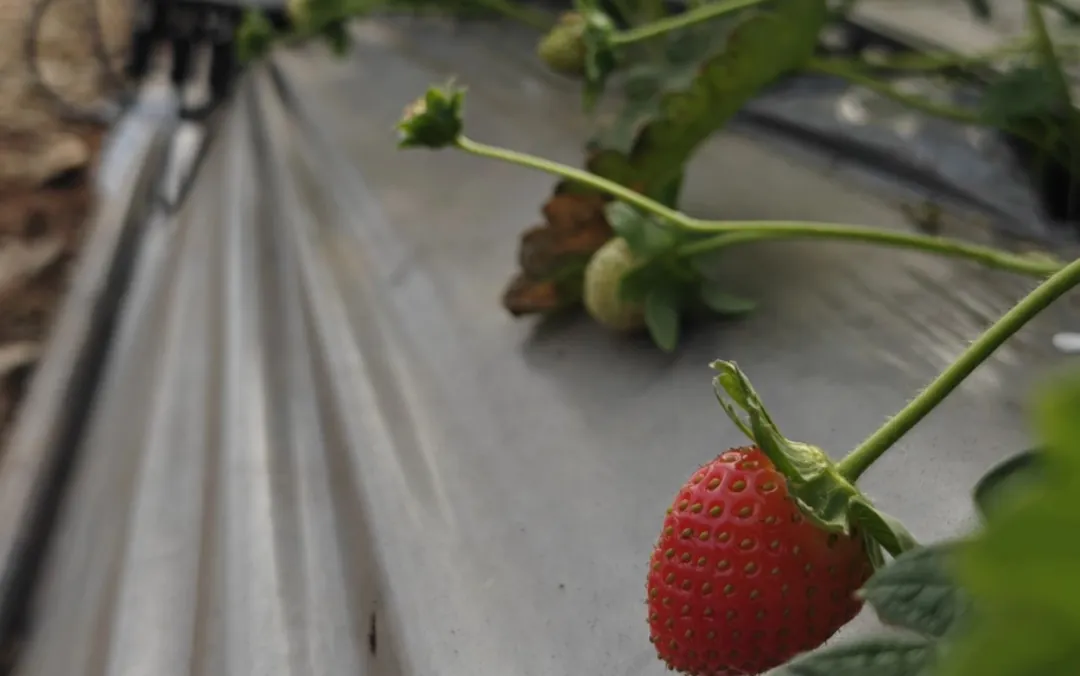
Strawberries under plastic mulch, where the grower cannot see the soil by design
A strawberry greenhouse puts tensiometers into raised beds sealed under plastic mulch. The mulch is there for good reasons, and it removes every traditional way of judging soil moisture.
Results on site
- Sealed
- root zone
- kPa
- what is measured
- Shallow
- rooting depth
The mulch that makes the system work also makes it invisible
How hard the roots pull, which does not need line of sight
Little stored water, so the profile changes quickly
- The challenge
- Raised beds are covered in plastic mulch, so the soil cannot be seen, dug or felt. Every traditional way a grower judges soil moisture is unavailable, and the crop is shallow-rooted with little margin.
- What we installed
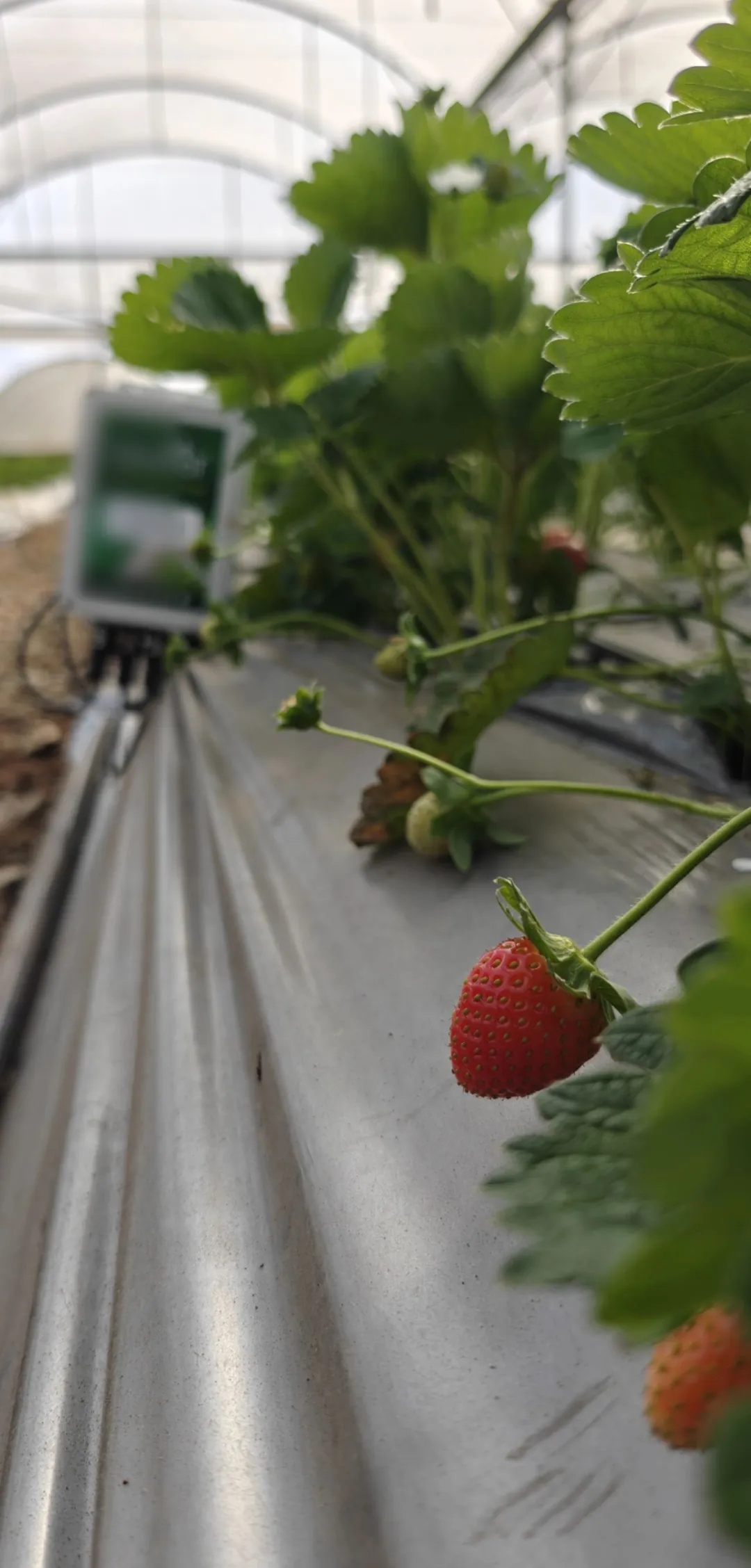
- Tensiometers reading soil water tension inside the bed, on an Omni Genesis controller at the end of the row.
- The result
- The sealed root zone becomes readable without opening it, on the one measurement that survives being covered.
The situation
A strawberry bed under plastic mulch is a well-designed system. The film suppresses weeds, holds moisture, warms the soil early in the season and keeps the fruit off the ground, which matters for a crop where a marked berry is an unsold berry. There is a good reason it is standard practice.
It also seals the root zone completely.
Every ordinary way a grower checks soil moisture assumes access to the soil. You look at the surface and see whether it has dried. You scrape it back. You dig down beside a plant. You pick up a handful and feel how it holds together. None of those are available through a continuous sheet of plastic, and the only way to get them back is to cut a hole in the thing that is doing four useful jobs.
So the bed goes in, the film goes down, and from that point the most important variable in the system is behind a cover for the rest of the season.
Why the margin is thin
Strawberries root shallowly. The volume of soil holding water the plant can reach is small, which means the profile moves between comfortable and stressed much faster than it does under a deep-rooted crop.
That compresses the useful checking interval. On a deep-rooted orchard crop, a weekly reading is a reasonable sample of what is happening. On a shallow bed under mulch, a week can contain a full cycle of drying and rewetting that nobody saw, and repeated cycles of that are exactly what shows up later in fruit size and shelf life.
What was installed
Tensiometers reading soil water tension inside the bed, wired to an Omni Genesis controller at the end of the row.
The sensors go in at planting, while the bed is open and before the film is laid. That is the one moment when installing them costs nothing: no cut in the mulch, no disturbance to an established root system, one cable run that then stays put for the season.
Tension is the right measurement here specifically because it does not require access. It reports in kPa, a measure of how hard the roots have to pull to get water, which is both the quantity the plant responds to and a number that carries between beds without recalibration. Irrometer tensiometers come in different lengths for different root depths, and a shallow bed takes one of the short ones. The model follows the soil: the SR for medium to heavy soils and the LT for sandy soils and growing media.
Why it matters
There is a general point here about where instrumentation earns the most.
The obvious place to put a sensor is somewhere already well understood, which is also where it adds least. The valuable place is wherever a grower’s own senses have been designed out of the system. Mulched beds, substrate bags, sealed root zones, tanks, silos, buried pipe: in each case something was covered for a good reason, and the covering took an experienced person’s judgement offline along with it.
The mulch is not the problem to solve. It is doing its job. The measurement simply has to go where the eye no longer reaches.
From the site
Hardware in this deployment
Every sensor below connects to the same controller. That is what makes a mixed site possible.
controllers
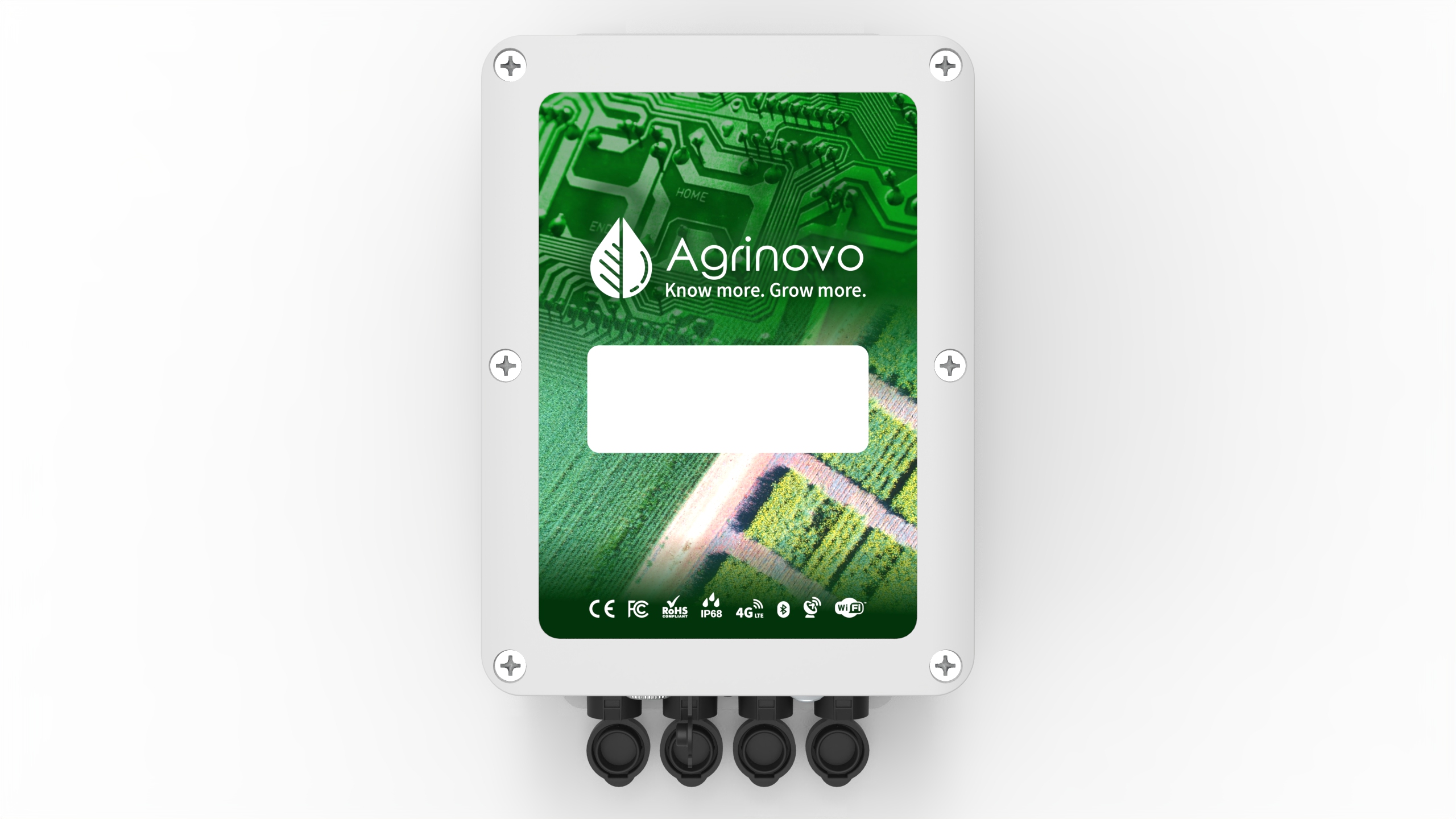
Omni Genesis IoT Controller - 4-Port, Solar, IP65
Soil water tension
Irrometer tensiometers
Questions about this deployment
Why does plastic mulch make irrigation harder to judge?
Why not just lift the mulch to check?
Does shallow rooting change what you measure?
Why tension rather than moisture percent?
When should the sensors go in?
More deployments like this
Greenhouse
Bell pepper soil tension
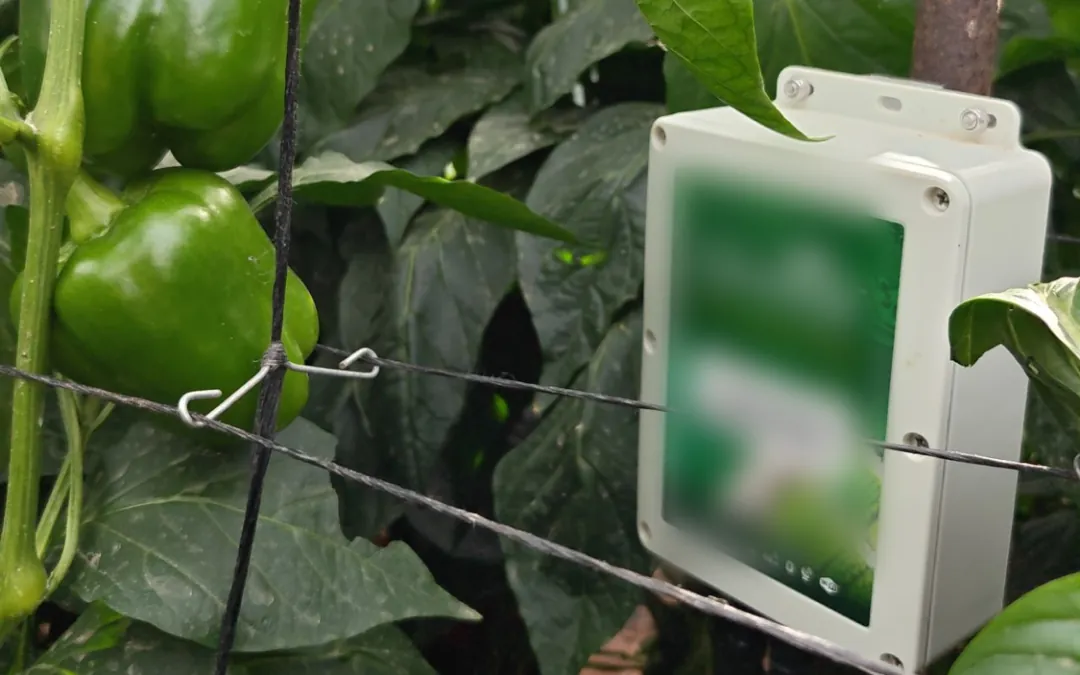
A bell pepper greenhouse adds soil water tension to a house that already manages climate closely, because peppers are sensitive to how consistently water arrives, not only to how much.
kPa the unit that matters
Greenhouse
Flower farm chiller fault
A cut flower grower chills its irrigation water. Instrumenting both systems in the root zone rather than at the chillers showed which of the two units was failing, in time to repair it.
2 systems instrumented identically
Greenhouse
Hydroponic lettuce monitoring
A commercial hydroponic lettuce operation monitors pH, EC, dissolved oxygen and temperature on one controller. Dissolved oxygen is the parameter most nutrient systems never measure, and the one that couples to temperature.
4 parameters, one controller
Planning something similar?
Tell us what needs monitoring and we will scope a right-sized system with you.