Silo & Level
80 GHz radar on a fish farm's feed silo, so the feed stock stops being an estimate
A fish farm fits an 80 GHz radar level sensor to its feed silo. Feed stock reads continuously in the farm's own platform instead of being judged by eye from the top of a ladder.
Results on site
- 80 GHz
- FMCW radar
- ±1 mm
- rated accuracy
- Non-contact
- measurement
A narrow beam that measures past a silo's walls and internals
Manufacturer-rated, and unaffected by dust, heat or humidity
Nothing enters the feed, nothing wears, nothing to recalibrate
- The challenge
- Feed level in the silo could only be judged by opening the hatch at the top and looking in. Between checks the farm was ordering and feeding against an estimate, and the check itself meant a climb.
- What we installed
- An 80 GHz FMCW radar level sensor on the silo lid, measuring the feed surface without contact and reporting over RS485 Modbus into an Omni Genesis controller.
- The result
- Silo level reads continuously in the same platform the farm already uses for its ponds, so remaining feed sits next to the feeding records rather than in someone's head.
The situation
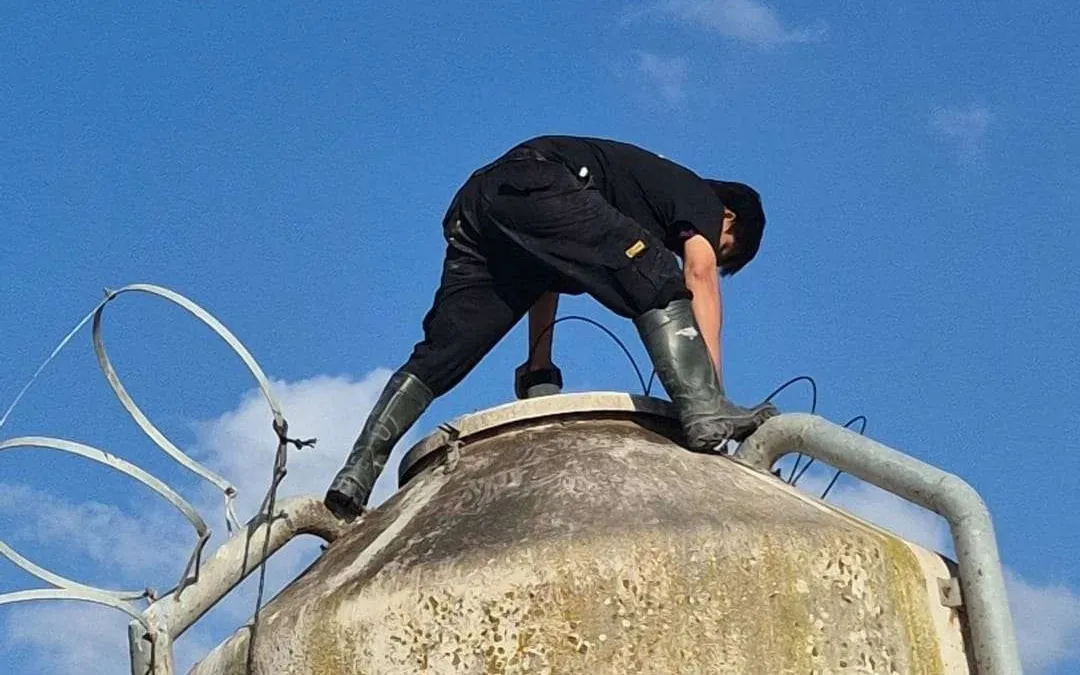
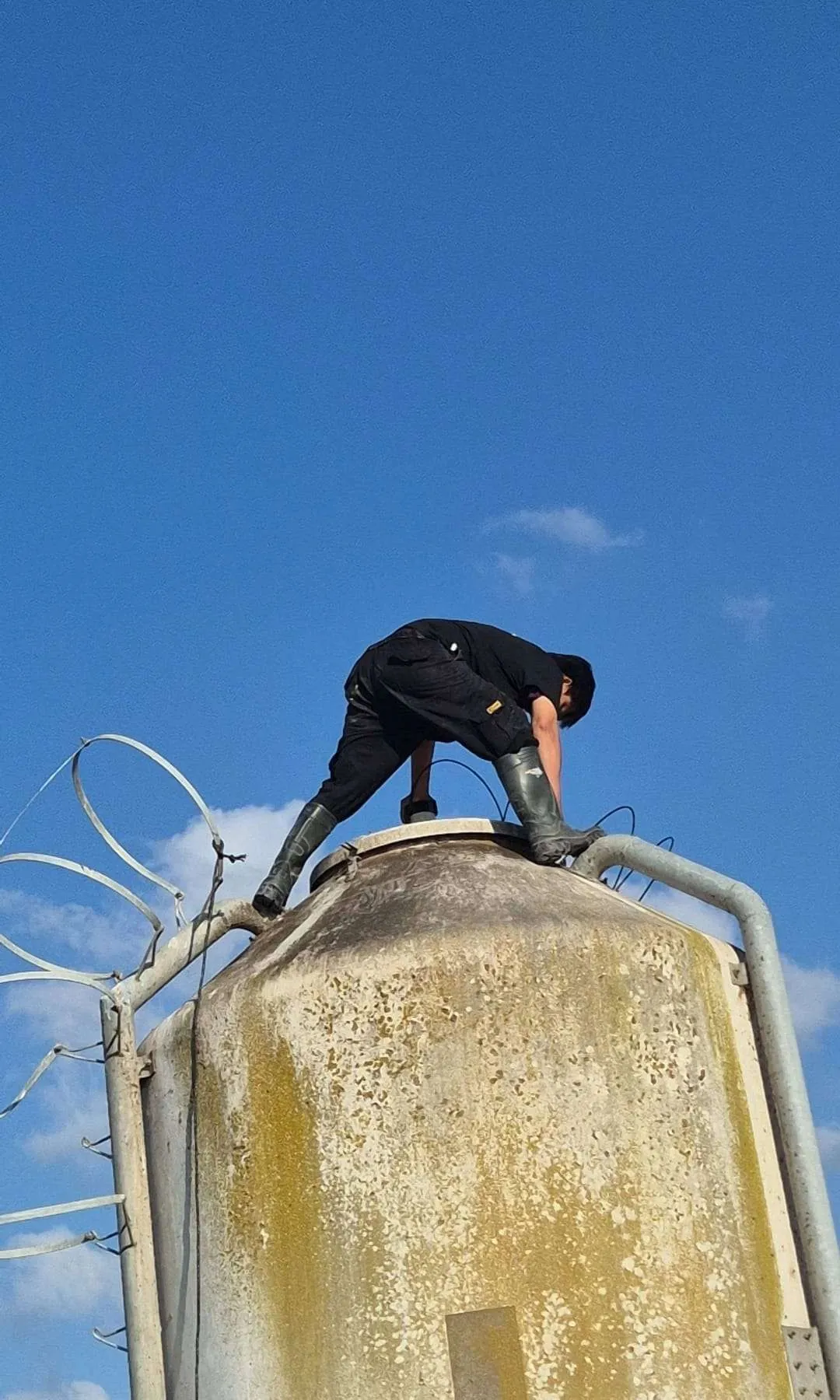
Feed is the biggest running cost in fish production, and on most farms it lives in a silo that gives no indication of how full it is. The only honest way to find out is to climb the ladder, open the hatch at the top and look in, which is why the photograph at the top of this page exists.
That works, in the sense that it produces an answer. What it does not produce is a number, or a record, or an answer at any time other than the moment somebody is standing up there. Between checks the farm orders feed against an estimate and feeds against an estimate, and the estimate is doing more work than anyone would like. A silo that empties earlier than expected turns into an urgent delivery; one that is topped up too early ties up money and space in something that does not improve with storage.
Why radar, and why 80 GHz
A feed silo is one of the harder vessels to measure. It is tall and narrow, it has structure inside it, the material surface is sloped and uneven rather than flat, and during a delivery the whole space fills with dust.
That rules out most of the easy options. An ultrasonic meter measures by timing a pulse through the air, so the dust, the temperature and the humidity inside the silo all change the answer. Lower-frequency radar is immune to those, but spreads a wider beam, which in a narrow silo means picking up the walls and the internals along with the feed.
80 GHz FMCW radar is the specification that answers both. The beam is narrow enough to look down the length of a silo without catching its sides, the bandwidth is wide enough to separate the true material surface from the noise behind it, and the higher frequency reflects better off fine, dusty, granular material than a lower one does. None of it depends on the air the signal travels through.
What was installed
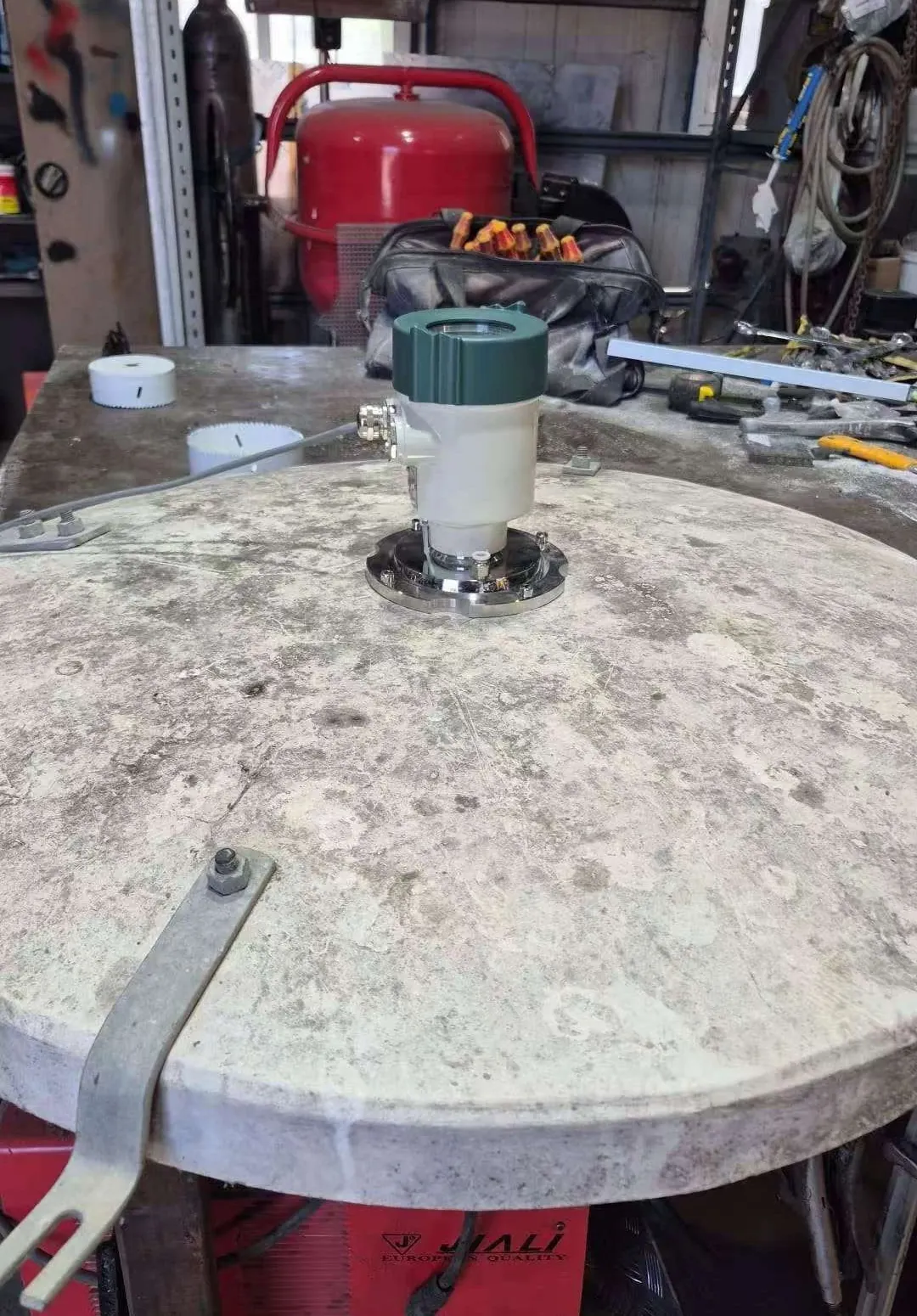
The sensor is an 80 GHz FMCW radar level sensor, mounted through a stainless flange in the centre of the silo lid. The second photograph shows it in the state it was in before anyone went near the silo: sensor, flange and lid assembled and sealed on a workbench, so the only part of the job that had to be done at the top of a ladder was bolting the lid back down.
From there it is a cable run. The sensor outputs RS485 Modbus RTU into an Omni Genesis controller, and the controller carries the reading up to the platform on the same connection it uses for everything else on the farm.
Nothing goes inside the silo. There is no probe to be buried by the next delivery, no cable to abrade, no float to jam and nothing to take out and clean. The sensor sits in the roof and looks down, and a full silo and an empty one are the same job for it.
What changes on the farm
The level arrives in the same place as the rest of the farm’s measurements, which is the part that matters more than the sensor. This farm runs its production on AquaOS, so how much feed is in the silo now sits alongside the feeding records rather than in a notebook or in somebody’s memory. Feed going out and feed remaining stop being two separate accounts that only get reconciled when one of them turns out to be wrong.
Reordering changes shape too. A weekly guess becomes a level anyone can look at, from anywhere, at the moment they need to decide. That is a smaller claim than it sounds and a more useful one: most feed emergencies are not caused by bad planning, they are caused by planning against a number nobody had actually checked.
Why it matters
There is a pattern in this that is not specific to feed. A farm usually knows its water: oxygen, temperature and pH have been instrumented for years because the consequence of getting them wrong arrives within hours. Inventory has been left to human attention, because the consequence of getting it wrong arrives slowly and is paid in money rather than in fish.
Measuring the silo puts the largest cost line on the farm under the same continuous observation as the water, using the same controller and the same platform. It is the cheapest kind of instrumentation to justify, because it is measuring the thing the farm is already spending the most on.
From the site
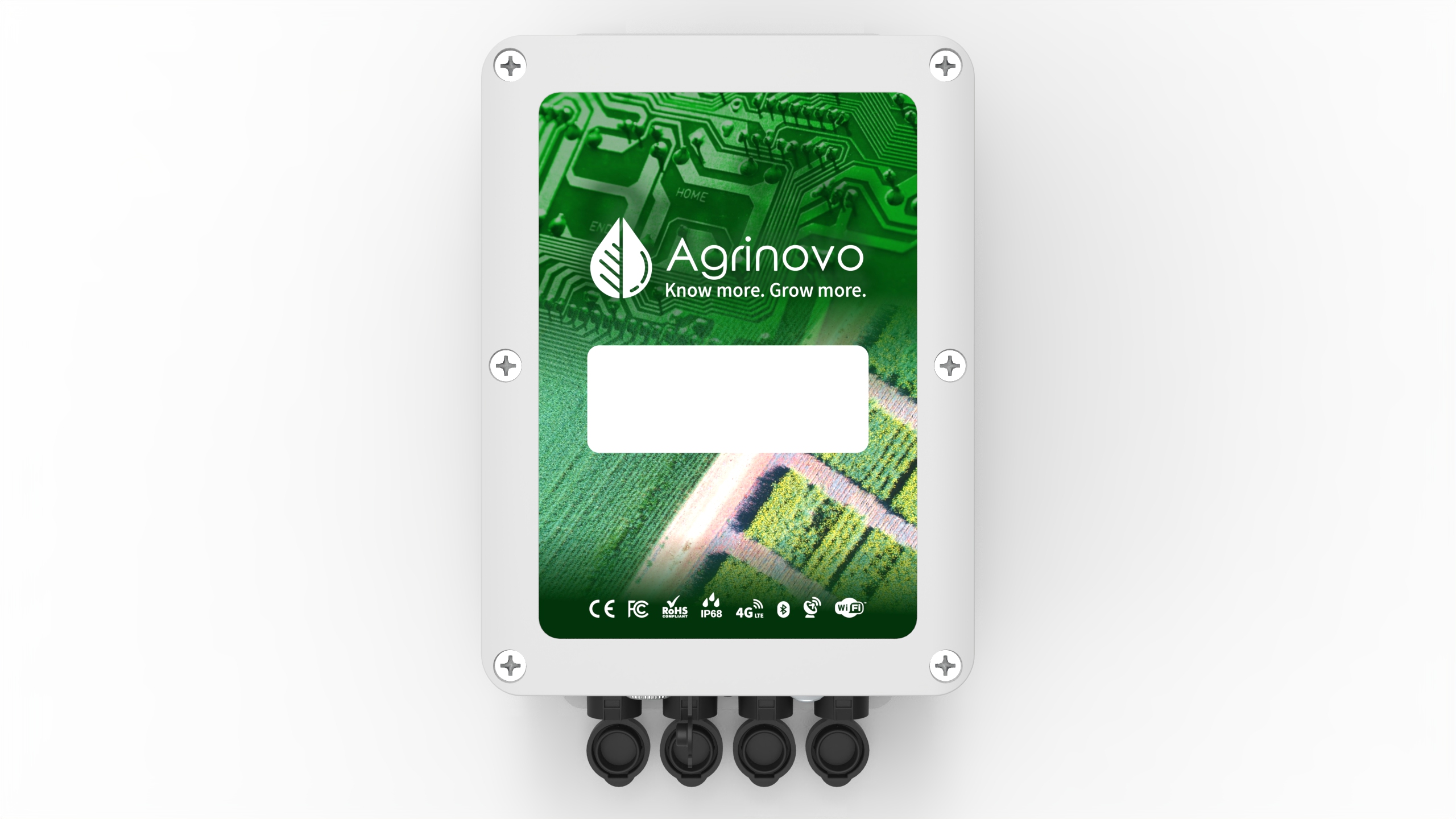
Hardware in this deployment
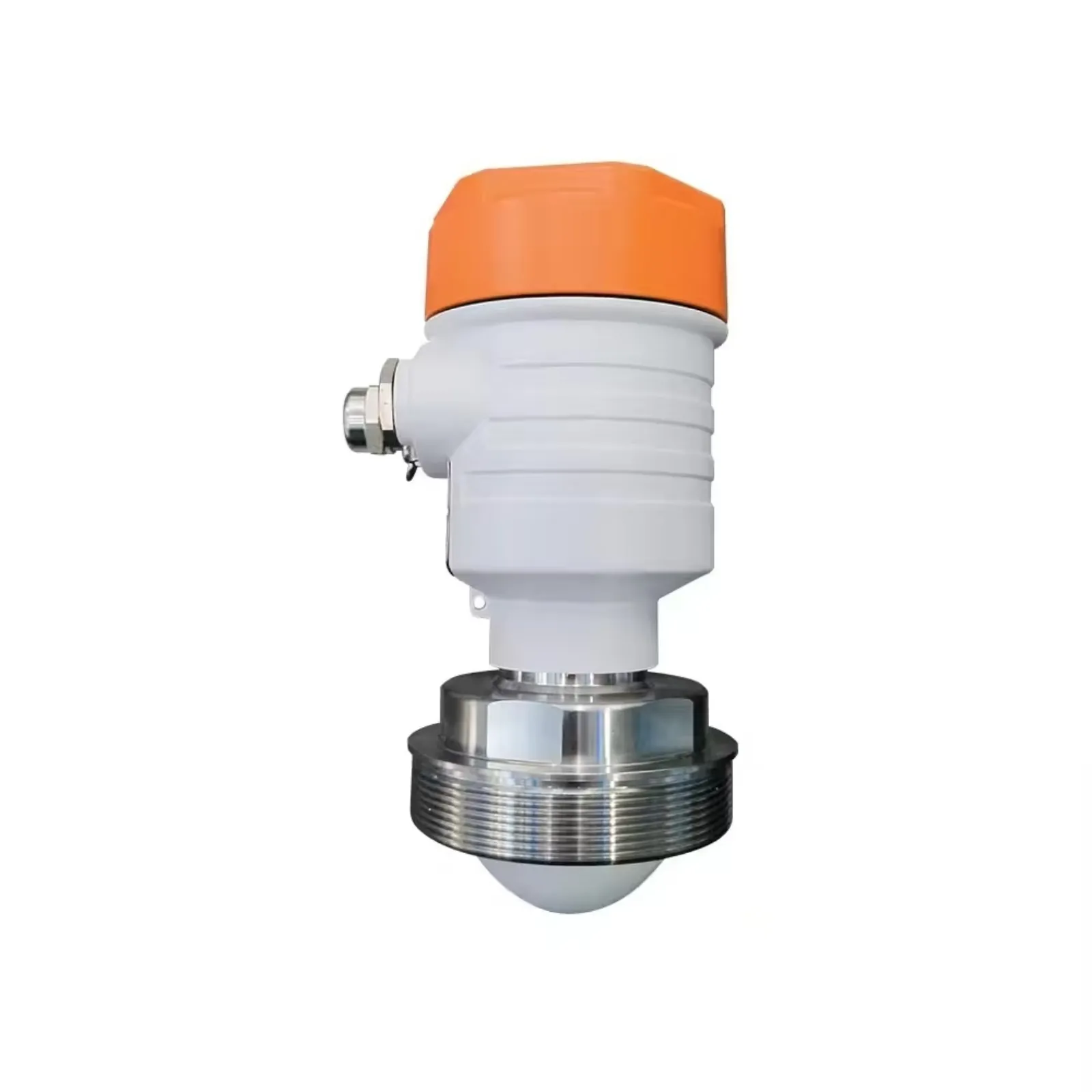
Every sensor below connects to the same controller. That is what makes a mixed site possible.
Questions about this deployment
Why measure a feed silo with radar rather than load cells?
Does dust during filling upset the reading?
Does anything touch the feed?
Can this be fitted to a silo that is already in use?
How does the reading get from the silo to the farm's system?
Why does a fish farm care about silo level specifically?
More deployments like this
Soil & Irrigation
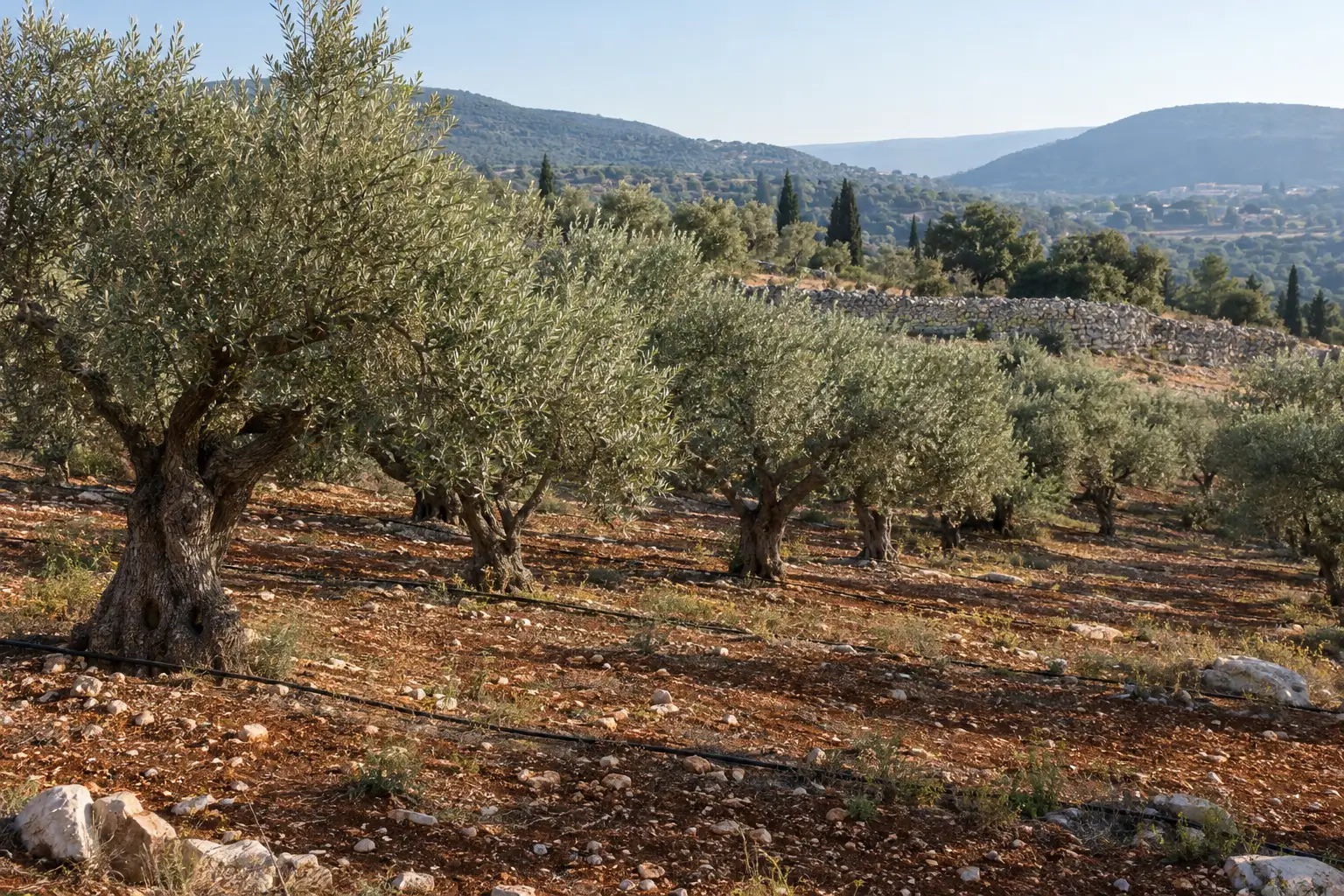
Olive grove tensiometer network
A 35-dunam (3.5 hectare) olive grove in the Upper Galilee switches from calendar irrigation to tensiometer-driven scheduling and cuts water use without losing yield.
19% less water over the 2025 season
Greenhouse
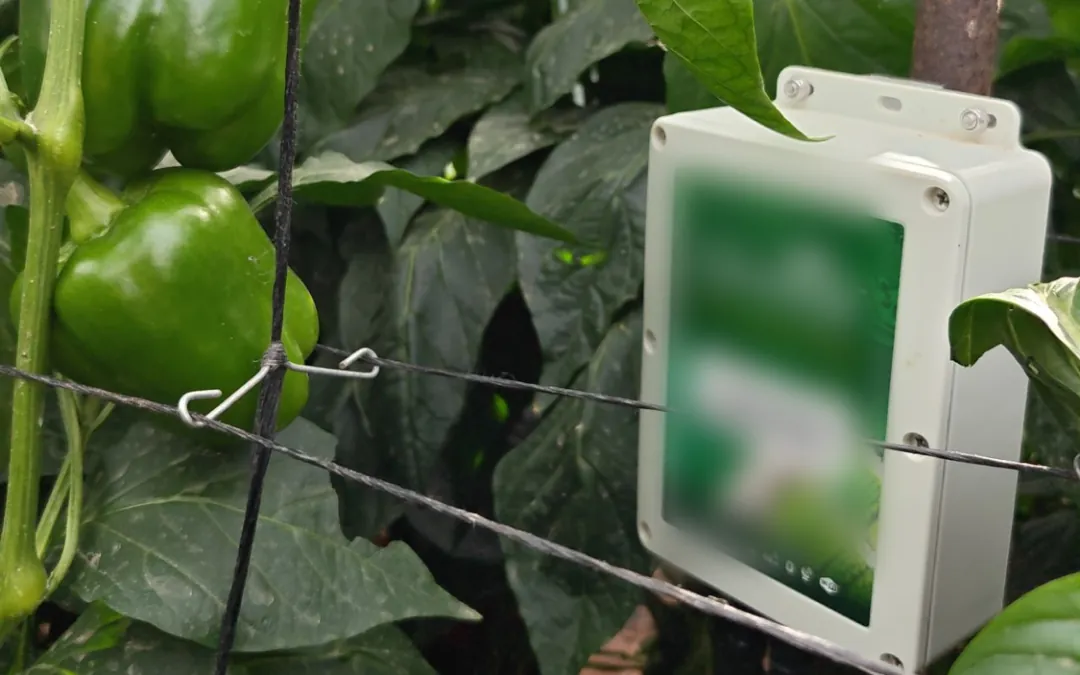
Bell pepper soil tension
A bell pepper greenhouse adds soil water tension to a house that already manages climate closely, because peppers are sensitive to how consistently water arrives, not only to how much.
kPa the unit that matters
Soil & Irrigation
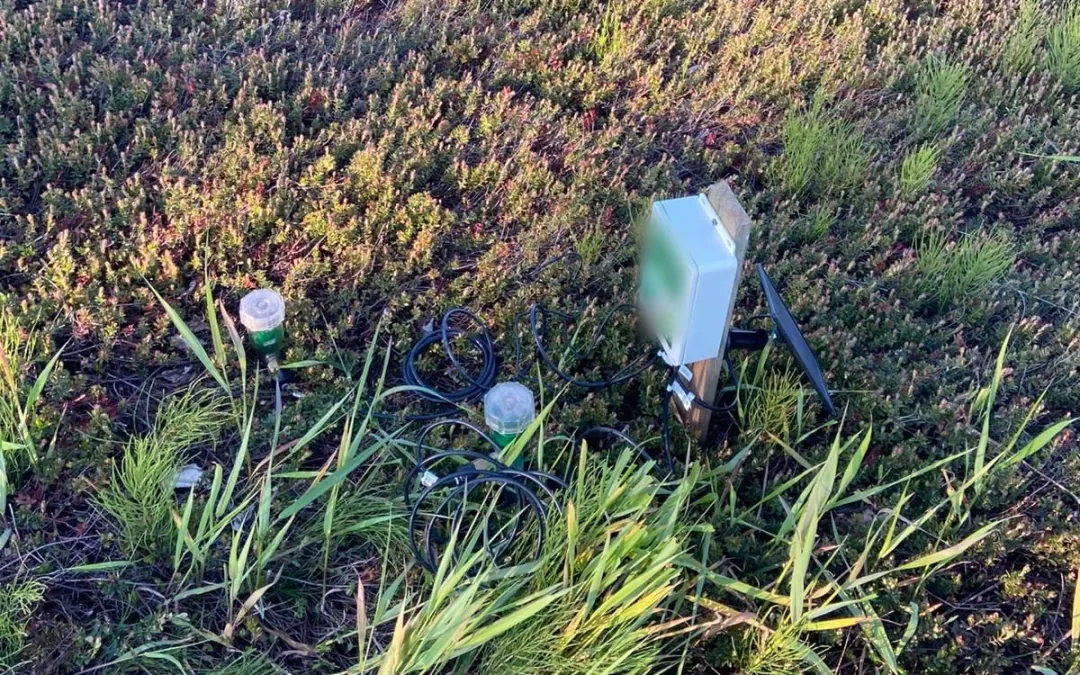
Cranberry frost monitoring
A cranberry grower in Canada puts air temperature, humidity and soil water tension on one solar-powered Omni Genesis station sitting in the bed, where the frost decision is actually made.
±0.3 °C temperature accuracy
Planning something similar?
Tell us what needs monitoring and we will scope a right-sized system with you.