Crop · Orchards & plantations
Olive orchard sensors: soil tension for deficit irrigation and water salinity
An olive grove is irrigated by choosing where to allow a deficit, so the sensors have to show how dry the root zone is during pit hardening and when to restore water before flowering and oil accumulation. The setup that does it is a soil tension pair at 30 and 60 cm, 30 cm from a dripper, per irrigation block, with a Watermark sensor to follow the soil past the tensiometer range and an EC probe where the water is brackish.
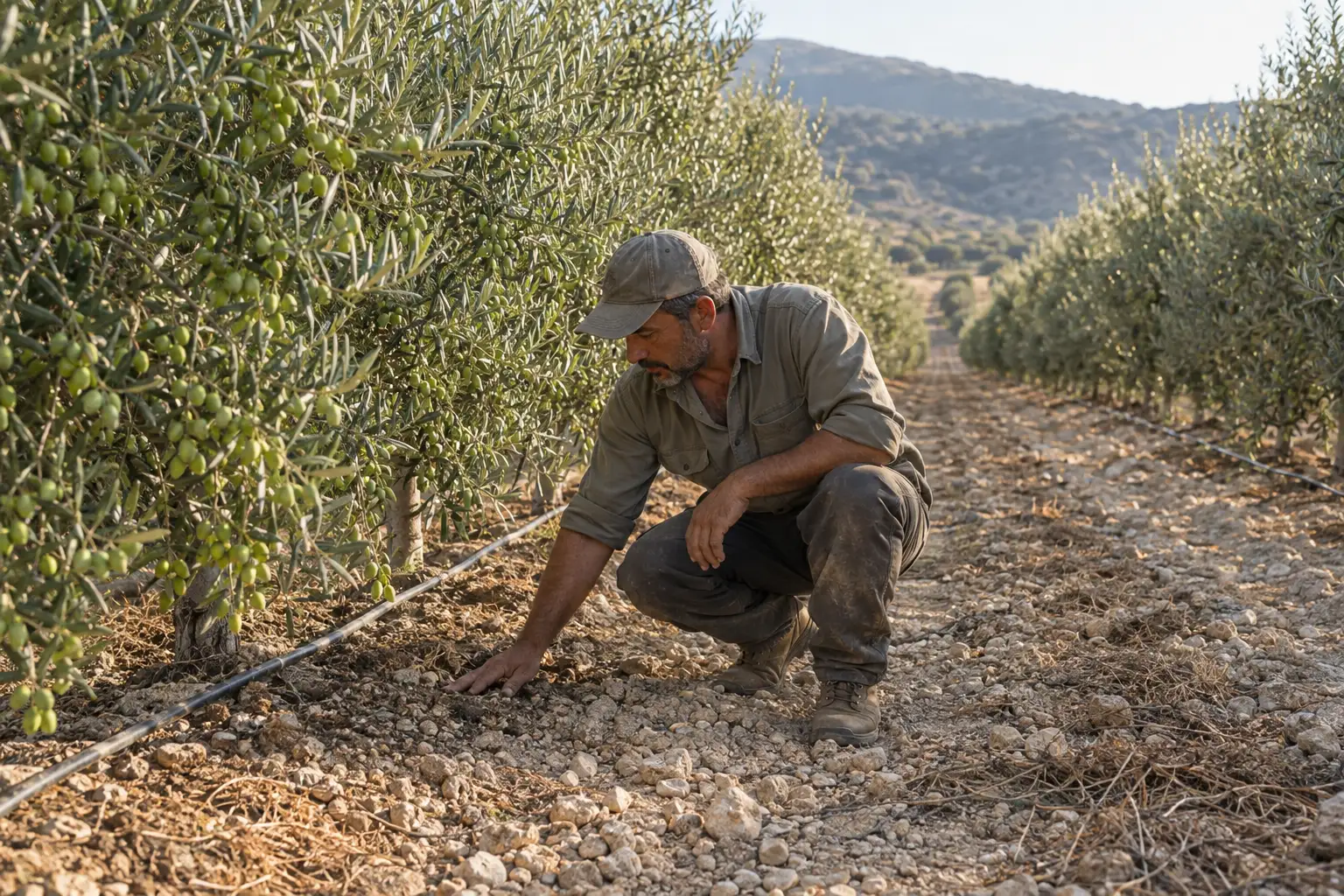
At a glance
- Least sensitive stage
- Pit hardening to veraison, where a planned deficit costs little yield
- Sensor positions
- Pairs at 30 cm depth, 30 cm from the dripper, plus a deep sensor near 60 cm
- Trigger in one trial
- About 30 kPa until mid August, then 60 kPa, with full irrigation
- Salinity
- Rated moderately tolerant; varieties differ sharply on brackish water
Olive is one of the most drought resistant fruit trees, and that is exactly why its irrigation is a measurement problem. The tree survives on very little water, yet in dry climates it gives large yield gains when irrigated, and it gives most of them back if water is withheld at the wrong moment. Modern olive irrigation is therefore built on planned deficits: water is cut at the stage the tree tolerates and restored before the stages it does not. A grower running that strategy needs to know how dry the root zone actually is, block by block, and when the deficit has gone far enough.
What an olive tree needs from the soil
A deficit at the right stage. Research in Spain and California agrees on the calendar. The stage least sensitive to water shortage runs from pit hardening to veraison, according to the CICYTEX and IRTA group that automated irrigation in an Extremadura hedgerow grove. The UC Davis extension material summarises the thresholds in midday stem water potential: flowering and fruit set do best near -10 bars and lose flowers around -20 bars, pit hardening tolerates -20 to -30 bars with no significant yield loss once water is restored, and oil accumulation shows no significant effect while the tree stays above about -20 bars. Below -30 to -40 bars during pit hardening, fruit drops and yield falls. In a Madrid trial on Arbequina, Gómez-del-Campo found that water could be saved in July at -2.9 MPa, but stem potential had to stay above -2.0 MPa in August to protect oil production.
Less water than most orchards. The UC Davis material puts the California olive crop coefficient at 0.65 and mature seasonal water use from April to November at about 25 inches, among the lowest of any California crop, and reports full oil yield with 80 percent of evapotranspiration under sustained deficit. Conditions change that number: the Ramat Negev research station in Israel’s desert reports water use of 900 to 1,000 mm a year there, against 400 to 700 mm in regions further north.
Roots that depend on the soil. The Madrid hedgerow had an effective rooting depth of 0.60 m, and a six hour irrigation wetted the soil to that depth. On a deep sandy loam in Mendoza, the INTA team explained why trees under a deficit showed no stress by roots exploring below 90 cm and a likely contribution from groundwater. The deep sensor belongs at the bottom of your own root zone, not at a fixed number.
No standing water. The same UC Davis material warns that olive is sensitive to root asphyxia and that young trees with small root systems must never sit in saturated soil. A deficit strategy that ends with a long recovery irrigation can overshoot into waterlogging, which is what the deep sensor catches.
Some tolerance for salt, not uniform. FAO Irrigation and Drainage Paper 29 rates olive as moderately tolerant to salinity. The Ramat Negev trials show how much variety matters: across 2012 to 2023, Koroneiki, Arbequina, Souri and Barnea passed the station’s threshold of about 200 kg of oil per dunam on both fresh water at 1.2 dS/m and brackish water at 4.2 dS/m, while Picual passed it only on fresh water.
What to measure and where
Soil tension at two depths, close to the dripper
The field trials give a placement that works. Gómez-del-Campo installed Watermark sensors in pairs at 30 cm depth, 30 cm from the emitters next to the trunks of three representative trees. Millán and colleagues put sensors under the dripper at 30 and 60 cm, with one more between drippers at 30 cm. For a commercial block that becomes:
| Position | Depth | Role |
|---|---|---|
| Shallow, 30 cm from a dripper | about 30 cm | Decides when the next irrigation starts |
| Deep, same spot | near 60 cm, or where your roots end | Shows how long a set must run and catches waterlogging |
| Optional, between drippers | about 30 cm | Shows how far the wetted strip reaches in a hedgerow |
One station per irrigation block, next to a tree that represents the block, is the minimum. Hedgerow blocks on uneven soil benefit from two.
A trigger to start from
In the Madrid trial the fully irrigated control was watered when the 30 cm sensors averaged about 30 kPa (30 cb), until 15 August. After that date the trigger was relaxed to 60 kPa until the end of the season, so the trees would harden before autumn frost. Deficit treatments in the same trial were held far drier during July and August. Those numbers are a starting point, not a recipe: the paper itself notes that soil thresholds are site specific, while stem water potential travels better between orchards. It also found the two strongly linked, with relative extractable water to 0.8 m explaining 77 percent of the variation in stem potential. The practical routine is to set a soil trigger per block, take pressure chamber readings at the key stages, and move the trigger until the two agree.
When the soil dries past a tensiometer
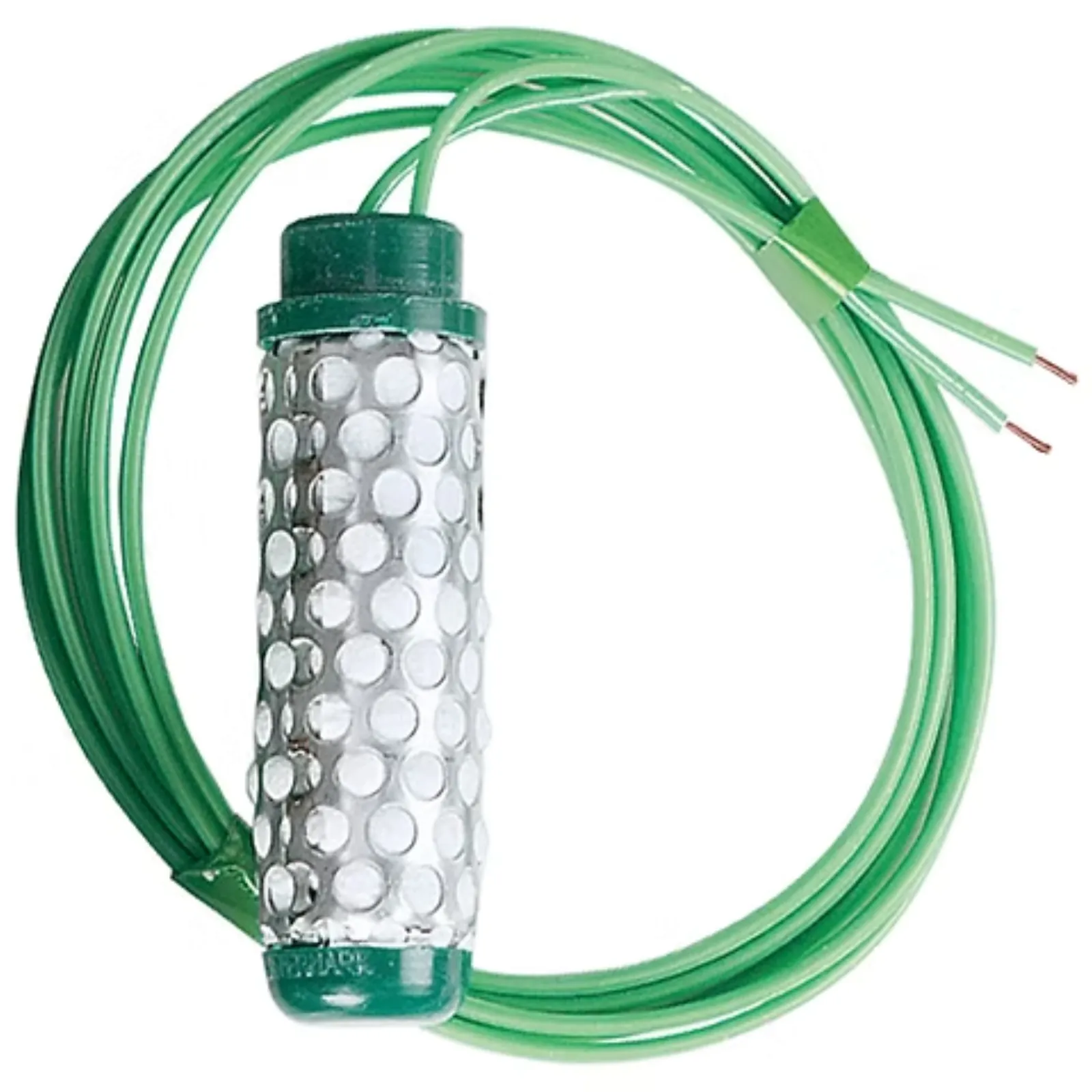
The SR tensiometer reads from 0 to 100 cb, which covers the wet range where decisions for flowering and fruit set are made. During a pit hardening deficit the soil is meant to dry further than that. A Watermark granular matrix sensor reads to 200 cb and needs no refilling, so it keeps recording how deep the deficit has gone and when it is time to restore water.
Irrigation water EC
Where blocks are fed from a brackish well, treated effluent or a blend, the salinity reaching the trees is whatever the source delivered that week. A conductivity probe on the irrigation main records it continuously, so a block that is losing yield can be checked against the water it actually received.
Agrinovo hardware for an olive block
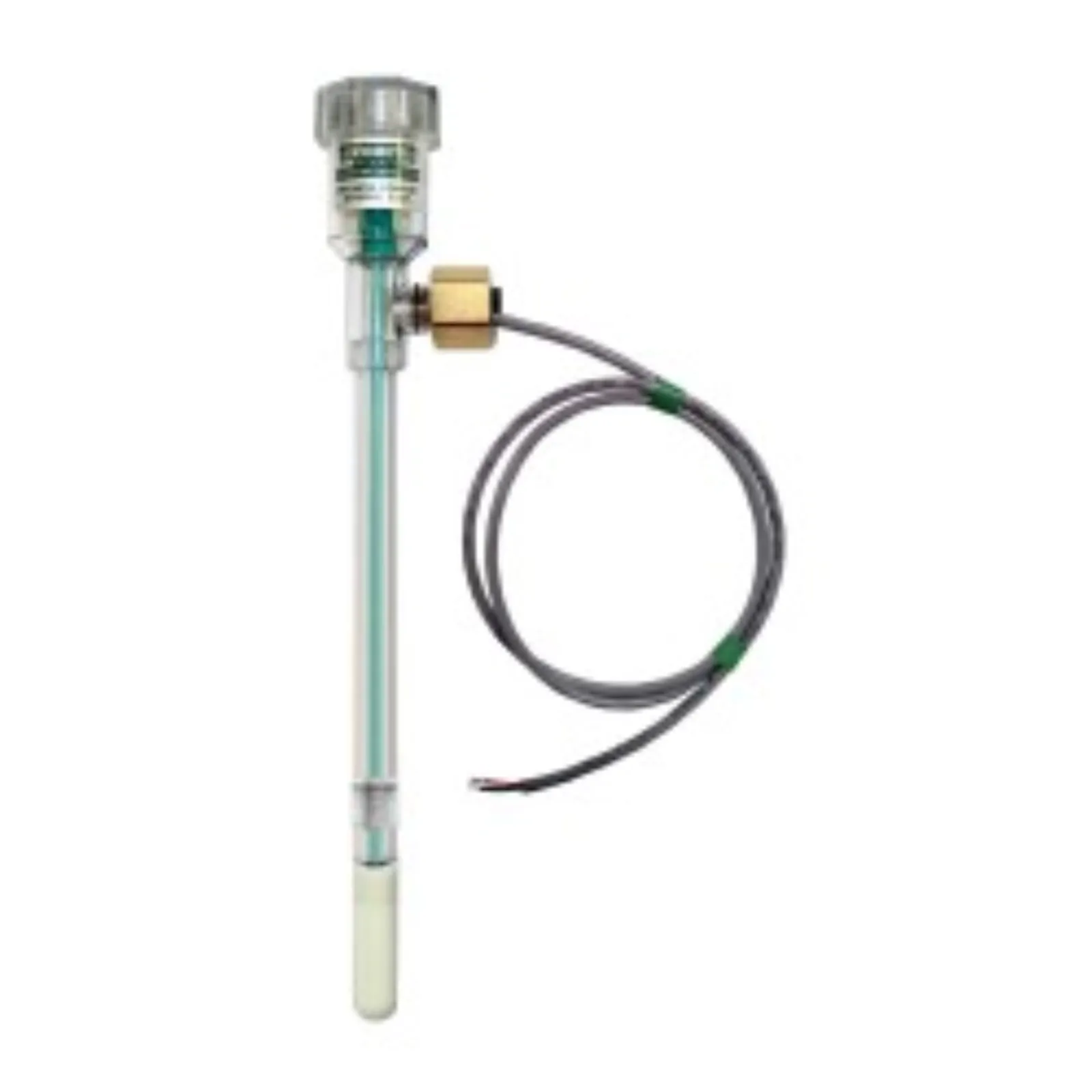
- Irrometer SR tensiometer, 0 to 100 cb, in the 30 cm and 60 cm lengths for the shallow and deep positions, suited to medium and heavy soils. With the manufacturer’s voltage transducer it reads into the controller as an analog input.
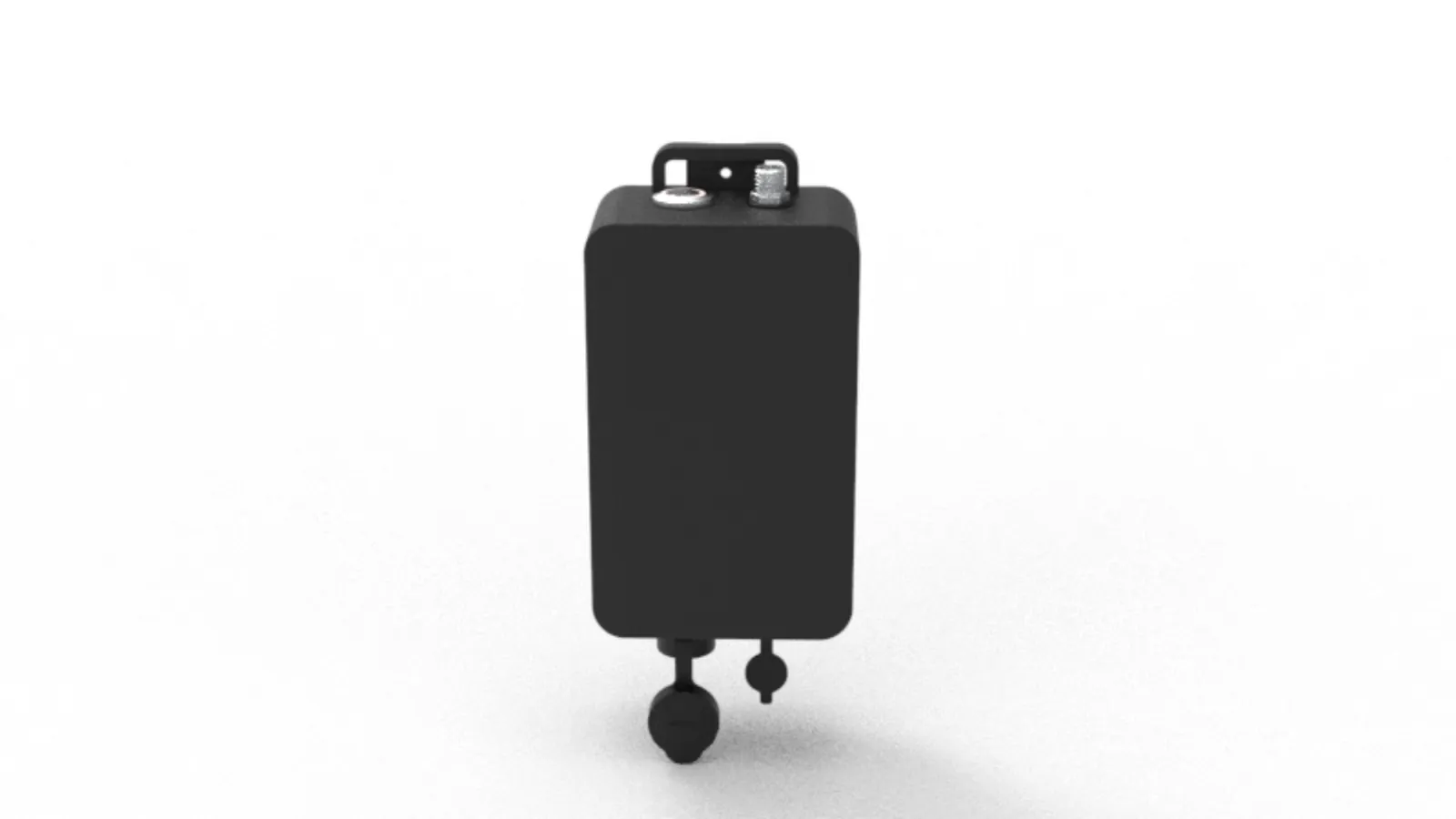
- Watermark 200SS, 0 to 200 cb, buried and maintenance free, for the deficit months and for stations that are rarely visited.
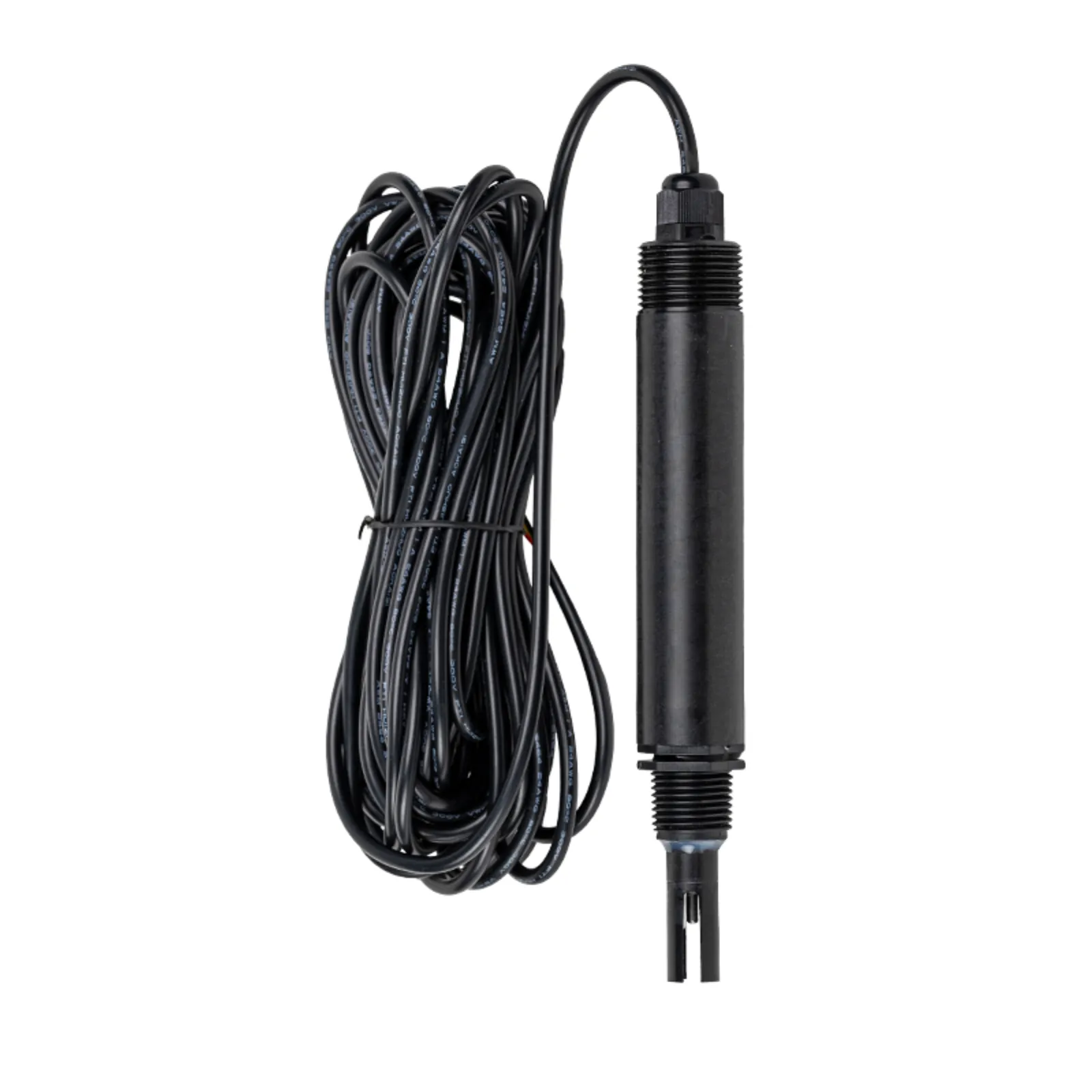
- EC-100 conductivity probe, RS485 Modbus with automatic temperature compensation, on the irrigation main. With its standard K=1.0 cell it covers fresh and brackish irrigation water up to 10,000 µS/cm.
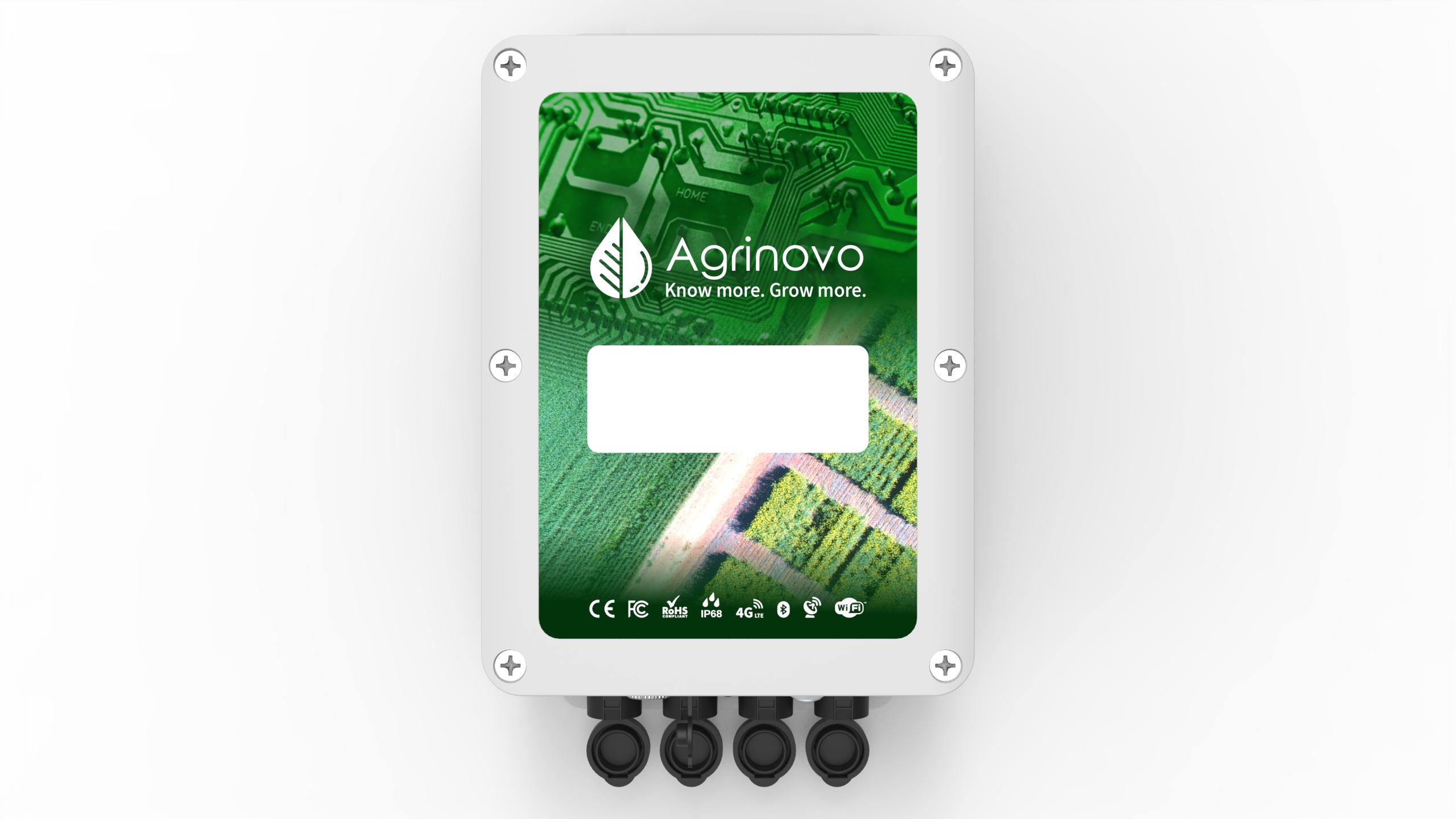
- Omni Genesis controller, four sensor ports configured from the cloud, 4G-LTE with a SIM included, rechargeable batteries with a solar input. A pole in the middle of a grove needs no power line.
- Omni Genesis Lite, one port, for a single tensiometer station on a small block.
Each block then has shallow tension, deep tension and, where measured, irrigation water EC on one chart. An app notification goes to the users on the account when the shallow sensor stays past the trigger longer than the time you allow.
Using the readings through the season
Spring, flowering and fruit set. Keep the shallow sensor near its trigger. This is the period when shortage costs flowers and set, so irrigations should follow the readings closely.
Pit hardening. Let the planned deficit run, and watch the Watermark sensor rather than the calendar. The aim is to restore water before the tree passes into the range where fruit drops, which the stem water potential readings confirm.
Oil accumulation. Return to a tighter trigger. The Madrid results tie oil production in August to tree water status, so this is not the month to stretch intervals.
Late season. In climates with autumn frost, the Madrid protocol relaxed the trigger after mid August to harden the trees. Where effluent or brackish water is used, the EC line is the record of what each block received over the year.
The sensors do not replace the pressure chamber. UC Davis calls midday stem water potential the reference for deciding when to irrigate, and notes that it records a single moment and takes labour. Soil tension fills the hours and days in between, and the two together give a schedule the grower and the agronomist can both check.
Agrinovo hardware for this application
Every item links to its product page with the datasheet. Specifications on those pages come from the manufacturer documents, not from this article.
Frequently asked questions
Which sensors should I use to schedule irrigation in an olive grove?
How deep should soil moisture sensors go in an olive orchard?
At what soil tension should olives be irrigated?
Can olive trees be irrigated with brackish water?
Can one Agrinovo controller read tensiometers, Watermark sensors and an EC probe?
Sources
The agronomy on this page comes from the publications below. Where a number is not on this list, we left it out.
- Summer deficit irrigation in a hedgerow olive orchard cv. Arbequina (Spanish Journal of Agricultural Research, 2013), M. Gómez-del-Campo, Universidad Politécnica de Madrid
- Automatic Irrigation Scheduling on a Hedgerow Olive Orchard Using an Algorithm of Water Balance Readjusted with Soil Moisture Sensors (Sensors, 2020), S. Millán, C. Campillo, J. Casadesús, J.M. Pérez-Rodríguez and M.H. Prieto, CICYTEX and IRTA, Spain
- Management of Water and Nutrients for Young Olive Trees, Giulia Marino, Cooperative Extension Specialist, UC Davis
- Water quality for agriculture, FAO Irrigation and Drainage Paper 29, Table 5: relative salt tolerance of agricultural crops, R.S. Ayers and D.W. Westcot, FAO
- Olive trials at Ramat Negev R&D, annual report 2023 (Hebrew), Itzik David and Amnon Bustan, Ramat Negev Desert Agro-Research Center
- Efecto del riego deficitario controlado sobre la concentración de agua en fruto y productividad en olivo cv. Picual, B. Musale, C. Puertas and E. Trentacoste, INTA EEA Junín, Mendoza, Argentina
Other applications
Orchards & plantations
Avocado orchards
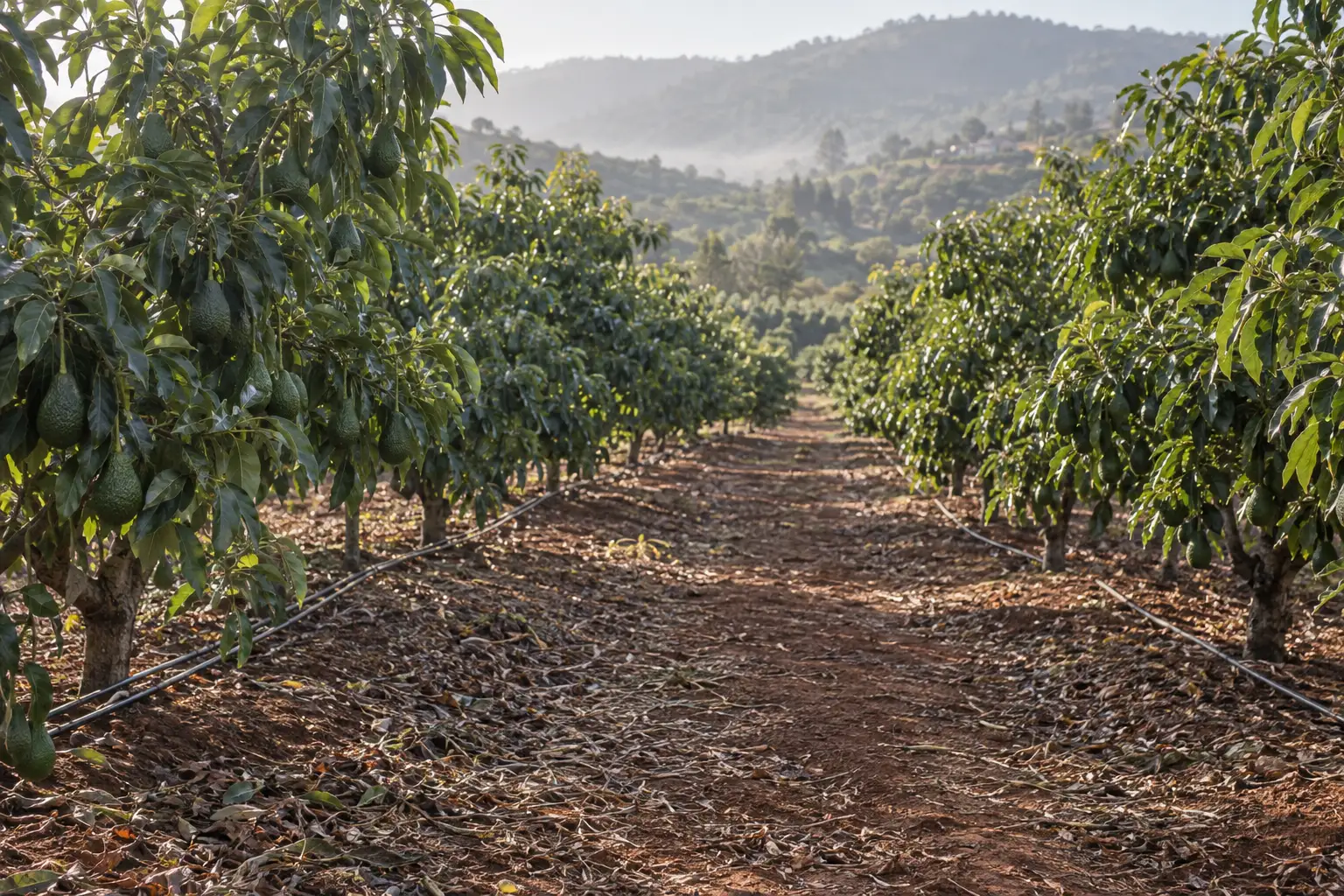
Which sensors an avocado orchard needs and where to put them: tensiometers and Watermark probes at 20 and 45 cm, irrigation triggers by soil type, EC of the irrigation water, and the Agrinovo hardware that reads them remotely.
Orchards & plantations
Citrus orchards
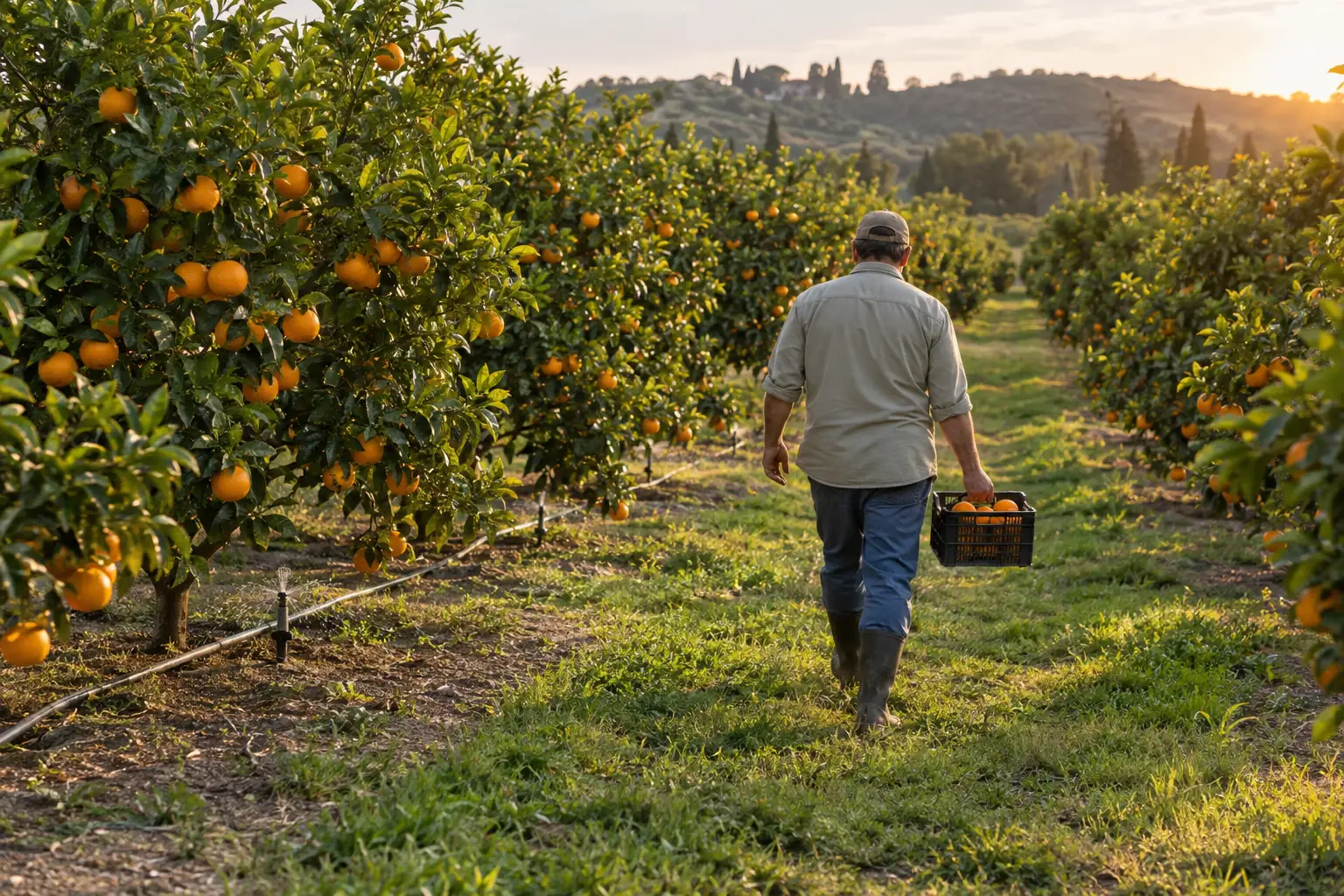
Which sensors a citrus grove needs and where they go: two soil water sensors in the top 30 cm at the dripline, depletion and tension triggers, irrigation water EC against rootstock chloride limits, and the Agrinovo hardware.
Orchards & plantations
Date palm plantations
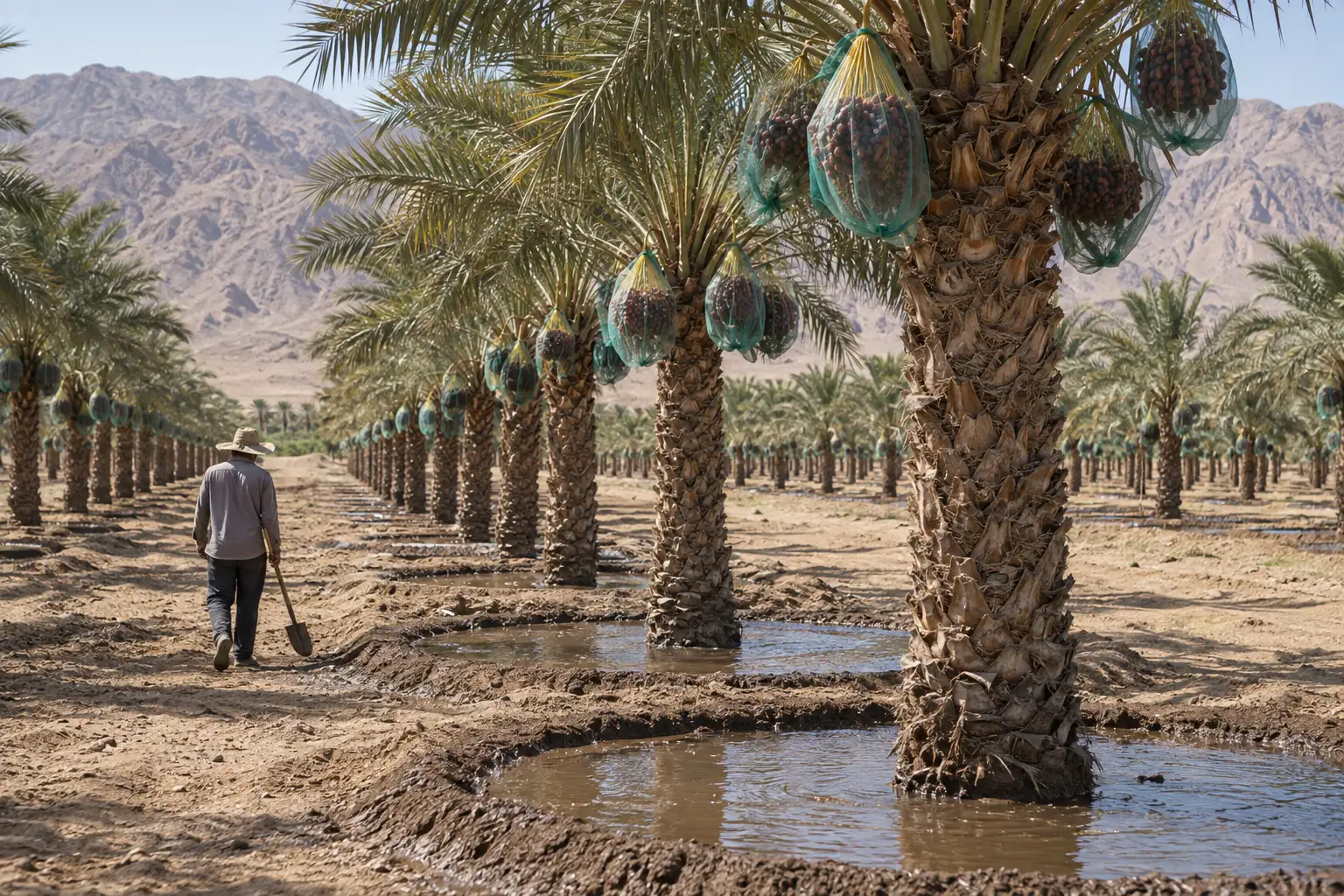
Which sensors a date palm plantation needs: tensiometers and Watermark sensors from 30 to 120 cm where the palm draws its water, EC of the irrigation water, and the Agrinovo hardware that reports them over cellular.
Tell us about your plot
Soil type, crop, irrigation method and what you want to see from your phone. We reply with a sensor list and a layout, not a brochure.