Crop · Orchards & plantations
Date palm irrigation sensors: soil tension through the root profile and irrigation water EC
A mature date palm takes about 70 percent of its water from the top metre of soil and nearly all the rest from the next metre, so a sensor at 20 cm says little about what the tree is drinking. The sensors that manage a date block are soil tension sensors at three depths between 30 and 120 cm in the wetted zone, plus continuous EC on the irrigation water, because Medjool proved far less salt tolerant in long trials than older tables suggest.
At a glance
- Where the water is taken
- About 40% from the top 50 cm, 70% from the top 100 cm, 90% from the top 150 cm
- Root zone of a mature palm
- Down to about 5 m, about 3 m radius around the trunk
- Young palms
- Roots 25 to 50 cm deep, so irrigate often
- Water salinity
- Full yield up to EC 2.7 dS/m in the classic FAO table; Medjool at 4 dS/m grew to half the size of trees at 1.8 dS/m
A date plantation applies large volumes of water, usually in places where water is short and often salty. FAO lists annual irrigation for dates at 25,000 to 32,000 cubic metres per hectare in the Jordan Valley and 27,000 to 36,000 in California. At those volumes a schedule that is ten percent too generous wastes thousands of cubic metres a year, and a schedule that runs too lean costs growth that a palm takes years to make up. Sensors earn their place in a date block because the palm hides its water use deep in the profile, where nobody can see or dig.
What a date palm needs from the soil
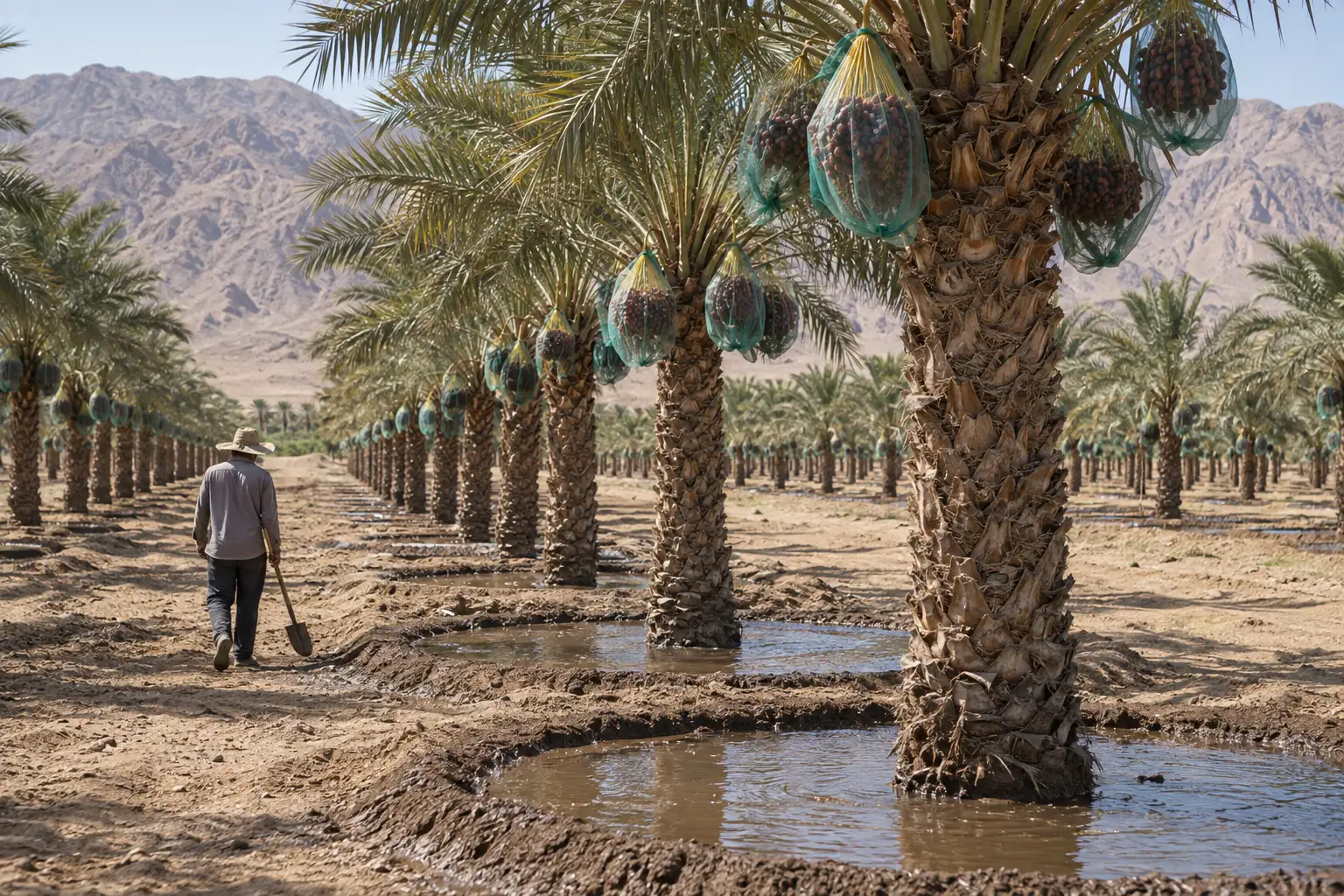
The date palm root system is unusual for an orchard tree. FAO describes the root zone of a mature palm as roughly 5 metres deep and 3 metres in radius around the trunk, with roots thinning steadily with depth: about 40, 30, 20 and 10 percent of the roots in four equal layers from the top down. Water extraction follows the same pattern. Around 40 percent of what a mature palm uses comes from the top 50 cm, 70 percent from the top metre, 90 percent from the top 1.5 m, and the remainder from below that. The working root zone for irrigation purposes is therefore the first metre and a half, not the surface.
Young palms are different. An offshoot or a tissue culture plant has roots only 25 to 50 cm deep and 10 to 30 cm across, and FAO recommends frequent irrigation by basin, micro or drip until the roots spread, especially in sandy soil. A young block and a mature block on the same farm need different sensor depths and different schedules.
How much water the soil can hold for the palm depends on texture. FAO uses about 100 mm of available water per metre of soil for light soils, 140 mm for medium soils and 180 mm for heavy soils, and suggests letting the palm use about 40 percent of that between irrigations. Those budgets are only as good as the soil data behind them. A sensor station measures the same thing directly.
Then there is salinity. Date palm has a reputation as one of the most salt tolerant fruit trees, and the classic FAO table gives full yield up to a soil salinity of ECe 4.0 dS/m, or irrigation water of ECw 2.7 dS/m, with a 10 percent loss at water EC 4.5. Long trials on Medjool tell a stricter story. Tripler, Shani, Mualem and Ben-Gal kept Medjool palms on irrigation water of 1.8, 4, 8 and 12 dS/m for six years in large weighing lysimeters in Israel. After five years the trees on 1.8 dS/m were about twice the size of those on 4 dS/m, the larger trees yielded 35 to 50 percent more fruit, and the effect of salinity grew over the years as the trees matured and began fruiting. Irrigation at 8 and 12 dS/m was judged commercially impractical. Their conclusion was direct: growers have every reason to give dates the best water they have.
What to measure and where
Soil tension at three depths
Tension is reported in kilopascals or centibars (1 kPa equals 1 cb). It describes how hard the roots must pull to get water, and the University of California factsheet notes it is less affected by soil texture and salinity than other readings. Two instruments measure it: the tensiometer, a water-filled tube with a ceramic tip, and the Watermark granular matrix sensor.
Install a station in the wetted zone of a palm that represents the block: under the drip line or bubbler ring, or inside the basin on flood irrigated blocks, inside the 3 metre radius that FAO gives for the root zone of a mature palm. For a mature palm, three depths cover the profile the FAO extraction figures describe:
| Depth | Share of uptake above it | What it tells you |
|---|---|---|
| About 30 cm | Under 40 percent (FAO puts 40 percent in the top 50 cm) | The surface layer, the timing depth for young palms, and how fast the top dries in summer |
| About 60 cm | Over 40 percent | The main timing depth for mature palms: its drying curve shows when the next irrigation is due |
| 90 to 120 cm | About 70 percent at 1 m, 90 percent at 1.5 m | Whether each irrigation reached the bottom of the active root zone, and whether water is draining past it |
On young palms start with 30 and 60 cm and add the deep position as the roots spread. On large blocks with changes in soil, put a station on each soil type, as the University of California tensiometer guidance recommends.
Setting thresholds honestly
Published tension triggers for avocado or citrus do not transfer to dates, and we have not found a published trigger for Medjool that holds across soils. The UC tensiometer factsheet gives the method that works: treat general thresholds as a starting point, then build your own by recording readings against what you see in the palms and the fruit. A station that logs three depths every hour gives a grower that record within one season. The pattern to look for is simple: the middle sensor dries steadily between irrigations, the deep sensor responds after each one, and neither sits near zero for days on end, which would mean water is being lost below the roots.
Irrigation water EC
The EC of the water going into the block is the second measurement, and in desert date regions it is the one that changes without warning. A well drifts saltier through a dry season, a supply switches source, a reservoir concentrates by evaporation. A conductivity probe on the irrigation main, logged continuously, shows the change the week it happens and keeps a record of the water each block actually received. FAO notes that wider wetting in the early years doubles as a leaching irrigation; the deep tension sensor shows whether that water passed through the root zone or stopped above it.
Agrinovo hardware for a date block
Every sensor below is a module on one Omni Genesis controller, chosen per block:
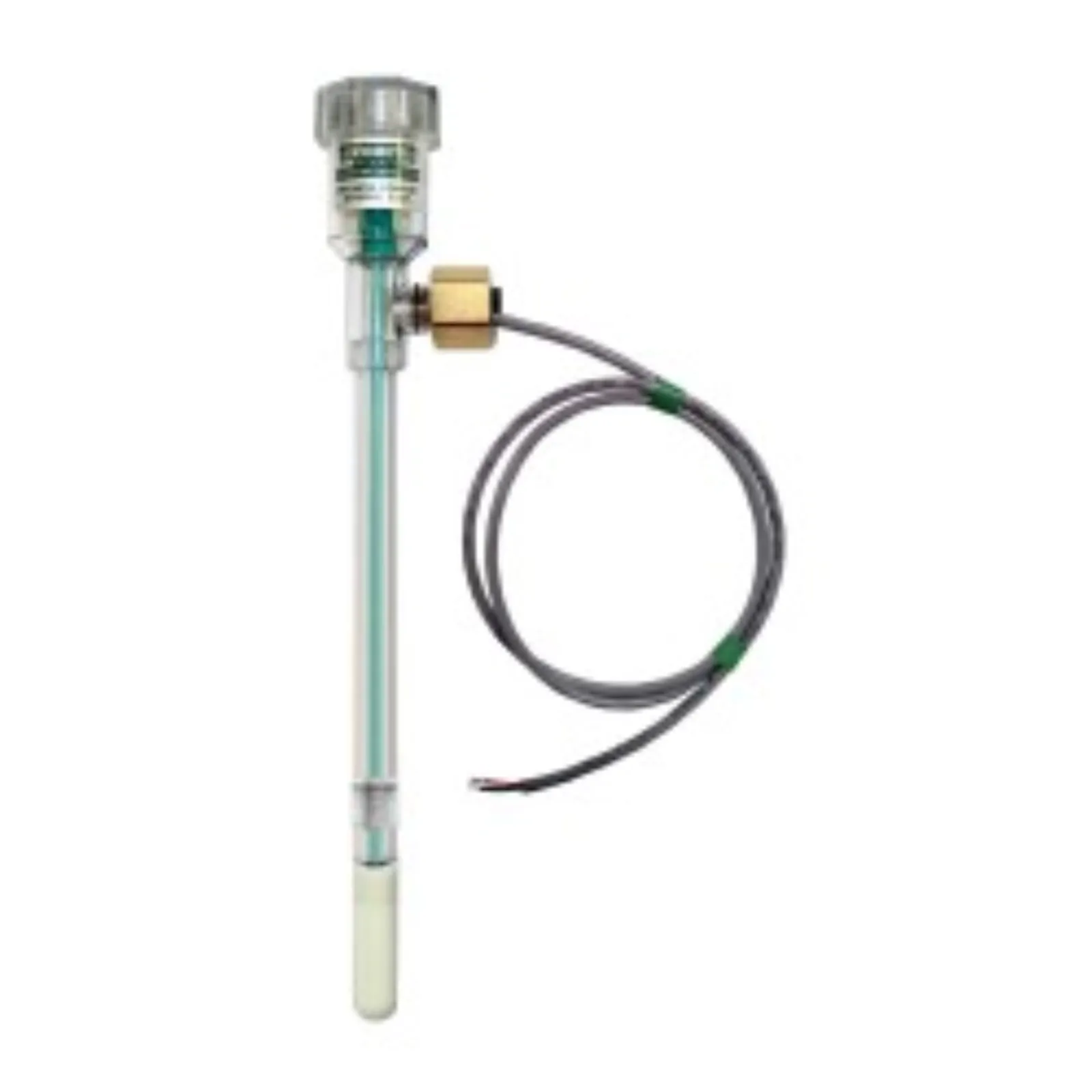
- Irrometer SR tensiometer, 0 to 100 cb, for medium and heavy soils, supplied in lengths from 15 to 120 cm so one model covers the 30, 60 and 120 cm positions. Fitted with the manufacturer’s RSU-V transducer (0.5 to 4.5 V) it reads into the controller as an analog input.
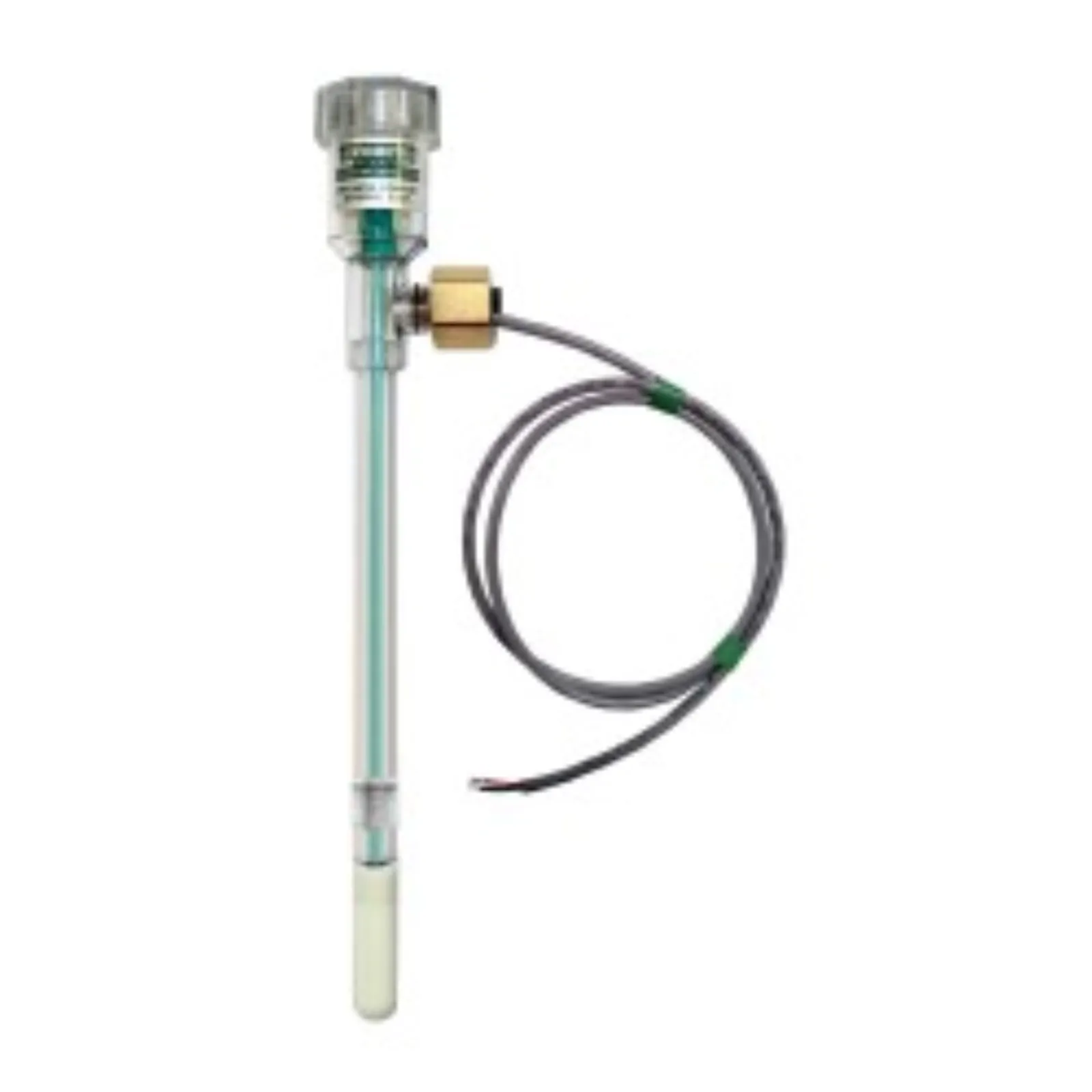
- Irrometer LT tensiometer, 0 to 40 cb, for sandy soils that drain quickly and are irrigated often.
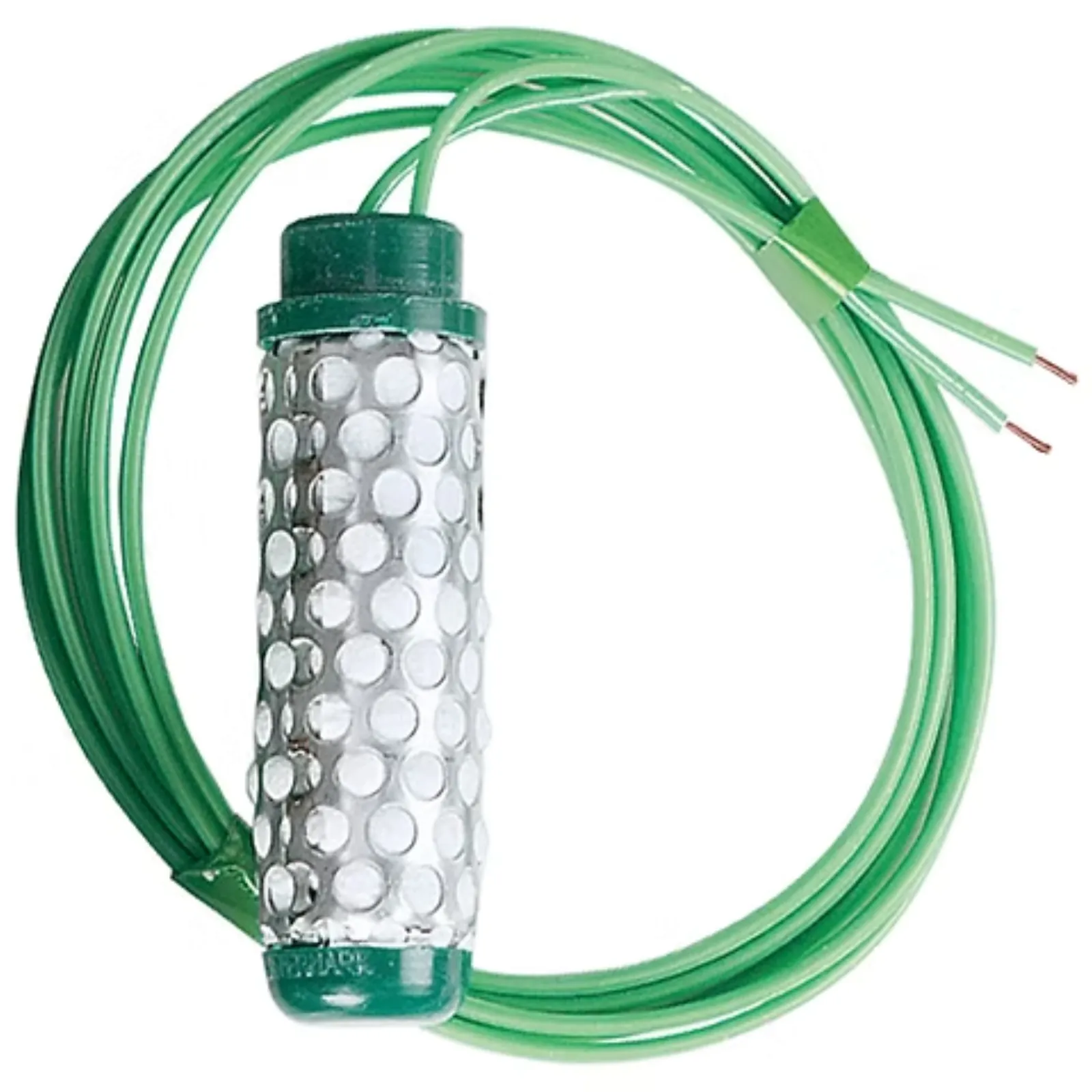
- Watermark 200SS, 0 to 200 cb, for the deep position or for stations that are hard to visit: buried, no refilling, and still reading when the soil dries past the tensiometer’s range.
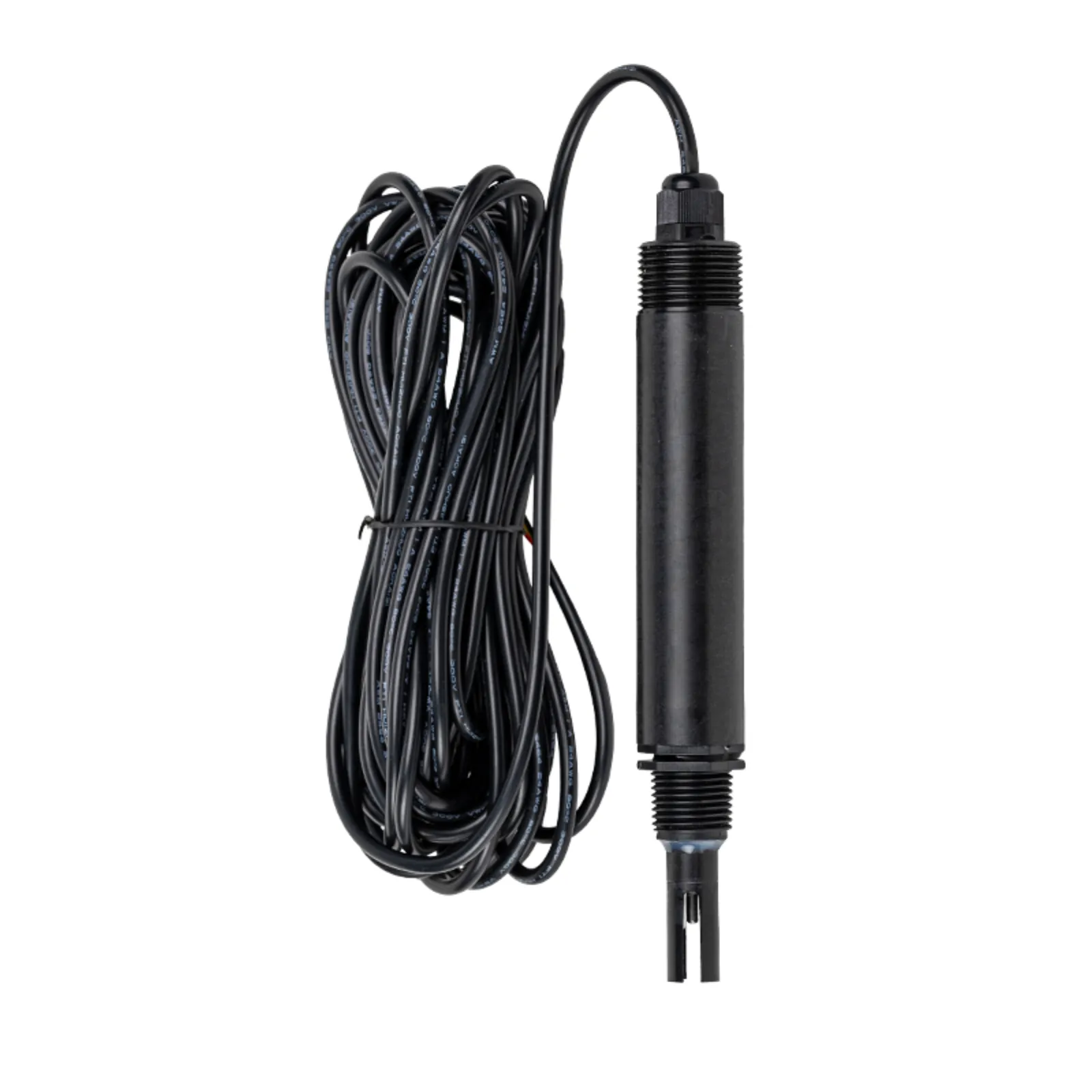
- EC-100 conductivity probe on the irrigation main, RS485 Modbus. With its standard K 1.0 electrode it covers irrigation water up to 10 dS/m (10,000 µS/cm).
- EC-110 conductivity and salinity sensor, 0 to 200 mS/cm, where blending lines or brackish sources run above that.
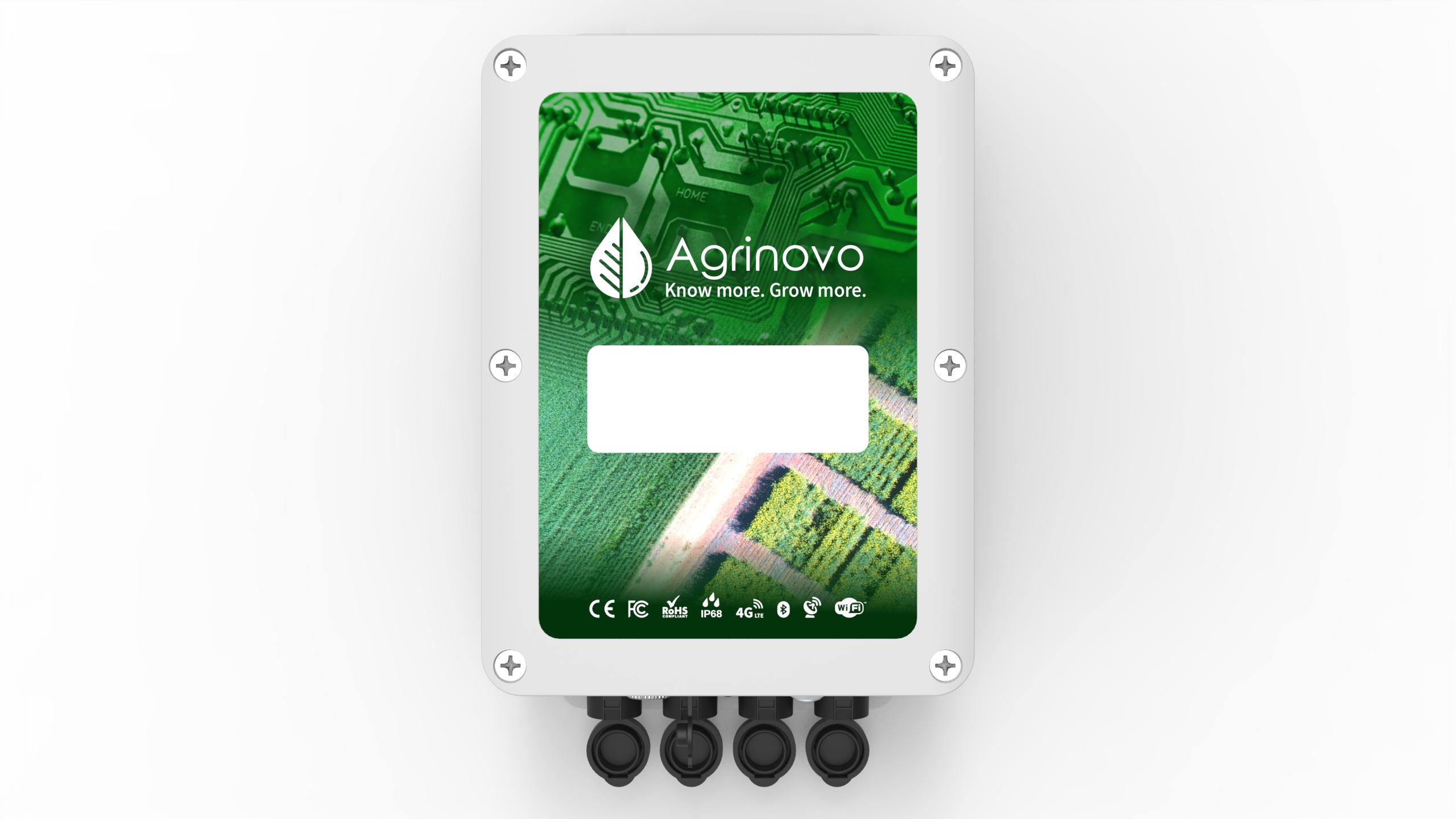
- Omni Genesis controller, four sensor ports, 4G-LTE with SIM included, rechargeable batteries with solar charging, IP65. It reports every reading to one dashboard, where each sensor has its own range and an app notification goes out when a reading stays outside it longer than allowed.
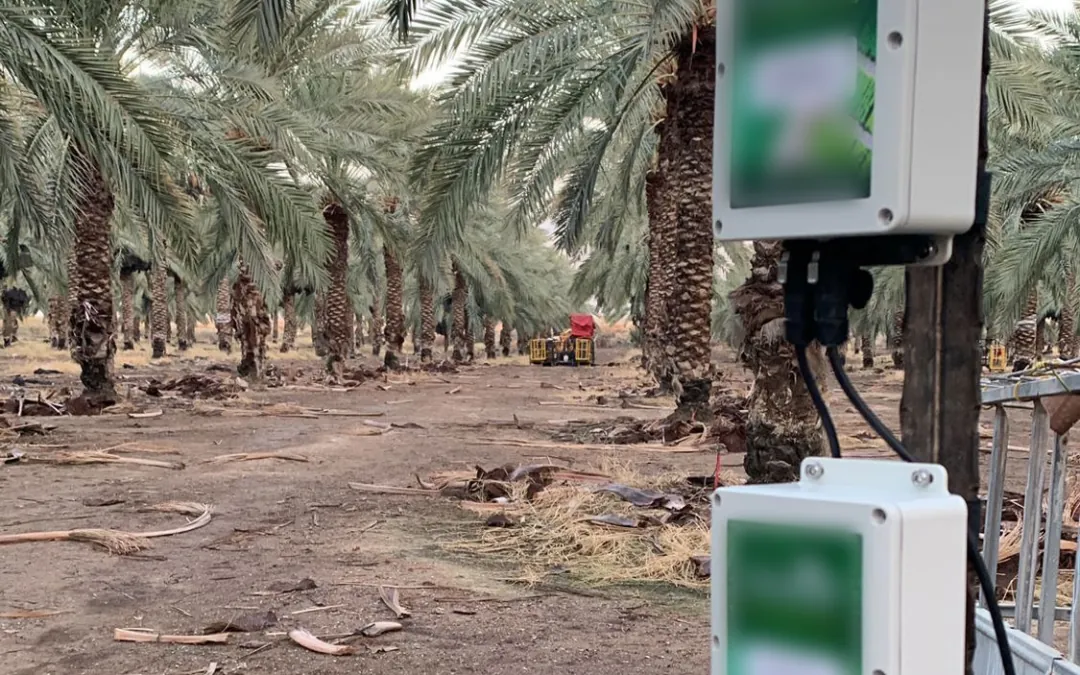
The result is one chart per station with three tension lines and the inlet EC on the same time axis, with no Wi-Fi needed in the plantation and no power line to the station. The Medjool case study shows two stations reading two positions from one post at the edge of a row.
How the readings are used through the year
In spring and early summer the middle sensor’s drying curve sets the interval: the steeper it gets as the palms come into full water use, the shorter the gap between irrigations. After each irrigation, the time the deep sensor takes to respond tells you whether the set was long enough, which is how a schedule moves from a per-hectare estimate to a measured one per block. Through the hot season, a middle sensor that flattens while the weather stays hot is worth a visit: the palm is not taking water, and blocked emitters, a salinity change or a poorly wetted basin are the usual reasons. FAO points out that with drip it can be hard to confirm the correct amount was applied; the deep sensor is that confirmation.
Agrinovo hardware for this application
Every item links to its product page with the datasheet. Specifications on those pages come from the manufacturer documents, not from this article.
soil
Irrometer SR Tensiometer - Standard Range, 0-100 cb
soil
Irrometer LT Tensiometer - Low Tension, 0-40 cb
soil
Watermark 200SS Granular Matrix Soil Moisture Sensor
EC Probes
EC-100 Digital Conductivity Probe

EC Probes
EC-110 Digital Conductivity & Salinity Sensor - 0 to 200 mS/cm
controllers
Omni Genesis IoT Controller - 4-Port, Solar, IP65
Frequently asked questions
How deep should soil moisture sensors go for date palms?
What soil tension should trigger irrigation in a date plantation?
How salty can irrigation water be for date palms?
Tensiometer or Watermark sensor for a date block?
Does sensor monitoring work with flood or basin irrigation?
Sources
The agronomy on this page comes from the publications below. Where a number is not on this list, we left it out.
- Date palm cultivation, chapter on irrigation (FAO Plant Production and Protection Paper 156), P.J. Liebenberg and A. Zaid, Food and Agriculture Organization of the United Nations
- Long-term growth, water consumption and yield of date palm as a function of salinity (Agricultural Water Management 99, 2011), E. Tripler, U. Shani, Y. Mualem and A. Ben-Gal, Hebrew University of Jerusalem and Arava R&D
- Soil Moisture Monitoring with Tensiometers, University of California Agriculture and Natural Resources
Other applications
Orchards & plantations
Avocado orchards
Which sensors an avocado orchard needs and where to put them: tensiometers and Watermark probes at 20 and 45 cm, irrigation triggers by soil type, EC of the irrigation water, and the Agrinovo hardware that reads them remotely.
Orchards & plantations
Citrus orchards
Which sensors a citrus grove needs and where they go: two soil water sensors in the top 30 cm at the dripline, depletion and tension triggers, irrigation water EC against rootstock chloride limits, and the Agrinovo hardware.
Orchards & plantations
Olive orchards
Which sensors schedule irrigation in an olive grove: tensiometers and Watermark probes at 30 and 60 cm, triggers from field trials, deficit by stage, water EC.
Tell us about your plot
Soil type, crop, irrigation method and what you want to see from your phone. We reply with a sensor list and a layout, not a brochure.