CHL-100 with Arduino, ESP32, Raspberry Pi and Python
How to wire the CHL-100 Digital Chlorophyll Sensor with Self-Cleaning to your own microcontroller or computer and read it over RS485 Modbus RTU. The tables are the ones in the datasheet, and both code examples are run against the datasheet example frame before this page is published.
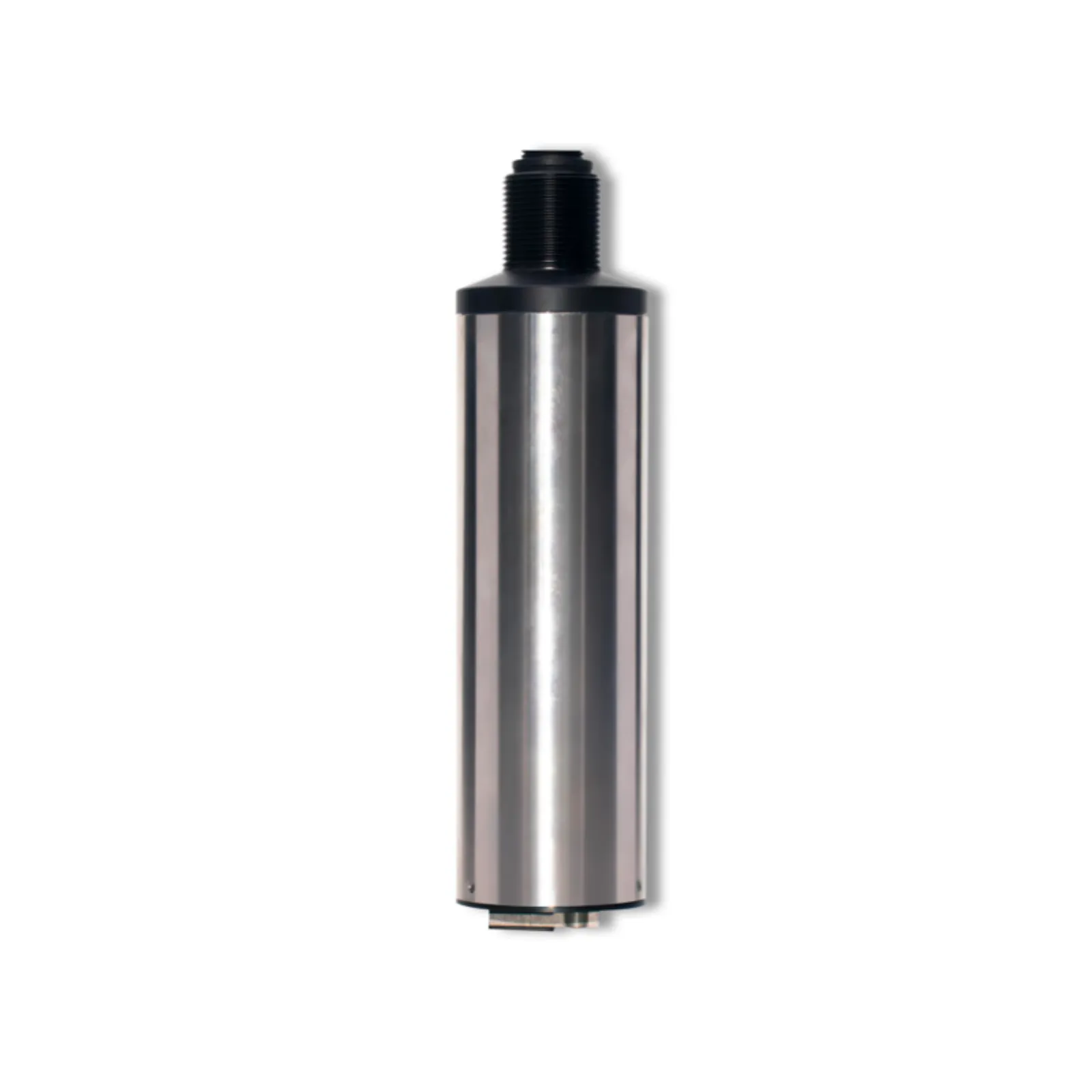
Connecting the CHL-100
The probe is an RS485 device, so it needs a transceiver between it and your board. On a computer or a Raspberry Pi that is a USB to RS485 adapter. On a microcontroller it is a MAX485-type module on a hardware serial port. Power the probe from a supply within the voltage range in the table and join its ground to the ground of the transceiver.
| Core | Color | Function | Description |
|---|---|---|---|
| 1 | Brown | V+ | Power Supply (12-24V DC) |
| 2 | Black | AGND | Power Ground |
| 3 | Blue | RS485-A | Data+ |
| 4 | White | RS485-B | Data- |
Python example (Raspberry Pi, Linux, macOS, Windows)
The script needs only pyserial. It builds the Modbus request itself, checks the CRC of the reply and prints one reading every five seconds. On Windows pass the COM port as the argument.
#!/usr/bin/env python3
"""Read the Agrinovo CHL-100 over RS485 Modbus RTU.

Works on a Raspberry Pi or any computer with a USB to RS485 adapter.
Install the serial library once:  pip install pyserial
Run:  python3 chl_100.py /dev/ttyUSB0
"""
import struct
import sys
import time

import serial

PORT = sys.argv[1] if len(sys.argv) > 1 else "/dev/ttyUSB0"
ADDRESS = 0x01  # the probe's Modbus address


def crc16(frame: bytes) -> bytes:
    crc = 0xFFFF
    for byte in frame:
        crc ^= byte
        for _ in range(8):
            crc = (crc >> 1) ^ 0xA001 if crc & 1 else crc >> 1
    return struct.pack("<H", crc)


def read_registers(port, address, function, start, count):
    request = struct.pack(">BBHH", address, function, start, count)
    port.reset_input_buffer()
    port.write(request + crc16(request))
    reply = port.read(5 + 2 * count)
    if len(reply) >= 5 and reply[1] == function | 0x80:
        raise IOError(f"probe returned Modbus error {reply[2]}")
    if len(reply) != 5 + 2 * count or crc16(reply[:-2]) != reply[-2:]:
        raise IOError("no valid reply from the probe")
    return reply[3:-2]


def read_probe(port):
    data = read_registers(port, ADDRESS, 0x03, 0x2600, 4)
    return {
        "temperature_c":    struct.unpack("<f", data[0:4])[0],
        "chlorophyll_ug_l": struct.unpack("<f", data[4:8])[0],
    }


if __name__ == "__main__":
    with serial.Serial(PORT, 9600, bytesize=8, parity="N", stopbits=1, timeout=1) as port:
        while True:
            print(read_probe(port))
            time.sleep(5)
Arduino example (ESP32, Mega and other boards with a second serial port)
The sketch uses no library. On an ESP32 it uses Serial2 on the pins set at the top; on AVR boards it uses Serial1. DE and RE of the transceiver go to one output pin.
// Agrinovo CHL-100 over RS485 Modbus RTU.
// For a board with a spare hardware serial port (ESP32, Mega, Leonardo, Due)
// and a MAX485-type transceiver. Power the probe from its own supply, as the
// wiring table says, and join the grounds.

const uint8_t ADDRESS = 0x01;  // the probe's Modbus address
const int DE_PIN = 4;          // transceiver DE and RE tied together
const int RX_PIN = 16;         // ESP32 only
const int TX_PIN = 17;         // ESP32 only

#if defined(ESP32)
#define RS485 Serial2
#else
#define RS485 Serial1
#endif

uint16_t crc16(const uint8_t *frame, size_t length) {
  uint16_t crc = 0xFFFF;
  for (size_t i = 0; i < length; i++) {
    crc ^= frame[i];
    for (int bit = 0; bit < 8; bit++) {
      crc = (crc & 1) ? (crc >> 1) ^ 0xA001 : crc >> 1;
    }
  }
  return crc;
}

// Builds a float from its four bytes, most significant first.
float float32(uint8_t b3, uint8_t b2, uint8_t b1, uint8_t b0) {
  uint32_t bits = ((uint32_t)b3 << 24) | ((uint32_t)b2 << 16) | ((uint32_t)b1 << 8) | b0;
  float value;
  memcpy(&value, &bits, sizeof value);
  return value;
}

// Reads `count` registers into `data`. Returns false when the probe does not
// answer or the checksum is wrong.
bool readRegisters(uint8_t function, uint16_t start, uint16_t count, uint8_t *data) {
  uint8_t request[8] = {ADDRESS, function, (uint8_t)(start >> 8), (uint8_t)start,
                        (uint8_t)(count >> 8), (uint8_t)count, 0, 0};
  uint16_t crc = crc16(request, 6);
  request[6] = crc & 0xFF;
  request[7] = crc >> 8;

  while (RS485.available()) RS485.read();
  digitalWrite(DE_PIN, HIGH);
  RS485.write(request, 8);
  RS485.flush();
  digitalWrite(DE_PIN, LOW);

  uint8_t reply[5 + 2 * 16];
  size_t expected = 5 + 2 * count;
  if (RS485.readBytes(reply, expected) != expected) return false;
  uint16_t received = reply[expected - 2] | ((uint16_t)reply[expected - 1] << 8);
  if (reply[1] != function || crc16(reply, expected - 2) != received) return false;
  memcpy(data, reply + 3, 2 * count);
  return true;
}

void setup() {
  Serial.begin(115200);
  pinMode(DE_PIN, OUTPUT);
  digitalWrite(DE_PIN, LOW);
#if defined(ESP32)
  RS485.begin(9600, SERIAL_8N1, RX_PIN, TX_PIN);
#else
  RS485.begin(9600);
#endif
  RS485.setTimeout(1000);
}

void loop() {
  uint8_t data[2 * 4];
  if (!readRegisters(0x03, 0x2600, 4, data)) {
    Serial.println("no reply");
    delay(5000);
    return;
  }
  Serial.print("temperature_c=");
  Serial.print(float32(data[3], data[2], data[1], data[0]), 1);
  Serial.print(" chlorophyll_ug_l=");
  Serial.print(float32(data[7], data[6], data[5], data[4]), 2);
  Serial.println();
  delay(5000);
}
What the examples read
Both examples send one request, function 0x03, 4 registers from 0x2600, and decode these values:
| Value | Unit | Register | Encoding |
|---|---|---|---|
temperature_c | °C | 0x2600 | 32-bit float, least significant byte first |
chlorophyll_ug_l | µg/L | 0x2602 | 32-bit float, least significant byte first |
Other Modbus tools
The same request works from any Modbus RTU master: pymodbus, minimalmodbus, Node-RED, LabVIEW, a PLC or a third-party data logger with a Modbus port. Use the serial settings, function code and register addresses above.
Logging without writing code
The Omni Genesis controller reads the CHL-100 and sends the readings to the Agrinovo cloud over the cellular network, where they can be exported or read through the cloud API.
Datasheet reference
Specifications
| Parameter | Specification |
|---|---|
| Chlorophyll Range | 0 to 500 µg/L |
| Temperature Range | 0 to 100°C |
| Accuracy | ±3% FS |
| Supply Voltage | 12-24 VDC |
| Submersion Depth | Max 2 meters |
| Maintenance | Clean every 4 to 8 weeks |
Communication Settings
| Parameter | Value |
|---|---|
| Protocol | Modbus-RTU |
| Baud Rate | 9600 bps |
| Data Bits | 8 |
| Parity | None |
| Stop Bits | 1 |
| Default Address | 0x01 |
Data Format
- Type: 32-bit Single Precision Float (IEEE-754)
- Byte Order: Little-endian (parse sequence: 4321)
Register Map
Measurement Registers (Function 0x03)
| Address (Hex) | Address (Dec) | Description | Range |
|---|---|---|---|
| 0x2600 | 9728 to 9729 | Temperature | 0 to 100°C (float32) |
| 0x2602 | 9730 to 9731 | Chlorophyll | 0 to 500 µg/L (float32) |
| 0x260A | 9738 to 9739 | Signal Value | 0 to 2000 (float32) |
Configuration Registers
| Address (Hex) | Description | Function | Notes |
|---|---|---|---|
| 0x3000 | Slave ID | 0x03/0x10 | Modify address |
| 0x3100 | Manual Brush | 0x10 | Write 0x0000 to trigger |
| 0x3200 | Brush Interval | 0x10 | Default: 60 min (0x3C00) |
| 0x00C8 | Factory Reset | 0x06 | Restore defaults |
Reading Data
Read Chlorophyll + Temperature
Read 4 registers from 0x2600:
Request:  01 03 26 00 00 04 4F 41
Response: 01 03 08 3F 03 DE 41 71 EB C3 3F B0 DA
Decoding (Little-endian float32):
| Value | Bytes Received | Reordered | Result |
|---|---|---|---|
| Temperature | 3F 03 DE 41 | 41 DE 03 3F | 27.8°C |
| Chlorophyll | 71 EB C3 3F | 3F C3 EB 71 | 1.53 µg/L |
Address Configuration
Change Address (0x01 → 0x0A)
Write to register 0x3000:
01 10 30 00 00 01 02 0A 00 90 F3
Note: Communication will be lost until reconnecting with the new address.
Broadcast Discovery
Use address 255 (0xFF) to discover unknown device address.
Self-Cleaning Brush
Trigger Manual Clean
Write 0x0000 to register 0x3100:
01 10 31 00 00 01 02 00 00 86 93
Set Cleaning Interval
Write interval (minutes) to register 0x3200. Default: 60 min (0x3C00)
Revision History
| Rev | Date | Changes |
|---|---|---|
| 1.0 | June 2026 | Initial release |
| 1.1 | August 2026 | Layout revision |
| 1.2 | October 2026 | New layout |
Contact
Agrinovo, https://agrinovo.io/products, [email protected], +972 54 688 8148 (direct / WhatsApp). Specifications subject to change without notice.
Questions about wiring or the protocol?
Tell us which board or logger you are using and what you need to measure.