Aquaculture
Algae cultivation: a light sensor built to live in seawater
A marine research group monitors light, dissolved oxygen and pH in seawater algae tanks, with a lux sensor built for immersion and a custom power cabinet.
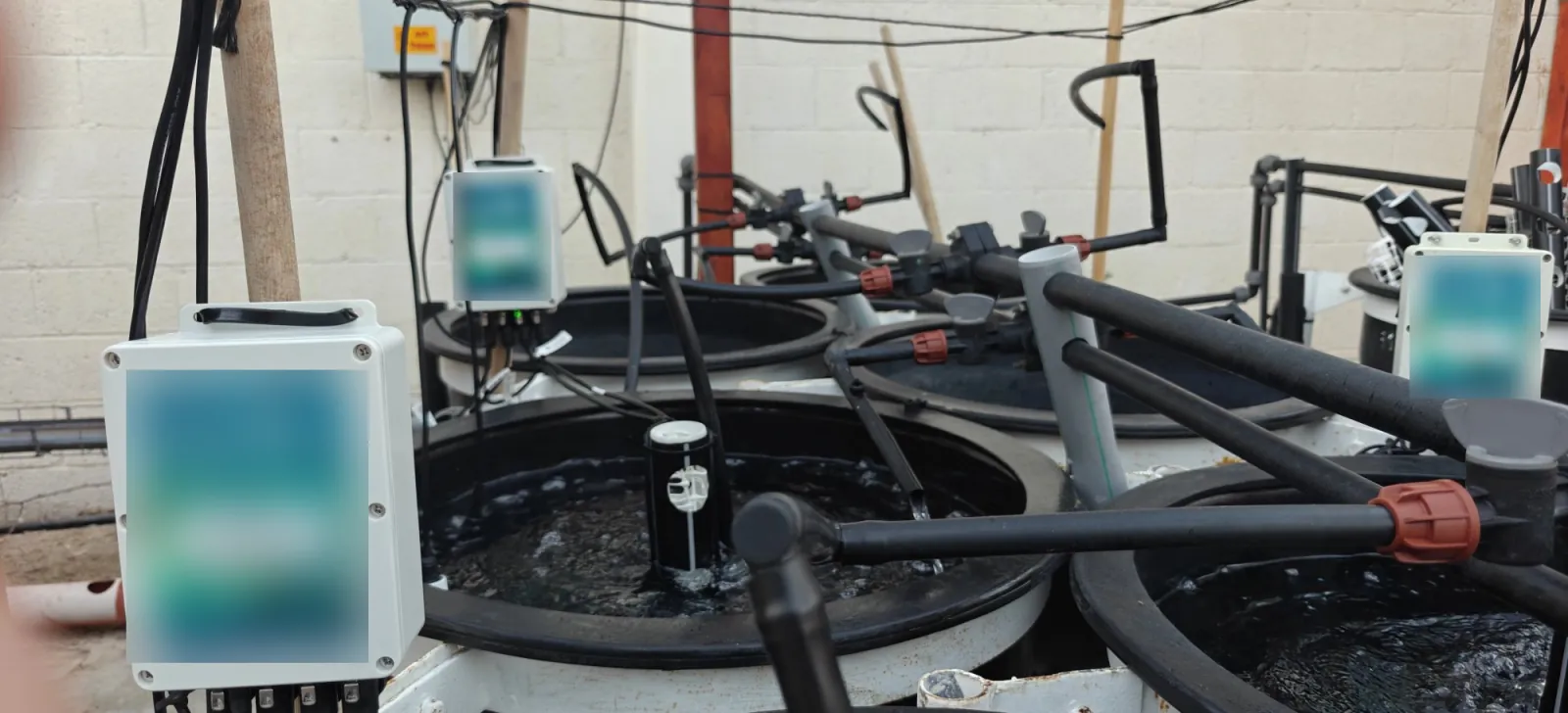
Results on site
- 16
- controllers per cabinet
- 3
- parameters per tank
- 0-20k lux
- custom light sensor range
One custom cabinet distributes mains-derived power to a full row of tanks
Light, dissolved oxygen and pH on one controller
Built for continuous immersion in seawater rather than adapted from a dry-land sensor
- The challenge
- Algae growth is driven by light, but no off-the-shelf lux sensor we could find was built to sit in seawater continuously, and the site needed mains power distributed to a row of controllers outdoors.
- What we installed
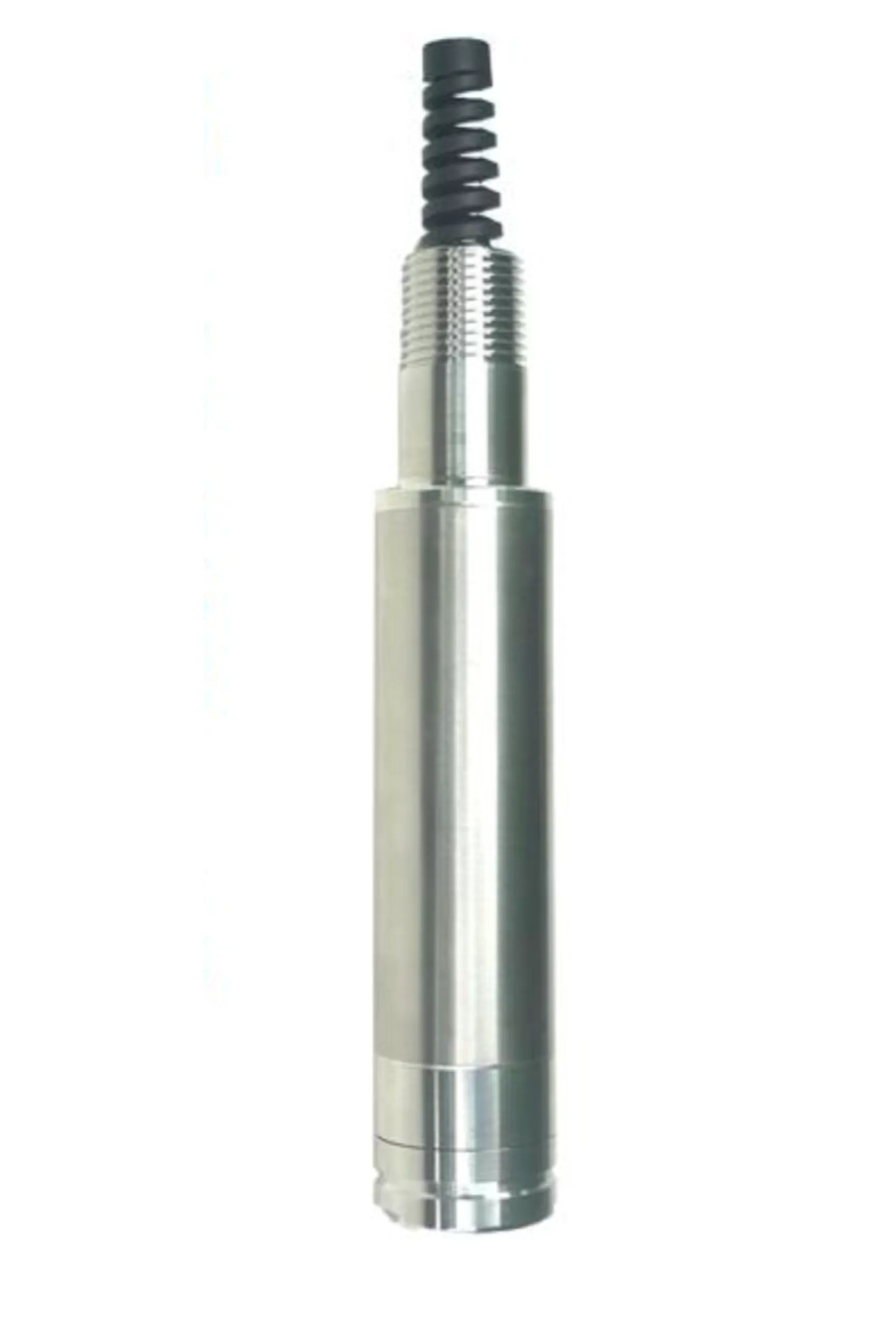
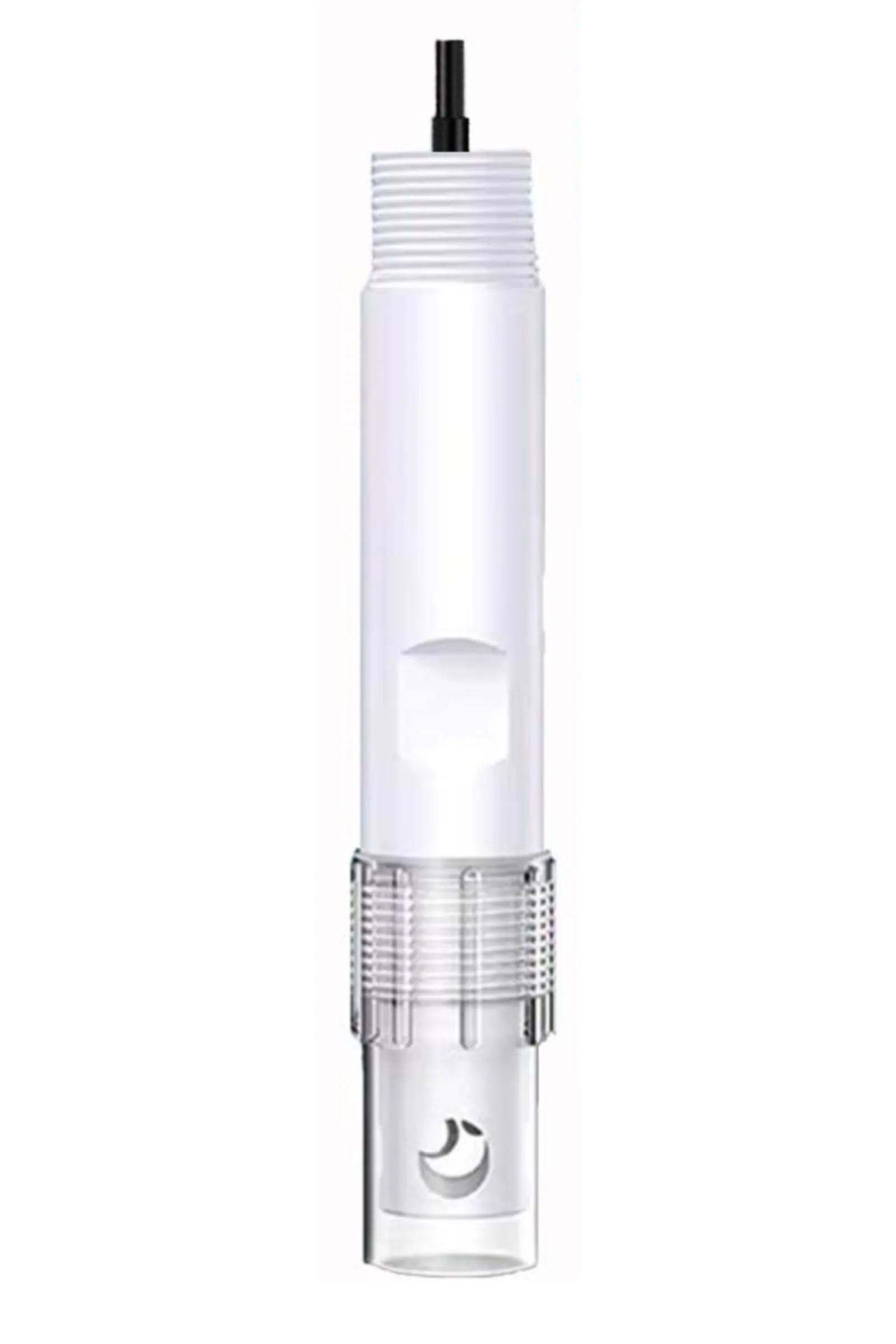
- Omni Genesis controllers with DO-110 titanium dissolved oxygen probes and PH-110 saltwater pH probes, a purpose-built seawater lux sensor, and a custom power cabinet feeding up to 16 controllers.
- The result
- Light, dissolved oxygen and pH are logged per tank on the same platform, with the light measurement coming from hardware built specifically for the medium.
The situation
A marine research group cultivates algae in outdoor seawater tanks. The work needs the growing conditions in each tank on the record, and for algae the condition that matters most is light, because light is the input photosynthesis runs on. Dissolved oxygen and pH follow, both of them responses to how the culture is doing.
Seawater is the complication. It is corrosive, it is conductive, and it works its way into any joint that was designed for fresh water and hoped for the best. Probes that are reliable in a freshwater tank are not automatically reliable here, and one measurement in particular had nowhere to go.
The gap in the market
There was no shortage of light sensors. There was a shortage of light sensors that could sit in seawater indefinitely. A light sensor has to have an optically clear window, and that window is a sealing joint positioned exactly where the sensor is most vulnerable. Dry-land sensors put a cheap gasket there. Immersion changes the requirement completely, and continuous immersion in seawater changes it again.
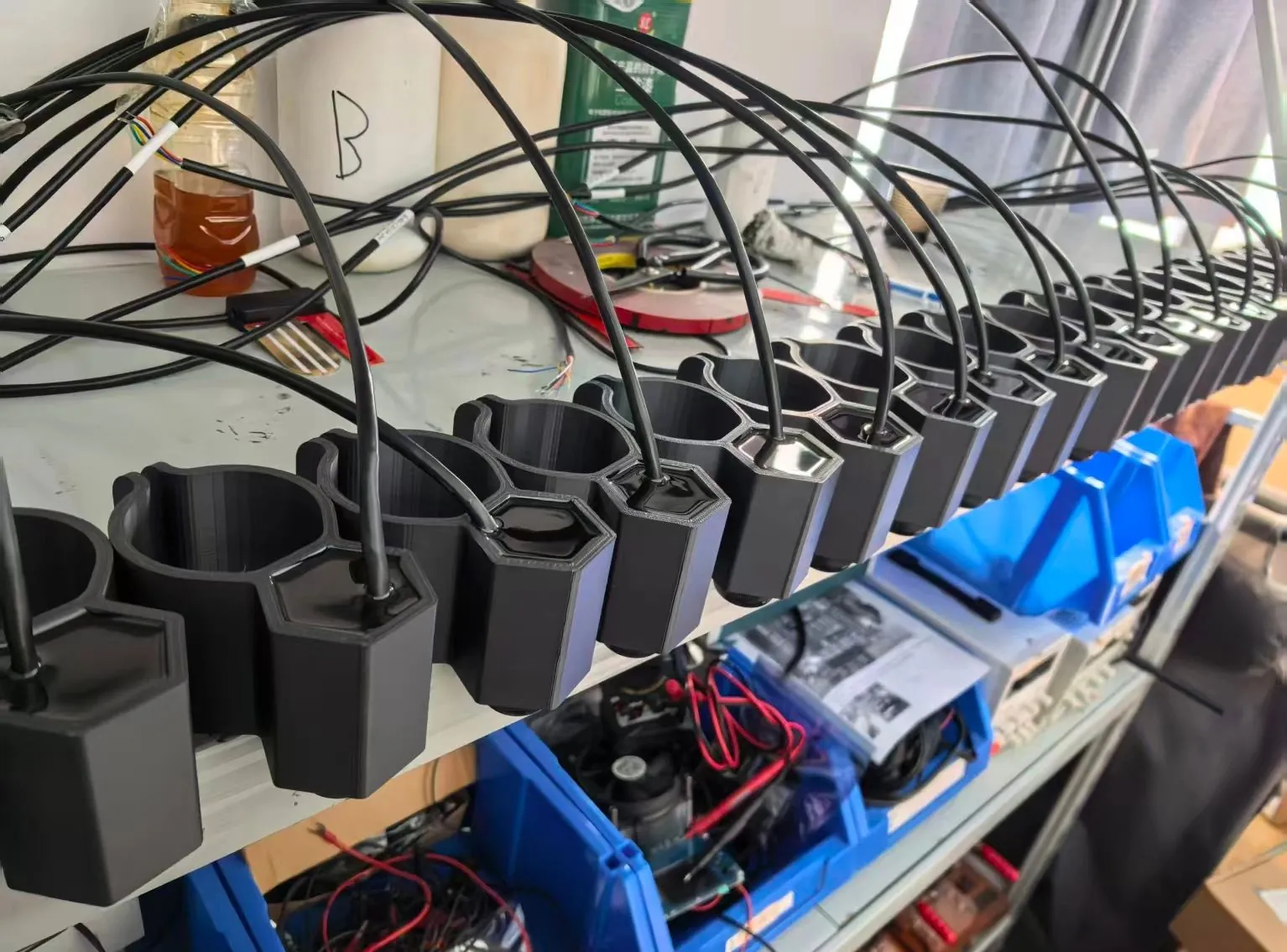
So we built one. The sensor reads 0 to 20,000 lux, and it was designed around the housing and the cable entry rather than having them added at the end, because those are the parts that decide whether a submerged instrument lasts a season or a fortnight. It speaks the same protocol as every other sensor in the range, so from the controller’s point of view it is simply another instrument on the bus.
What was installed
Each tank has an Omni Genesis controller reading three things from the water below it: light from the custom sensor, dissolved oxygen from a DO-110 titanium probe, and pH from a PH-110 saltwater probe. The titanium body on the DO-110 and the saline specification on the PH-110 are the reason those particular variants are in the catalog; the standard versions belong in fresh water.
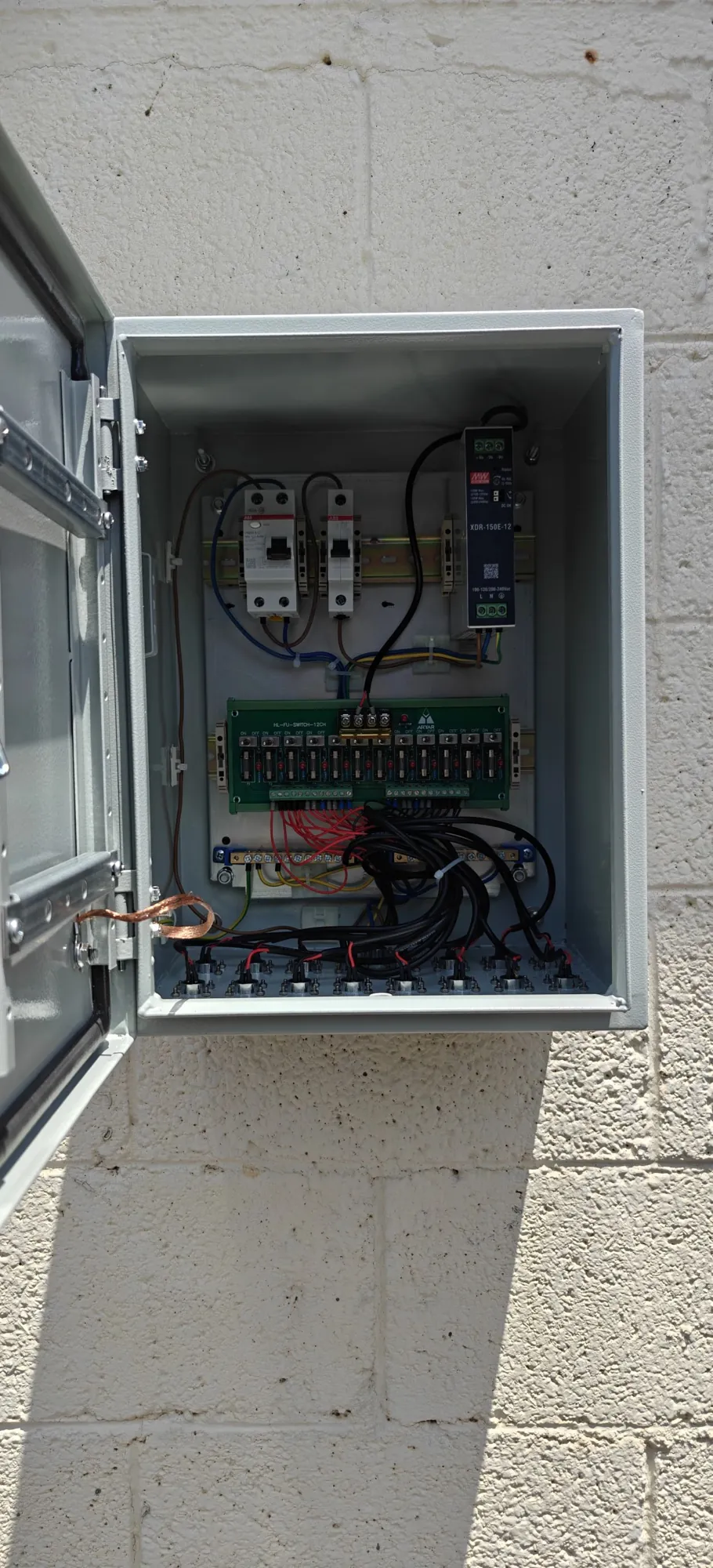
Powering a row of controllers outdoors was its own problem. A wall adapter per controller is a collection of failure points in the weather, so we built a cabinet instead. One mains feed goes in. Protective breakers and a regulated supply sit at the top of the enclosure, then an individually fused output channel per controller, each leaving through its own gland. It carries up to 16 controllers, and a fault on one tank does not take the row down with it.
Why it matters
Two things in this deployment did not exist as products before the project needed them: a light sensor that survives seawater, and a way to power a row of controllers cleanly outdoors. Neither required a new platform. The sensor joined the same bus as everything else and the cabinet feeds standard controllers, so the custom work stayed at the edges where the requirement actually was.
That is what modular hardware buys a research group. Closed systems can offer whatever their vendor decided to build. An open one can be extended to measure the thing your work actually depends on, even when nobody sells it yet.
From the site
Hardware in this deployment
Every sensor below connects to the same controller. That is what makes a mixed site possible.
controllers
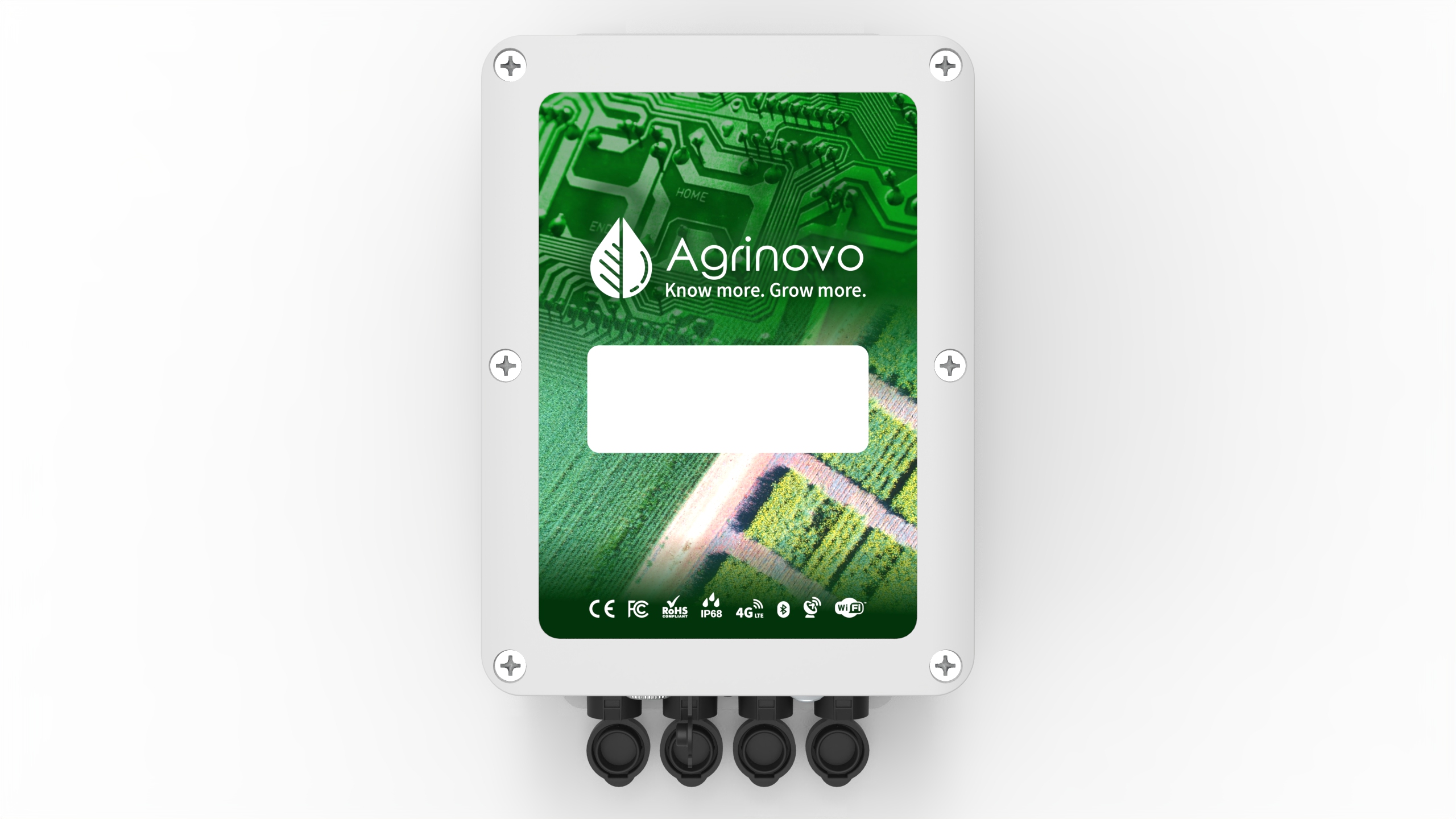
Omni Genesis IoT Controller - 4-Port, Solar, IP65
DO probes
DO-110 Fluorescent Dissolved Oxygen Sensor (Titanium)
pH probes
PH-110 Industrial pH Probe - RS485 or Analog Output
Custom build
Seawater lux sensor, 0-20k lux
Custom build
16-controller power cabinet
Questions about this deployment
Why does algae cultivation need a light sensor?
Why build a custom light sensor instead of buying one?
Are standard pH and dissolved oxygen probes suitable for seawater?
What does the custom power cabinet do?
Can Agrinovo build sensors that are not in the catalog?
More deployments like this
Aquaculture
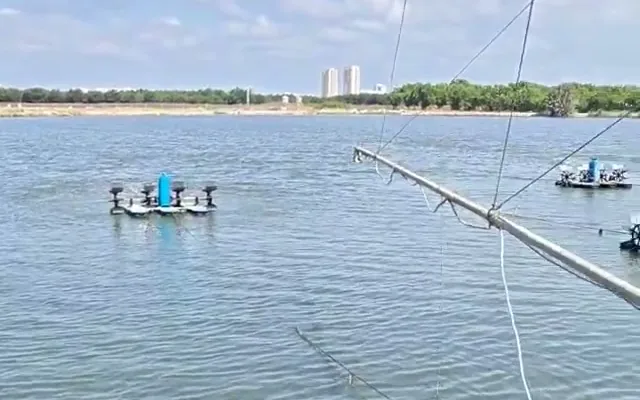
Remote aerator control
A fish farm puts its pond aerators under remote control, then automates them against a dissolved oxygen threshold so the water decides when they run.
0 trips to switch an aerator

Soil & Irrigation
Olive grove tensiometer network
A 35-dunam (3.5 hectare) olive grove in the Upper Galilee switches from calendar irrigation to tensiometer-driven scheduling and cuts water use without losing yield.
19% less water over the 2025 season
Greenhouse
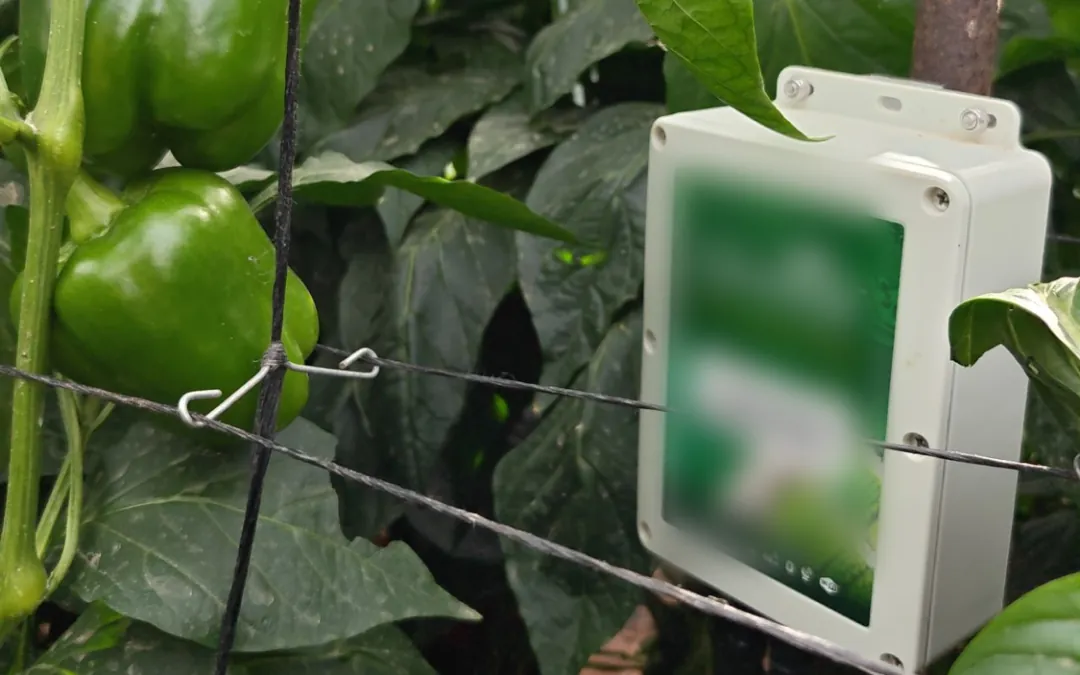
Bell pepper soil tension
A bell pepper greenhouse adds soil water tension to a house that already manages climate closely, because peppers are sensitive to how consistently water arrives, not only to how much.
kPa the unit that matters
Planning something similar?
Tell us what needs monitoring and we will scope a right-sized system with you.