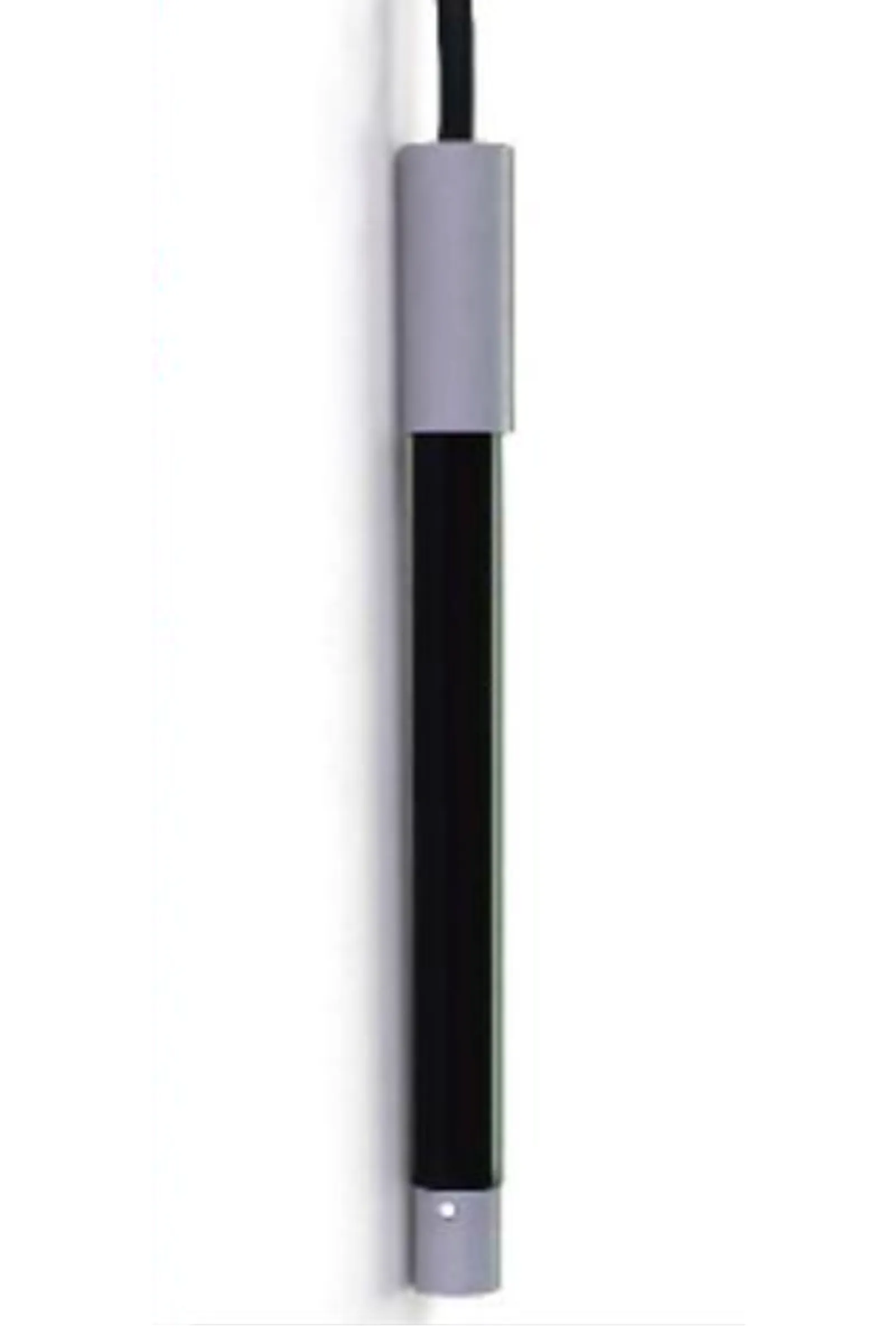
O3-100 Dissolved Ozone Sensor - RS485, 0-20 mg/L
Dissolved ozone (O3) sensor for water monitoring. RS485 output for disinfection in water treatment, aquaculture, and industry.
Contact for pricing
Product Highlights
View all in Specifications tabOverview
The O3-100 is a digital dissolved ozone sensor for continuous in-line measurement of O3 concentration in water. It outputs RS485 Modbus RTU directly, with no separate transmitter required, and covers the full operational range from low-residual disinfection up to high-concentration industrial oxidation, 0.00 to 20.00 mg/L. It is the sensor of choice for water treatment plants, recirculating aquaculture systems (RAS), food processing facilities, swimming pool ozonation, and any process where dissolved ozone must be measured continuously rather than sampled.
If you are spec’ing an ozone monitoring system, the dissolved ozone monitoring guide covers the broader context. For hands-on wiring, calibration, and flow-cell installation, see the O3-100 setup guide.
Why Choose the O3-100 for Continuous Dissolved Ozone Monitoring
If you are currently doing manual DPD or indigo colorimetric tests, switching to a continuous O3-100 deployment is the single highest-leverage upgrade you can make to an ozonation system. Three reasons:
- Continuous CT verification. Manual spot checks every shift cannot prove that your contact-time-times-concentration target was met for every cubic meter of treated water. The O3-100 logs once per second and gives you the audit trail that regulators and HACCP auditors actually require.
- Closed-loop dosing. With the RS485 output wired into your generator controller, the system adjusts ozone production in real time as organic load varies. This trims wasted ozone generation versus fixed-dose operation, since the generator only produces what the current organic load actually requires.
- No reagents, no consumables. Unlike DPD test kits or galvanic membrane sensors that need refills and replacements every few months, the O3-100 is a sealed electrochemical probe. Recalibration every 1-2 weeks is the only routine task.
Compared to legacy 4-20mA analog ozone analyzers that still need a separate transmitter, the O3-100 delivers ±0.02 mg/L accuracy with direct digital output, multi-drop bus support, and built-in temperature compensation.
Application-Specific Configurations
Different ozonation systems need different deployment patterns. The O3-100 covers all of them with the same hardware; only the placement, flow cell, and control logic change.
Drinking Water and Wastewater Treatment
Install the O3-100 immediately downstream of the ozone contact chamber to verify residual ozone meets your treatment target (typically 0.1-0.4 mg/L for general organic removal). Use the A580 gas-tight flow cell to prevent off-gassing losses. Wire RS485 into your existing PLC or SCADA system for closed-loop dosing control against organic load variation throughout the day.
Recirculating Aquaculture Systems (RAS)
Place the O3-100 at the contact chamber outlet to confirm CT targets are being achieved. Pair with an ORP-100 sensor in the fish tank as a safety layer: the ORP probe triggers an emergency generator shutoff if residual ozone reaches the culture tank (typically above 350 mV). The O3-100 alone confirms the treatment side is working; the combination protects both treatment performance and stock. The ORP control for ozonation in RAS article walks through the full control architecture.
Food and Beverage Processing
Mount the O3-100 in the wash water tank or recirculation line after the ozone injection point. Concentrations vary by application: 0.5-2.0 mg/L for produce washing, 1-5 mg/L for equipment sanitization. Connect to an Omni Exodus controller for cloud-based logging that produces timestamped HACCP records auditors can review without exporting from a proprietary platform.
Cooling Tower and Industrial Process Water
Run an ORP probe as the primary continuous control signal (target 600-700 mV) and use the O3-100 for periodic verification and troubleshooting. ORP electrodes survive cooling-tower chemistry better than electrochemical ozone probes, while the O3-100 gives you ground-truth concentration when ORP alone is ambiguous.
Pairing with Controllers and IoT Platforms
The O3-100’s RS485 output works with any Modbus RTU master. For cloud-connected deployments with mobile alerts, the Omni Genesis controller (4 ports) handles a single ozonation loop, while the Omni Exodus controller (6 ports) covers multi-parameter setups including pH, ORP, and temperature alongside ozone. Both publish to the Agrinovo cloud dashboard with configurable rate-of-change alerts so a generator failure pages someone immediately rather than after the next manual check.
Key Features
- High Sensitivity: Measures from 0.00 to 20.00 mg/L (ppm)
- Fast Response: Results within 60 seconds
- Digital Output: RS485 Modbus RTU for seamless integration with SCADA and IoT systems
- Automatic Temperature Compensation: Integrated TH10K thermistor for accurate readings
- Direct Connection: Connect directly to computer or PLC without additional instrumentation
- High Protection: IP68 waterproof rating ensures reliable operation
- No Consumables: Electrochemical sensor requires no reagents
Applications
- Drinking water treatment plants
- Wastewater treatment and reuse
- Aquaculture water disinfection
- Swimming pool and spa ozonation
- Food and beverage processing
- Pharmaceutical water systems
- Cooling tower water treatment
- Bottled water production
- Advanced oxidation processes (AOPs)
- Color and odor removal
- Industrial process water
- Laundry and textile applications
Technical Specifications
The O3-100 delivers precise ozone measurements from 0.00 to 20.00 mg/L with automatic temperature compensation via the integrated TH10K thermistor. The electrochemical sensor technology specifically detects dissolved O3, providing accurate real-time monitoring for process control and safety.
Understanding Ozone in Water Treatment
Ozone is one of the most powerful oxidants used in water treatment:
Advantages
- Powerful Disinfection: More effective than chlorine against bacteria, viruses, and protozoa
- No Harmful Byproducts: Does not produce trihalomethanes (THMs) or chlorinated compounds
- Oxidation Power: Removes color, taste, and odor compounds
- No Residue: Decomposes to oxygen, leaving no chemical residue
- Broad Spectrum: Effective against resistant organisms like Cryptosporidium
Applications by Concentration
- Disinfection: 0.1-0.4 mg/L
- Color/Odor Removal: 0.5-2.0 mg/L
- Advanced Oxidation: 2.0-10.0 mg/L
- Industrial Processes: 5.0-20.0 mg/L
Ozone Monitoring Importance
Accurate ozone monitoring is critical for:
- Process Control: Optimizing ozone dosing for efficiency
- Safety: Preventing overdosing and monitoring off-gas levels
- Regulatory Compliance: Meeting water quality standards
- Cost Optimization: Reducing ozone generation costs
- Equipment Protection: Preventing damage from excess ozone
Connectivity and Integration
The O3-100 supports dual output for integration into water treatment and disinfection control systems:
RS485 Modbus RTU:
- Connect to Agrinovo Omni Genesis or Exodus controllers for cloud-based ozone monitoring
- Multi-drop bus networking (up to 32 sensors per bus)
- Standard Modbus registers for O3 concentration and temperature
- Compatible with SCADA, PLC, and ozone generator control systems
RS485 Modbus RTU Output:
- Direct connection to ozone generator dosing controllers for residual management
- Feedback loop control for maintaining target ozone residual
- Scalable output range mapped to measurement range
IoT Integration:
- Pair with Omni Genesis/Exodus for remote ozone monitoring and dosing control
- Set automated alerts for under-dosing (disinfection failure) or over-dosing (equipment damage)
- Historical data logging for CT compliance documentation
- Monitor ozone decay curves for contact chamber optimization
Installation and Maintenance
Positioning: Install after the ozone contact chamber at a point where residual ozone reflects treatment effectiveness. For distribution monitoring, install at representative points in the network. Use ozone-resistant materials (PTFE, stainless steel, PVDF) for all wetted components in the sample line.
Calibration: Two-point calibration using freshly ozonated water cross-referenced with the indigo colorimetric method (Standard Methods 4500-O3). Ozone degrades rapidly - calibrate quickly. Recalibrate every 1-2 weeks.
Material Compatibility: Ozone is a strong oxidant that degrades rubber, PVC, and many plastics. Use PTFE tubing, ozone-resistant gaskets, and stainless steel fittings in the sample delivery system. Inspect seals and tubing monthly for degradation.
Safety Considerations
Ozone is a powerful oxidant and must be carefully controlled:
- Monitor residual ozone to prevent equipment corrosion
- Ensure proper ventilation in ozone generation areas
- Follow safety guidelines for ozone handling
- Maintain appropriate contact time for effective disinfection
Related Guides:
Part of our IoT Aquaculture Monitoring System
See how our aquaculture sensors work together in a complete real-time water quality monitoring system for fish farming.
Related Products
Other solutions in the Ion Selective probes category