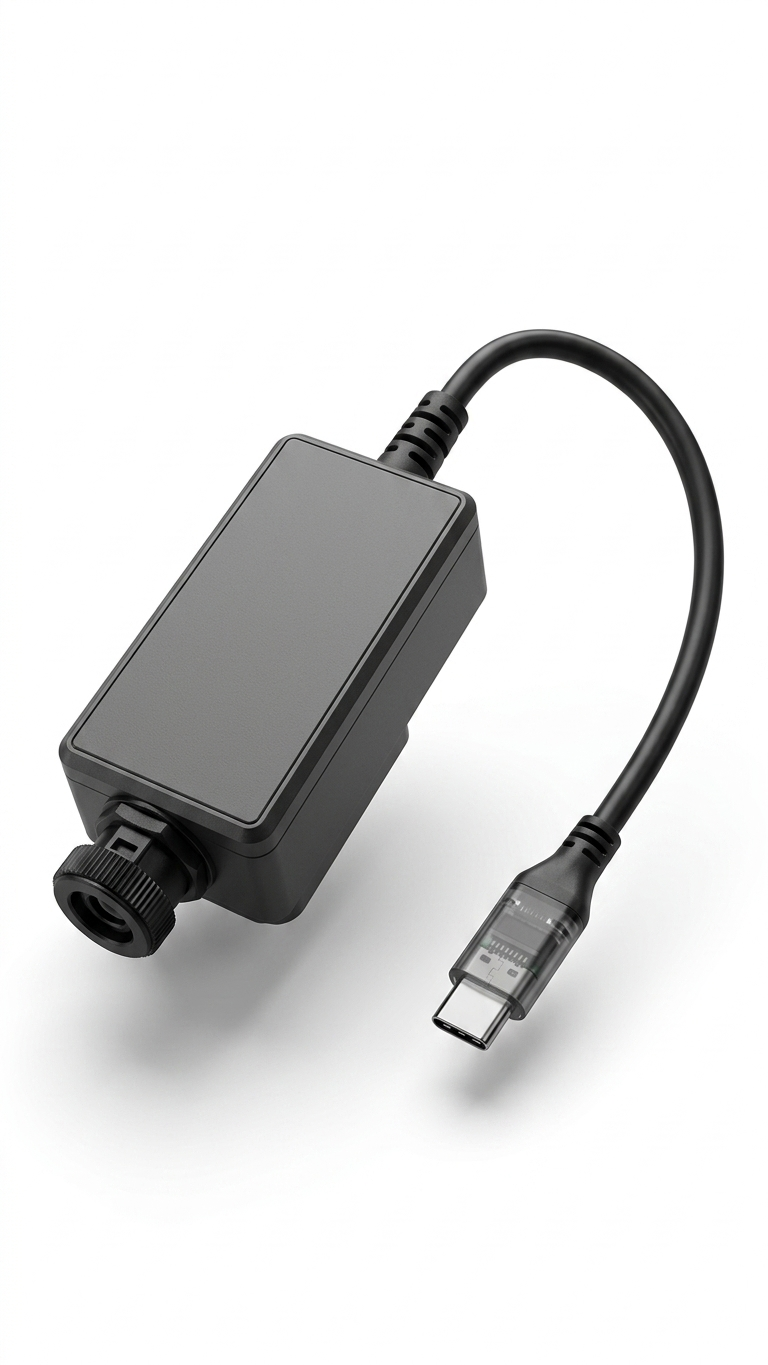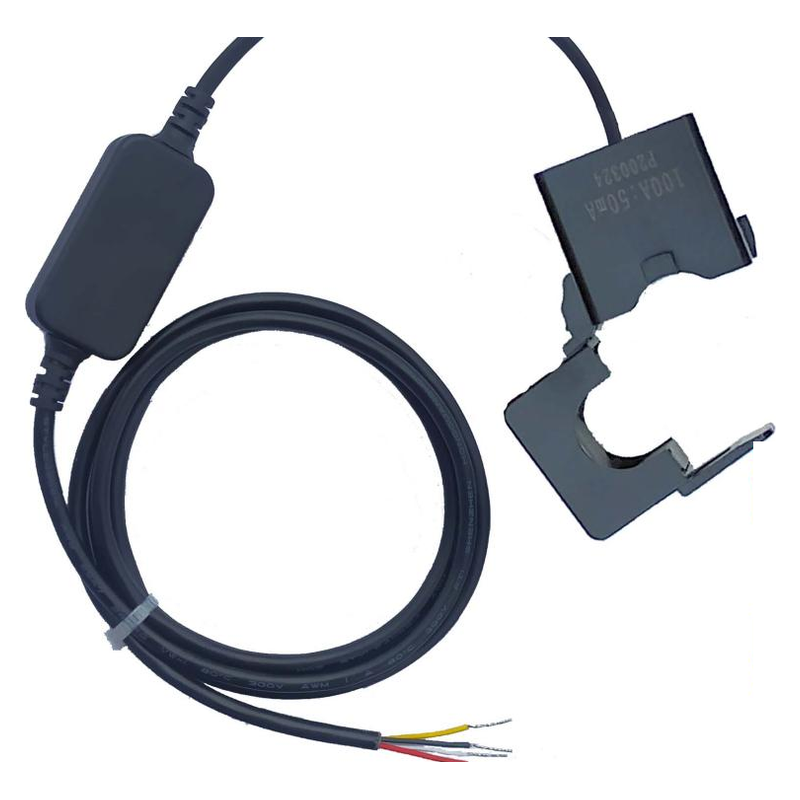
CT-100 Split-Core Current Sensor (RS485 Modbus)
Split-core current sensor that clips onto a live conductor and reports over RS485 Modbus. Confirms an aerator, pump or blower is actually running, not just switched on.
Contact for pricing
Product Highlights
View all in Specifications tabOverview
The CT-100 is a split-core current sensor with an RS485 Modbus-RTU output. The core opens, clips around an existing power cable, and closes again, so a motor is instrumented without cutting a wire, breaking the circuit, or taking the equipment out of service. Installation takes a minute on a machine that keeps running.
It answers a question a relay or a run-hour meter cannot: not whether the equipment was switched on, but whether it is drawing current. A contactor that has welded, a belt that has snapped, a paddlewheel that is turning against a seized bearing, and a pump that has lost its prime all look identical to a control panel. They do not look identical to a current reading.
Why it matters on an aerator
A pond aerator is the one piece of equipment where a silent failure turns into dead stock overnight. The control system says the aerator is on. The oxygen keeps falling. By the time the dissolved oxygen alarm fires, the fish have already spent hours in a falling DO curve, and nobody knows whether the cause is biology, weather, or a motor that stopped three hours ago.
A current reading separates those cases immediately. Normal running current means the aerator is working and the oxygen problem is a load problem. Zero current means the machine stopped. Current well below normal means it is turning, but not doing the work it should, which is what a fouled paddlewheel or a failing bearing looks like before it fails completely.
The same logic applies to any motor that matters: an irrigation pump running dry, a blower that has lost a belt, a feed auger that has jammed.
Key Features
- Split core: clips onto a live conductor, no rewiring and no downtime
- Digital output: RS485 Modbus-RTU, not an analog signal to scale and lose over a cable run
- 0.2 to 100 A range at 0.01 A resolution, 50-60 Hz
- Multi-point calibrated at production, with the conversion done inside the sensor
- Shares the bus: sits on the same RS485 line as water quality, soil and level sensors
- Low power: 5-24 V DC at 0.5 W
Installation
The core clamps around a single insulated conductor of the circuit being measured. Clamping around two conductors of the same circuit cancels the field and reads close to zero, which is the one mistake worth knowing about in advance. Press the catch, place the core, and close it until it clicks. Work inside a panel or on a live circuit must be carried out by qualified personnel under the applicable local electrical regulations.
Connectivity and Integration
The RS485 Modbus-RTU output (9600 bps default, 8-N-1) connects directly to the Omni Genesis and Genesis Lite controllers and to any PLC or monitoring system that speaks Modbus. Current arrives as a 32-bit value scaled to 0.01 A, and the device address and baud rate are configurable over the same bus.
Because it shares the bus with the rest of the range, one controller can hold both halves of the picture: the dissolved oxygen in the pond and the current the aerator is drawing to fix it. That pairing is what turns an alarm into a diagnosis.
Related Guides
Related Content
Applications
Part of our MobileSense Platform
See how MobileSense turns any phone into a field sensor reader, with every measurement tagged by worker, time, and GPS location.
Related Products
Other solutions in the accessories category