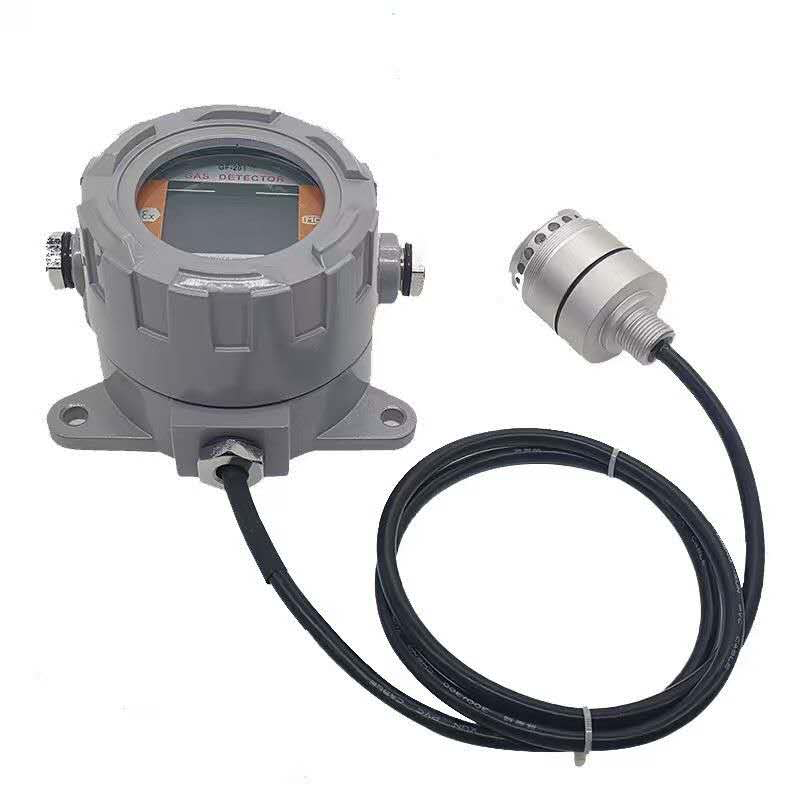
GF-201 H2S Gas Sensor
Fixed hydrogen sulfide (H2S) gas sensor, 0-100 ppm. Electrochemical sensing, flameproof Ex d enclosure, with 4-20 mA, RS485 Modbus, and two alarm relays.
Contact for pricing
Product Highlights
View all in Specifications tabOverview
The GF-201 is a fixed-point hydrogen sulfide (H2S) gas sensor for continuous toxic-gas monitoring in agriculture, aquaculture, and industrial environments. An electrochemical sensing cell with automatic temperature compensation and zero/span drift correction holds readings stable over long deployments, while a flameproof aluminium alloy enclosure (Ex d IIC T6) suits hazardous areas where gas may be present.
The sensor shows live concentration and alarm status on its LCD and drives three independent output paths at once: a 4-20 mA analog loop, an RS485 Modbus-RTU bus, and two normally-open alarm relays. That lets a single unit report to an Omni Genesis controller while its relays directly trigger a fan, solenoid, or local horn.
Why Monitor H2S
Hydrogen sulfide is heavier than air, corrosive, and toxic at low concentrations. It collects in low and enclosed spaces: pond sediment and RAS biofilters, sumps and wet wells, manure pits, and confined animal housing. Continuous fixed-point detection gives an early, audible warning before levels reach the point where they threaten livestock, fish, or staff.
Key Features
- Dedicated H2S range: 0-100 ppm with 1 ppm resolution
- Electrochemical sensing: temperature compensated, with zero and span drift correction
- Two-stage alarm: independent low and high relays, freely configurable set points
- Three outputs in parallel: 4-20 mA, RS485 Modbus-RTU, and two dry-contact relays
- Hazardous-area rated: flameproof Ex d IIC T6 aluminium enclosure, IP65
- Wide supply: 12-30 VDC, ≤2 W
- Field serviceable: LCD menu for calibration, alarm set points, and bus address
How It Works
The electrochemical cell produces a current proportional to the H2S concentration at the sensor inlet. On-board electronics linearise and temperature-compensate that signal, display it in ppm, and publish it on the analog and digital outputs. When concentration crosses a configured set point, the matching relay changes state to drive an alarm or interlock.
Installation
Because H2S is heavier than air, mount the sensor low, roughly 0.3-0.6 m above floor level, close to likely release points such as valves, joints, and sumps. Keep the sensor inlet clear of splashing water, oil, and dust, and leave service access around the housing. Calibrate with certified gas at commissioning and at least every six months thereafter.
One Detector, Replaceable Sensing Cell
The GF-201 family shares one platform: the same flameproof housing, display, relays, and outputs, with a replaceable sensing cell that sets the target gas. The family: H2S, NH3, CO2, O2, and CH4.
Additional sensing cells are available for the same platform by quote:
| Gas | Formula | Selectable ranges |
|---|---|---|
| Carbon monoxide | CO | 0-500 to 0-10000 ppm |
| Ozone | O3 | 0-10 to 0-1000 ppm |
| Chlorine dioxide | ClO2 | 0-20 to 0-1000 ppm |
| Chlorine | Cl2 | 0-10 to 0-200 ppm |
| Sulfur dioxide | SO2 | 0-100 to 0-1000 ppm |
| Nitrogen dioxide | NO2 | 0-100 to 0-1000 ppm |
| Formaldehyde | CH2O | 0-5 to 0-200 ppm |
| Ethylene | C2H4 | 0-50 to 0-1000 ppm |
Contact us with your target gas and range for a tailored quote.
Connectivity and Integration
The RS485 Modbus-RTU output (9600 bps, 8-N-1) connects directly to the Omni Genesis and Genesis Lite controllers and to any PLC or DCS that speaks Modbus. The parallel 4-20 mA loop covers legacy analog inputs, and the two relay contacts provide a wiring-free local trip for ventilation or shutoff. This is the same modular approach as the rest of the Agrinovo range: one controller, any mix of sensors.
Applications
Part of our Temperature Monitoring System
Explore our environmental monitoring solution for temperature, humidity, and climate tracking.
Related Products
Other solutions in the environmental category