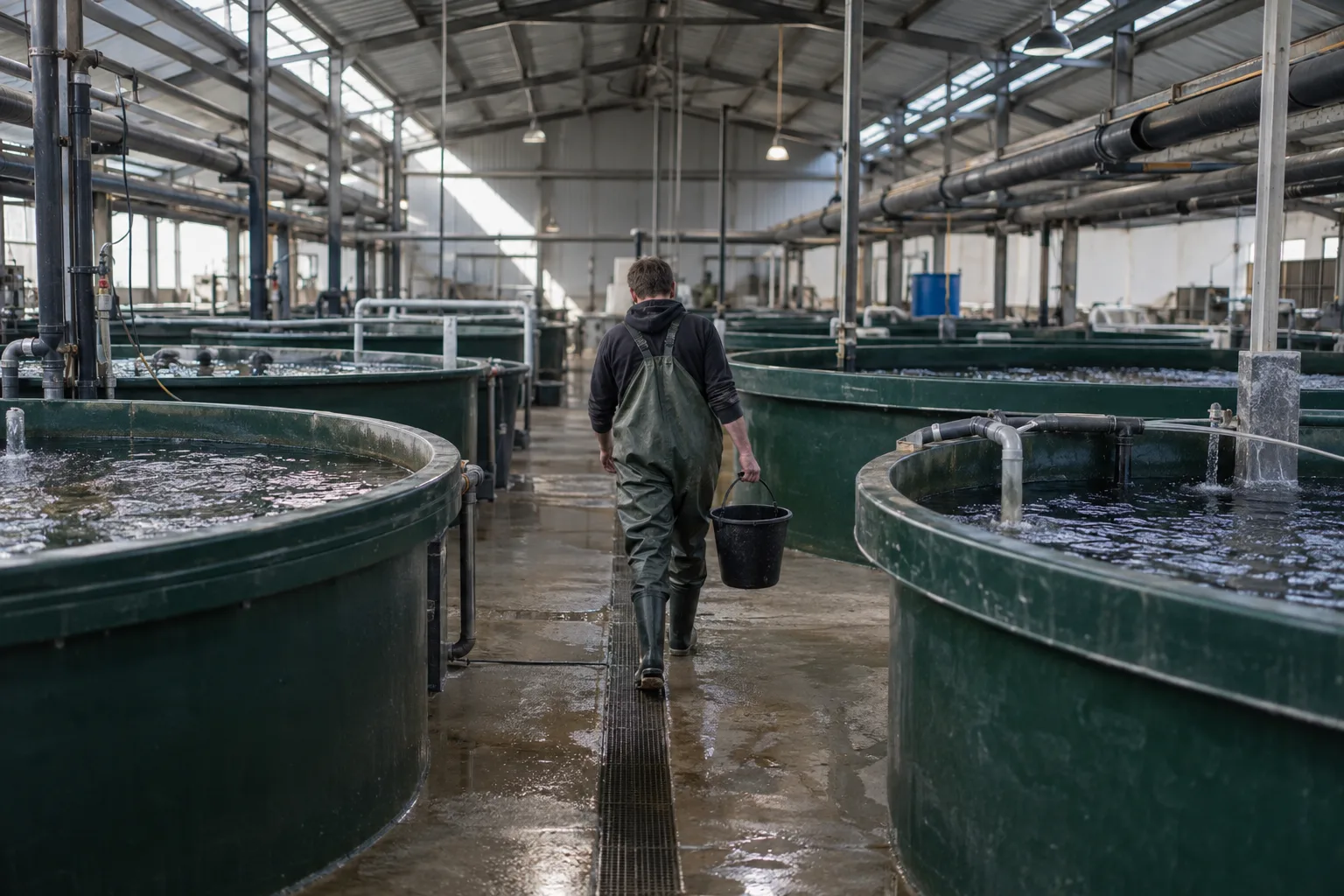
Most pages about dissolved CO2 sensors list a range and an output and stop there. The detail that actually decides whether a sensor suits your water is usually one line further down the datasheet: the conditions the sample has to meet. This guide compares the two main sensor families and is explicit about that condition for the sensor we supply, so you can tell before asking for a quote whether it fits.
Two families of dissolved CO2 sensor
Gas-sensing electrodes. CO2 passes from the sample through a gas-permeable membrane into a small volume of internal solution. The CO2 changes that solution, and an electrode inside measures the change. The sensor reports a concentration. This is an electrochemical method, closely related to pH measurement, and it shares the same habits: it is calibrated against standard solutions and it needs the sample to be within a stated chemical window.
Optical sensors. CO2 passes through a membrane into a small gas space, where its concentration is measured by infrared absorption. The method is physical, not electrochemical, so it does not depend on the chemistry of the sample in the same way. These are the instruments built for unattended measurement directly in the water.
Neither is better in general. They suit different installations, and the difference is mostly about where the sensor can sit.
The condition that decides it: sample pH
The CO2-100 is a gas-sensing electrode. Its datasheet states a working pH range of 4.8 to 5.2 and instructs the user to keep the sample within that range for valid readings.
That one line matters more than the measurement range. Most of the water people want to monitor is nowhere near pH 5:
- Fish and shrimp culture water is normally held near neutral.
- Groundwater and well water vary, but are usually above this window.
- Algae cultures and many bioprocess liquids run neutral to alkaline.
In those waters the CO2-100 cannot simply be lowered into the tank and left to report. The sample has to be brought into the pH 4.8 to 5.2 window first, which in practice means measuring a conditioned sample: a side stream or a drawn sample with its pH adjusted before it reaches the electrode.
Conditioning the sample also changes its carbonate balance. So before designing a sampling arrangement, be clear about what the reading will represent for your process and whether that is the number you need to control. We would rather have that conversation before a quote than after delivery.
Where each type fits
| Your situation | Sensor type that fits |
|---|---|
| Sample is already within pH 4.8 to 5.2, or you run a conditioned side stream | Gas-sensing electrode such as the CO2-100 |
| Periodic checks on drawn samples that can be conditioned | Gas-sensing electrode |
| Continuous, unattended measurement directly in neutral or alkaline water | In-situ optical sensor |
| A probe left in a tank, pond or well with no sample handling | In-situ optical sensor |
Agrinovo supplies the electrode type. We do not supply an in-situ optical dissolved CO2 sensor, and if your application is in the last two rows we will tell you so.
For recirculating aquaculture in particular, dissolved CO2 is one of several parameters that matter, and most of the others can be measured directly in the tank. Our RAS water quality monitoring guide covers the full set.
What the CO2-100 provides
Where the sample conditions are met, the electrode is a compact way to get a digital CO2 value into a control system.
- Range. 0.2 to 2,200 ppm, configurable up to 20,000 ppm, at 0.01 ppm resolution.
- Accuracy. ±5% of full scale.
- Temperature. A built-in temperature measurement, with compensation applied automatically or from a manual value.
- Output. RS485 Modbus RTU. The value arrives as a finished number, so a PLC or controller reads it directly with no separate transmitter. Our guide to sensor protocols explains RS485 and Modbus.
- Electrical. 9 to 27 V DC supply, 0.5 W or less, with an isolated supply.
- Mechanical. A PPS body with 3/4 inch NPT threads front and back, for mounting in a flow cell or a fitting.
Installation and upkeep
The datasheet guidance is short and worth following exactly:
- Keep the electrode tip immersed.
- Keep the sample within pH 4.8 to 5.2.
- Avoid air bubbles and high-flow zones. Bubbles on the membrane and a fast jet across it both disturb the reading.
- Recalibrate periodically against standards. Calibration is done over RS485 with up to five points, so it is driven from the controller.
- Keep the electrode clean and store it as the electrode storage guidance describes.
A flow cell on a side stream satisfies most of this at once: steady low flow, a tip that stays wet and a place to condition the sample.
What to tell us before a quote
Five answers settle most enquiries quickly:
- The pH of the water you want to measure.
- In the water or on a sample. Whether you need a probe in the tank or can run a side stream.
- The CO2 range you expect.
- The water temperature.
- What the sensor connects to: a PLC, an existing controller, or a complete monitoring system. An RS485 sensor connects to an Omni Genesis controller, which sends the data over cellular (4G LTE) to the cloud.
Conclusion
A dissolved CO2 sensor is chosen by where it has to sit. A gas-sensing electrode such as the CO2-100 gives a digital reading over RS485 with a wide range, and it needs the sample at pH 4.8 to 5.2. If your water is already there, or you can condition a side stream, it fits. If you need a probe left in neutral water, you need an optical instrument.
Contact us with the five answers above and we will tell you plainly which side of that line your application is on.