Chemical oxygen demand and suspended solids are two of the most telling numbers in any water that carries organic load, from aquaculture effluent to farm process water. They tell you how much oxygen-consuming material and how much particulate matter the water is carrying, which drives everything downstream: treatment performance, discharge compliance, and the health of a receiving pond or system. The problem is that these numbers have traditionally lived in a lab, measured on samples taken hours or days apart, which means the picture is always out of date.
Online COD and suspended-solids monitoring moves the measurement to the water itself, continuously. This guide explains what these parameters mean, how the sensors work, why self-cleaning optics matter, and how to build a continuous monitoring setup for farm, aquaculture, and process water.
COD, Turbidity, and Suspended Solids: What They Tell You
These three parameters are related but distinct, and a good monitoring setup often uses more than one because each answers a different question.
Chemical oxygen demand (COD) measures the quantity of oxygen that would be consumed in oxidizing the organic matter in the water. It is the standard indicator of organic pollution load. A rising COD means more organic material, whether from feed and waste in an aquaculture system, from a process stream, or from an effluent flow. It is the number that most directly reflects how much “work” the water will demand of a treatment step or a receiving environment.
Turbidity measures how cloudy the water is, by shining light through it and measuring how much is scattered by suspended particles. It is a fast, sensitive indicator of particulate content and a good early-warning parameter, because a sudden turbidity change often signals an upset before other measurements move.
Suspended solids measure the actual concentration of undissolved particles, by mass. In treatment and aquaculture contexts this includes the concentration of solids in a settling stage, or the mixed liquor suspended solids in an aeration basin, a key control parameter for biological treatment.
Together they describe both the dissolved organic load (COD) and the particulate load (turbidity and suspended solids), which is why comprehensive water monitoring frequently tracks all three.
How Online COD Sensors Work
The traditional COD test is a reagent-based laboratory method: it is accurate and it is the reference for compliance, but it consumes chemicals, takes time, and only ever measures the sample you happened to take. Online COD sensors take a different approach so they can measure continuously.
The most practical technology for continuous use is UV absorption. Dissolved organic matter absorbs ultraviolet light strongly at 254 nm, so a sensor that shines UV light through the water and measures how much is absorbed can correlate that absorbance to a COD value. Because it is purely optical, it uses no reagents and can run around the clock, which is exactly what continuous monitoring requires.
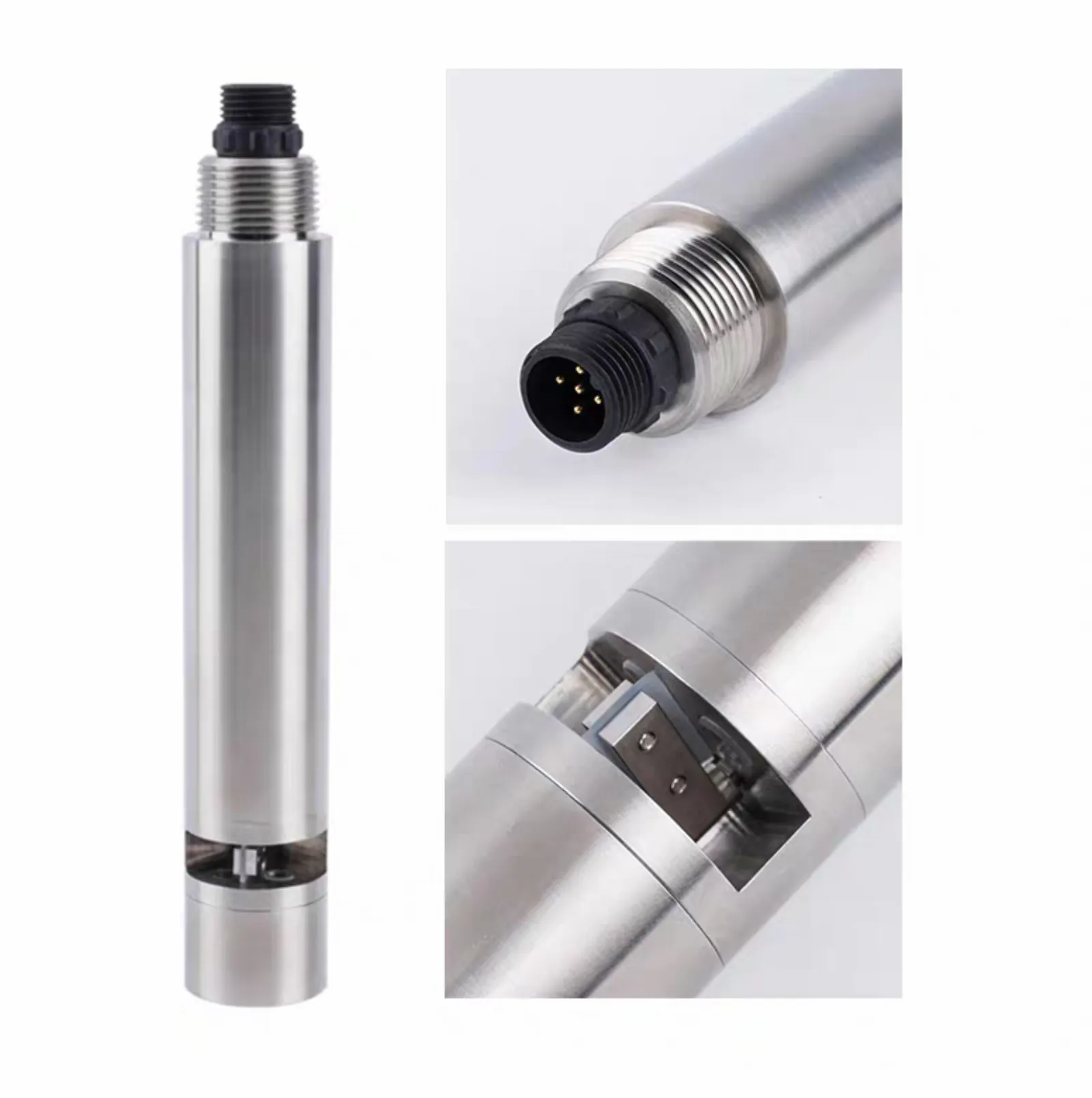
The COD-130 UV absorption COD sensor works on this principle and adds the feature that makes optical sensing viable in real, dirty water: a built-in self-cleaning wiper. The wiper clears the optical window automatically, so the sensor holds accurate readings over long deployments instead of drifting as film builds up. That combination, reagent-free UV measurement plus self-cleaning, is what lets a COD sensor live in effluent or pond water and keep reporting.
It is worth being clear about scope: an online COD sensor is built for continuous operational monitoring and trend detection, not to replace a regulated laboratory method for compliance reporting. The two work together, live data to run the process and catch problems, lab tests where a certified number is required.
Measuring Solids: Turbidity and Suspended Solids Sensors
Alongside COD, particulate monitoring rounds out the picture, and here too self-cleaning optics are what make continuous deployment practical.
The TUR-110 self-cleaning turbidity sensor measures cloudiness continuously, making it a fast responder to changes in particulate content, useful as an early warning and for tracking the performance of filtration or settling.
The SS-130 self-cleaning suspended solids sensor measures the concentration of suspended solids by mass, for when you need the actual solids loading rather than a cloudiness index.
The MLSS-110 sludge concentration sensor targets mixed liquor suspended solids, the control parameter for the biological stage of activated-sludge treatment, where knowing the solids concentration in the aeration basin is central to running the process well.
Each of these is available with a self-cleaning wiper for the same reason the COD sensor does: an optical sensor in solids-laden water fouls quickly without one, and a fouled sensor gives readings you cannot trust.
Why Continuous Beats Periodic
The case for continuous COD and solids monitoring is the same case that applies across water quality, and it is decisive here because these parameters move.
A lab result is a snapshot from when the sample was drawn. If organic load spikes an hour after sampling, the lab never sees it, and you learn about the consequence rather than the cause. Continuous monitoring shows the spike as it happens, timestamps it, and can alert you immediately, so an upset becomes something you respond to in real time instead of investigating after the fact. Over time, the continuous record also reveals patterns, daily cycles, the effect of a process change, the slow drift of a treatment stage losing performance, that intermittent sampling simply cannot show.
For an aquaculture operation, that means catching a rise in organic load before it depresses dissolved oxygen or stresses stock. For a treatment or process context, it means running closer to target with confidence and documenting performance continuously.
Building a Continuous Monitoring Setup
A practical on-site system connects the sensors to a controller that handles power, logging, and communication. The Omni Genesis controller reads the COD, turbidity, and suspended-solids sensors over RS485, is solar-capable and cellular-native for sites without power or a network, and sends everything to a cloud dashboard. There you see live values, set alerts on organic load or solids thresholds, and keep the full history.
Because the controller is multi-protocol and modular, the same system can carry the rest of a water-quality picture alongside COD and solids, dissolved oxygen, pH, ORP, and more, which is the basis of the broader IoT aquaculture monitoring platform. If your interest is water treatment specifically, our guides to dissolved ozone monitoring and chlorine dioxide monitoring cover related disinfection parameters.
Placement follows the usual rules for optical sensors: install them where the water is representative and flowing, not in a dead zone, keep them accessible for the occasional check even though the wiper handles routine cleaning, and let the self-cleaning interval do the day-to-day work.
The Bottom Line
COD, turbidity, and suspended solids are the parameters that describe organic and particulate load, and they are most useful when you can see them continuously rather than in delayed lab snapshots. Reagent-free UV COD measurement and self-cleaning optical solids sensors make continuous, on-site monitoring practical even in dirty water, giving you live visibility, real-time alerts, and a complete record to run a process or protect a discharge.
To scope continuous COD and solids monitoring for your operation, get a quote with a note on your water type and what you need to watch, or view the COD-130 sensor for the measurement details.
Frequently Asked Questions
What is an online COD sensor and how does it work?
An online COD sensor measures chemical oxygen demand continuously, in place, instead of sending samples to a lab. UV-absorption sensors work by shining ultraviolet light through the water; dissolved organic matter absorbs light at 254 nm, and the sensor correlates that absorbance to a COD value. Because it uses optics rather than reagents, it can measure around the clock with no chemicals, giving a live picture of organic load that lab sampling cannot.
What is the difference between COD, turbidity, and suspended solids?
They measure different things. COD (chemical oxygen demand) reflects the amount of oxygen-consuming organic matter dissolved in the water. Turbidity measures how cloudy the water is, caused by particles scattering light. Suspended solids measure the concentration of undissolved particles by mass. A complete water-quality picture often needs more than one: COD for organic load, turbidity and suspended solids for particulate content.
Why monitor COD and suspended solids continuously instead of lab sampling?
Lab COD tests are accurate but slow and infrequent, so they miss the changes that happen between samples, exactly when a problem develops. Continuous online monitoring shows organic load and solids in real time, catches spikes as they occur, and sends alerts so you can act immediately. It complements lab testing rather than replacing regulated lab methods: continuous data for operational control, lab tests for compliance.
Do optical water sensors get fouled in dirty water?
Fouling is the main challenge for any optical sensor in dirty water, which is why self-cleaning matters. Sensors with a built-in wiper clear the optical window automatically on a set interval, keeping readings stable over long deployments without someone cleaning the probe by hand. For COD, turbidity, and suspended-solids sensors in effluent or pond water, a self-cleaning wiper is close to essential.
Where are COD and suspended-solids sensors used on a farm or fish operation?
Common uses include monitoring aquaculture effluent and recirculating-system water, tracking organic load in wastewater and process water, checking the output of treatment steps, and watching solids in settling and filtration stages. Anywhere organic load or particulate content affects a process or a discharge, continuous COD, turbidity, and suspended-solids monitoring gives operational visibility.