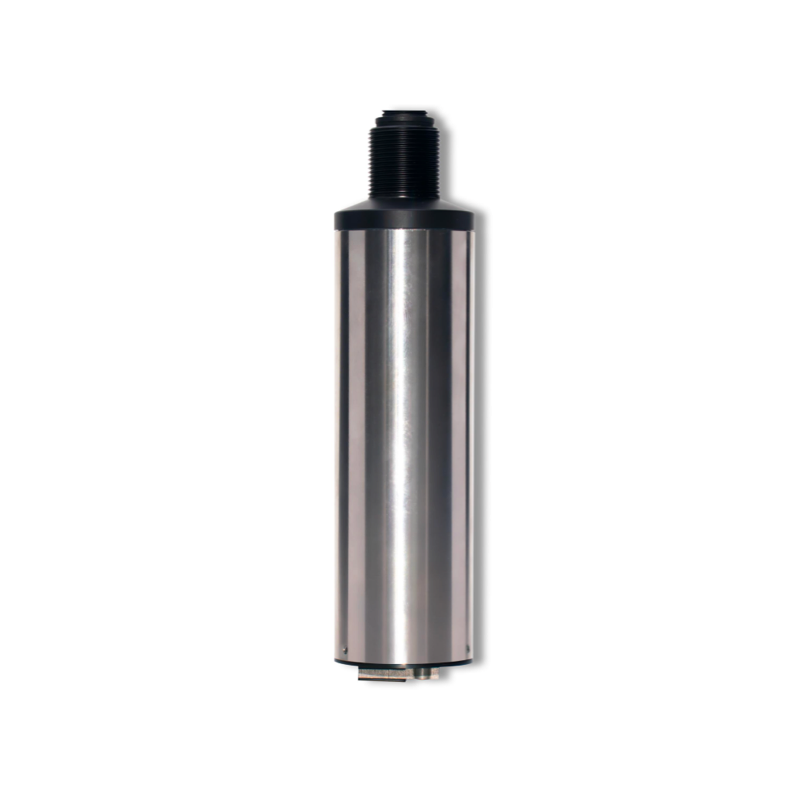
CHL-100 Digital Chlorophyll Sensor with Self-Cleaning
High-precision fluorescent chlorophyll sensor with built-in automatic self-cleaning brush. Ideal for water quality monitoring, algae detection, and aquaculture applications.
$799.99USD
Product Highlights
View all in Specifications tabOverview
The CHL-100 is a professional-grade digital chlorophyll sensor featuring fluorescent technology and an integrated automatic self-cleaning brush. Using specific wavelength excitation light, the sensor illuminates the sample and measures the fluorescence emitted by chlorophyll, which correlates directly with chlorophyll concentration. The built-in self-cleaning mechanism ensures stable long-term measurements even in challenging conditions.
No reagents required, no pollution, and economical for continuous online water quality monitoring. The automatic cleaning system maintains excellent stability for long-term deployment.
Key Features
- Fluorescent Technology: Uses optical fluorescence for accurate chlorophyll detection
- Automatic Self-Cleaning: Built-in brush prevents biofouling and ensures stable readings
- Wide Measurement Range: 0-500 µg/L for comprehensive algae monitoring
- High Accuracy: ±3% full scale precision
- 316L Stainless Steel: Corrosion-resistant construction for harsh environments
- Integrated Temperature Sensor: Automatic temperature compensation (0-50°C)
- Digital Output: RS485 Modbus RTU communication
- IP68 Waterproof: Fully submersible for continuous monitoring
- Configurable Cleaning Interval: Default 60 minutes, adjustable via Modbus
- Long Cable Options: Standard 10m, extendable to 100m
- Wide Power Range: 9-36V DC for flexible installation
Applications
- Aquaculture and fish farming
- Algae bloom detection and early warning
- Drinking water source monitoring
- Reservoir and lake water quality
- Wastewater treatment plants
- Environmental water monitoring
- Eutrophication assessment
- Marine and coastal monitoring
- Research and laboratory use
Technical Specifications
The CHL-100 uses fluorescent quenching technology where a specific wavelength of excitation light illuminates the sample. When chlorophyll absorbs this light, it becomes excited to a higher energy state. As it returns to the ground state, it emits fluorescence at a longer wavelength. The intensity of this fluorescence is directly proportional to the chlorophyll concentration.
The sensor employs modulation and coherent detection techniques to improve measurement sensitivity and interference rejection, ensuring accurate readings even in turbid or optically complex waters.
Understanding Chlorophyll
Chlorophyll is the green pigment found in algae and plants that enables photosynthesis. Monitoring chlorophyll levels in water provides valuable insight into:
- Algae Bloom Detection: Early warning of harmful algal blooms
- Eutrophication: Assessment of nutrient pollution levels
- Water Quality: General indicator of biological activity
- Primary Productivity: Estimation of aquatic ecosystem health
Typical chlorophyll concentrations:
- Oligotrophic (low nutrients): < 2 µg/L
- Mesotrophic (moderate): 2-8 µg/L
- Eutrophic (high nutrients): 8-25 µg/L
- Hypereutrophic: > 25 µg/L
Self-Cleaning System
The CHL-100 features an integrated automatic brush cleaning system:
- Configurable Interval: Default 60 minutes, adjustable from 1-255 minutes
- Manual Trigger: Can be triggered on demand via Modbus command
- Maintenance-Free: Reduces manual cleaning requirements
- Extended Deployment: Enables months of unattended operation
- Sealed Motor: IP68 rated cleaning mechanism
Important: Never force the cleaning brush to rotate manually or obstruct its movement. The internal reduction motor can be damaged by external forces.
Installation and Operation
The CHL-100 is designed for submersible installation:
Installation Guidelines:
- Mount vertically for optimal self-cleaning performance
- Position at least 30cm below the minimum water level
- Avoid locations with excessive air bubbles
- Keep sensor away from direct water flow impact
- Install protective cage to prevent debris entanglement
- Recommended maximum depth: 2 meters from surface
Calibration uses standard chlorophyll solutions. The sensor supports multi-point calibration for optimal accuracy across the measurement range.
Connectivity and Integration
The CHL-100’s RS485 Modbus RTU interface enables seamless integration with:
- SCADA systems for plant control
- Data loggers for continuous monitoring
- Wireless telemetry for remote access
- Alarm and notification systems
- Cloud platforms for IoT connectivity
- Omni Genesis and Exodus controllers
Maintenance
| Task | Recommended Frequency |
|---|---|
| Clean sensor exterior | Every 4-8 weeks |
| Calibration check | As required |
| Self-cleaning brush inspection | Every 18 months (return to factory) |
Maintenance Notes:
- Clean external surfaces with tap water and soft cloth
- Check cable for tension and damage
- Inspect measurement window and brush operation
- Return to factory every 18 months for seal replacement
Why Choose CHL-100
- Professional Quality: Industrial-grade sensor for reliable operation
- Self-Cleaning: Automatic brush reduces maintenance burden
- Low Maintenance: Minimal servicing requirements
- Reagent-Free: No chemicals needed, environmentally friendly
- Proven Technology: Fluorescent method used worldwide
- Cost-Effective: Long-term monitoring without reagent costs
- Versatile: Suitable for freshwater, brackish, and marine applications
Part of our IoT Aquaculture Monitoring System
See how our aquaculture sensors work together in a complete real-time water quality monitoring system for fish farming.